
Facebook
Twitter/X
LinkedIn
Pinterest
Reddit
Email
Print
Three-minute read
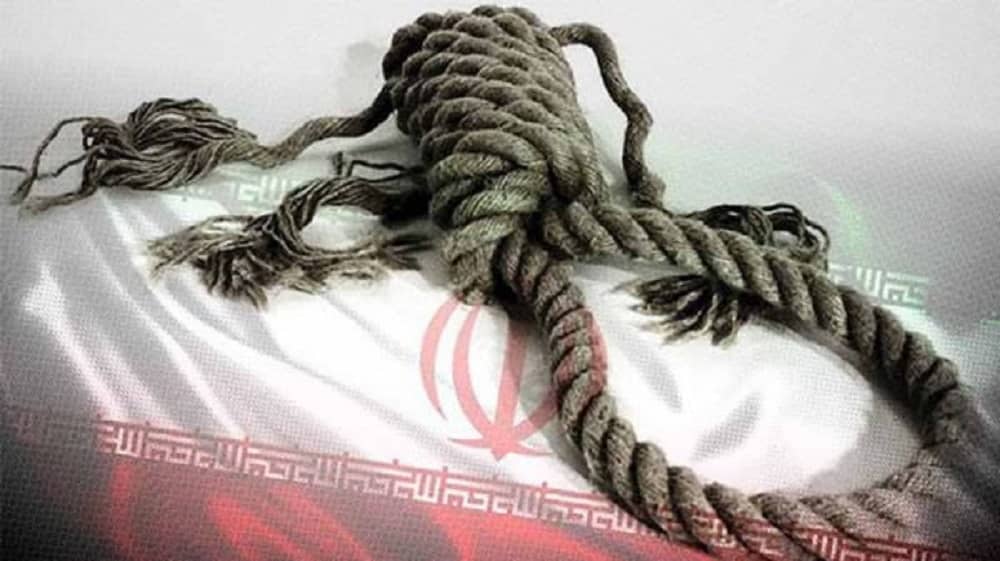
On October 7, ahead of the World Day Against the Death Penalty, Mrs. Maryam Rajavi, President-elect of the National Council of Resistance of Iran (NCRI), wrote to UN Secretary-General António Guterres warning that executions, torture and death sentences against protesters had reached an alarming new level.
Her letter called for an international initiative to halt executions and the killing of protesters and urged governments to make economic, political and diplomatic relations with Tehran conditional on ending both practices.
Recent findings by Amnesty International and United Nations mechanisms provide substantial independent evidence of the crisis she describes.
Iran Drove the Global Surge in Executions
On May 18, 2026, Amnesty International reported that Iran executed at least 2,159 people in 2025—more than double the 2024 figure and the highest number Amnesty has recorded in Iran since 1981.
Iran alone accounted for almost 80 percent of all known executions worldwide outside China. Among those put to death were 61 women, at least 998 people convicted of drug-related offences, and at least one person convicted of an offence allegedly committed while under 18.
Ahead of the World Day Against the Death Penalty, my mandate issued a press release on the use of the death penalty in Iran, joined by other UN experts. https://t.co/DppIFZou37
Iran: UN experts urge immediate halt to executions as country drives global surge
GENEVA (9 October…
— Mai Sato (@drmaisato) October 9, 2026
The escalation continued into 2026.
Amnesty reported on May 21 that since the U.S.-Israeli attacks began on February 28, Iranian authorities had executed at least 36 people on politically motivated charges following grossly unfair trials. At least 78 protesters, dissidents and people accused of links to banned opposition groups remained under death sentences; 41 had been arrested during the January uprising and at least five were children at the time of the alleged offences.
Amnesty subsequently reported more than 6,000 arbitrary arrests following the outbreak of war, including protesters, journalists, lawyers, human-rights defenders and members of ethnic and religious minorities. It documented concerns over enforced disappearances, torture, forced confessions and accelerated prosecutions on capital charges.
From Street Killings to Death Sentences
The execution campaign followed one of the bloodiest protest crackdowns in modern Iranian history.
On January 23, the UN Human Rights Council deplored the killing of thousands of people, including children, during protests beginning on December 28, 2025, along with the arrest of thousands more.
UN investigators received evidence of security forces firing live ammunition into crowds, protesters suffering deliberate eye injuries from metal pellets and widespread arrests of children, journalists and human-rights defenders. The judiciary simultaneously threatened detained protesters with moharebeh—“enmity against God”—a charge carrying the death penalty.
Iran demolishing Gohardasht Prison to erase a crime scene of the 1988 massacre
JVMI urges @volker_turk, @drmaisato, the FFMI and @WGEID to demand an immediate halt to the demolition of Gohardasht Prison and other burial sites of political prisoners.https://t.co/iuxGgbb3Cz
— Justice for the Victims of 1988 Massacre in Iran (@jvmifoundation) October 5, 2026
Mrs. Rajavi’s October letter describes the same progression: mass killing during the uprising followed by rushed trials, torture-tainted confessions and executions of political prisoners and protesters. It specifically cites the use of moharebeh, efsad-e fel-arz and baghi to criminalize political activity and opposition affiliation.
September Brought a More Serious Finding
Two reports released in September shifted the international assessment beyond individual violations toward questions of systematic criminal responsibility.
On September 16, Amnesty published a major investigation into the suppression of the 2022 uprising. It documented crimes against humanity including murder, torture, enforced disappearance, imprisonment, rape and persecution, mapped the relevant command structures and identified 87 officials who it said should be criminally investigated.
Amnesty explicitly warned that the failure to hold officials accountable after earlier crackdowns helped create conditions for the mass killings of January 2026.
One day later, the UN Independent International Fact-Finding Mission concluded that repression of the 2025–2026 protests represented an unprecedented escalation, involving widespread lethal force, mass killings and extensive arrests. It found reasonable grounds to believe that Iranian authorities committed crimes against humanity during the crackdown.
The significance is difficult to reduce to another expression of international “concern.” Amnesty and UN investigators are increasingly documenting a recurring mechanism: protests are met with lethal force; survivors are arrested; detainees face torture and unfair proceedings; some are subsequently condemned to death.
On the eve of the World Day Against the Death Penalty on 10 October, I addressed a letter to United Nations Secretary-General António Guterres, calling for urgent international action to halt executions and the killing of protesters in Iran.
I also urged the Secretary-General to… pic.twitter.com/bJozJfZsBo
— Maryam Rajavi (@Maryam_Rajavi) October 7, 2026
The Question Is What Consequences Follow
Mrs. Rajavi’s October letter states that condemnations alone have failed to alter this pattern. She calls for UN investigative access, international criminal accountability and prosecution under universal jurisdiction where possible.
Her most immediate proposal concerns diplomacy itself: governments should condition their economic, political and diplomatic relations with Tehran on an end to executions and the killing of protesters and incorporate a requirement to halt executions into international agreements concerning Iran.
Whatever governments ultimately decide, the factual premise behind that demand is becoming increasingly difficult to dispute.
Iran’s execution crisis has never been occurring in isolation from its political repression.
The gallows have always been part of it.