
Iran and the US: An October surprise?
Asharq Al-Awsat, London, September 26
For more stories from The Media Line go to themedialine.org
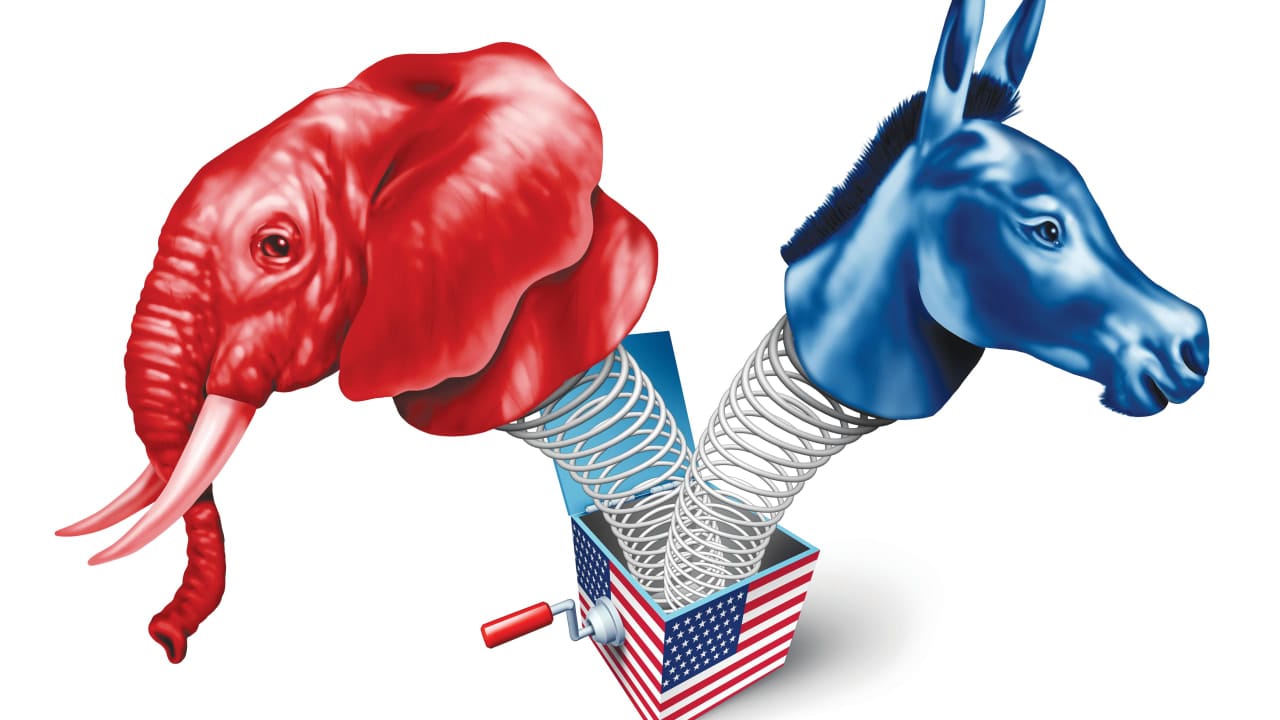
“October surprise” has become a code phrase for outside intervention capable of affecting the outcome of the American elections, always held in November. The term was coined by Gary Sick, a former CIA analyst who served as an adviser on Iranian affairs in president Jimmy Carter’s administration in the late 1970s.
According to Sick, who later wrote a book about his theory, Carter lost the November 1980 presidential election after the Islamic Republic delayed the release of American diplomats held hostage in Tehran as part of a secret deal with the Republican Party in exchange for promises from Ronald Reagan’s campaign. No evidence of such a deal has ever emerged, but the hostages were indeed released only on the day Reagan took office.
The delay appeared suspicious because Carter had already negotiated their release with Iran’s clerics and accepted all their demands, particularly a pledge not to prosecute the hostage-takers or those behind them.
Curiously, in 2009, an “October surprise” worked in the opposite direction, when an alliance of pro-American Islamist politicians and clerics fueled a popular uprising in Tehran in the hope that incoming Democratic president Barack Obama would lend them support, much as Carter had done against the shah in February 1979. They were disappointed when Obama declined even to express sympathy for protesters who were being brutally suppressed.
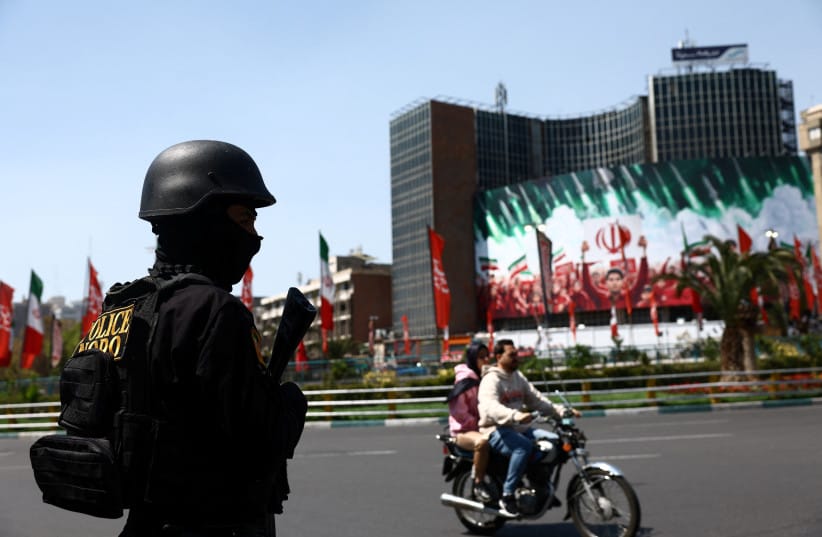 A member of a police force stands guard on a street, amid the U.S.-Israeli conflict with Iran, in Tehran Wednesday, 1st April 2026 (credit: MAJID ASGARIPOUR/WANA/REUTERS)
Over the past week or so, the phrase has resurfaced in connection with the coming US midterm elections. One theory is that the remaining Khomeinist clique in Tehran could engineer a surprise designed to ensure US President Donald Trump suffers a crushing defeat at the ballot box, perhaps through a new round of attacks on Iran’s neighbors that sends gasoline prices soaring.
Another possibility is that the clique might follow Trump’s own script and appease him by handing him another imaginary “great victory” to add to the one he claims over Greenland. In his speech to the United Nations General Assembly, Trump renewed his threat to annihilate Iran, only to claim later that American officials had held a “very good” three-hour meeting with Iranian leaders and that another meeting was planned for the “very near future.”
Military historian Victor Davis Hanson offers another possibility: Trump could decide to take even greater action against Iran than before, forcing Tehran’s leaders into unconditional surrender and thereby helping Republicans in the November 3 elections.
In another scenario, Hanson suggests that the “October surprise” could be a massive uprising across Iran aimed at installing a new governing team seeking peace with the United States.
Yet another possibility, discussed particularly in the Israeli media and supported by Hanson, is an invasion of Iran’s western provinces by Kurdish militants based in Iraq. Such an event could shake Iran’s military establishment, expose its inability to defend the country’s territory, and perhaps provide the first spark of a popular revolution.
The problem with all these “October surprise” theories is that they stop when the election ends, with little thought to what comes afterward.
The original October surprise may have helped Reagan win the presidency, but what did Iran gain from it? Twelve years of hostility under two Republican presidents, Reagan and George H.W. Bush, as well as, in April 1988, the first direct military confrontation between Iran and the US, when half of Iran’s naval fleet was sunk, and over $1.3 billion in damage was inflicted on its offshore oil facilities.
Three months later, Washington shot down an Iranian passenger aircraft, killing 290 people. Nor did the Americans gain much. The mullahs continued taking American hostages throughout the region and carried out the terrorist attack on a US base in Lebanon that killed 241 Marines, the largest American military loss since World War II.
Now return to the present. Suppose the mullahs take some action that causes Trump to lose the election. What incentive would he then have to seek an accommodation and enter history as a leader inclined to placate and appease his enemies?
And who can guarantee that Democrats, if they win, would revive Obama’s pro-mullah strategy? Nor can anyone guarantee that Democrats would secure a congressional majority large enough to override vetoes and constrain a wounded Trump.
Conversely, suppose Tehran suddenly changes course to please Trump and help him. Would Trump really be naïve enough to trust the turbaned Pinocchio that has already deceived seven American presidents over nearly half a century?
The best “October surprise” would be for Washington to recognize that this confused and costly strategy is unlikely to work. Under its current regime, Iran will not – and cannot – cease being a source of destabilization and an exporter of ideology and terrorism.
The fundamental reason for America’s failures toward Tehran is the assumption that it is dealing with a normal nation-state rather than an instrument for spreading a particular ideology. Washington, and others dealing with the Islamic Republic, have consequently fallen into the trap of half-measures: diplomacy pursued without full seriousness, sanctions imposed incompletely, and now a large-scale war without decisive force.
They promised to lift sanctions but never truly did. They promised to build trust through diplomacy but stopped halfway. They threatened “maximum pressure” but halted before the foundations of the regime began to crack. They boasted of seeking regime change but ended by signing an agreement with a regime that had not changed.
From Tehran, meanwhile, we have heard claims about establishing a new world order in alliance with China and Russia and turning the Islamic Republic into an “Islamic superpower,” even as rival factions pursued the dream of an attractive deal with the “Great Satan” by any means available, often devious ones.
In the end, perhaps the only October surprise will be no surprise at all.
– Amir Taheri
Trump, Xi, and Thucydides: Avoiding the trap, at least for now
An-Nahar, Lebanon, September 26
The Thucydides Trap is an established concept in politics, derived from an observation by the ancient Greek historian Thucydides, who described war between Athens and Sparta as inevitable because Athens was a rising power increasingly marked by arrogance while Sparta was the dominant power fearful for its position.
The trap is psychological, rooted in leaders’ behavior before it becomes an objective clash of interests. In 2012, political scientist Graham Allison examined 16 historical confrontations between rising and dominant powers and found that most ended in war.
Chinese President Xi Jinping himself recently revived the concept, telling US President Donald Trump during his visit to China last May that he hoped the two countries would avoid falling into this trap.
In the American-Chinese case, there is indeed a brake on the descent from competition into immediate war of the kind that occurred between Britain and France in the early 19th century or Britain and Germany in World War I. That brake is the degree of interdependence and integration between the two countries, something largely absent in those earlier cases.
The US provides the framework for the global economy through its financial capitalist system, while China supplies much of its productive substance through its industrial capitalist system. This marriage encouraged American companies to transfer manufacturing operations to China and left a large portion of Chinese wealth invested in American assets.
Yet concern has been spreading through Washington for some time over China’s visible rise and the possibility that economic strength will translate into military power and political influence.
Although initiatives such as the Belt and Road may outwardly appear to be economic and infrastructure projects, the American assessment has been that China is moving toward economic parity with the US. Washington has therefore sought restrictions and containment intended to ensure that China’s rise remains peaceful and does not produce influence capable of challenging American power, prestige and interests.
The difficult reality the United States awakened to over the past decade is that China did not settle for the implicit American mandate to serve as the world’s factory. It developed the capacity to become a center of design, research and development, shifting the ability to shape future technologies across numerous fields from the US toward China itself.
China is now ahead in many of those fields, though not yet in the most important and dangerous one: artificial intelligence. Even there, however, the remaining American advantage has narrowed to a few percentage points while Washington spends many times what China does to preserve it. Is it therefore only a matter of time?
American anxiety has been compounded by China’s intermittent efforts to develop alternatives to the US-dominated financial system. Yet those efforts themselves reflect Chinese fears generated by political demands in the US to use that system – through tariffs, sanctions, and restrictions – to weaken China’s economy, halt its rise, and perhaps even fragment the country.
Trump did not invent the idea of using these instruments against China, nor was he the first to recognize that the financial-industrial marriage between the two countries, combined with China’s expected rise, sits uneasily with the illusion that America will remain the strongest and greatest forever.
But he certainly incorporated those ideas into his simplistic populist rhetoric and arbitrary displays of political theater. China endured that approach while accelerating its efforts to reduce dependence on the US-dominated global financial system, creating a circular dynamic that could produce a separation extending far beyond rhetoric and eventually push both countries into the Thucydides Trap.
The mutual warmth displayed by the American and Chinese presidents matters little in itself, except insofar as it can establish a friendlier relationship that might help ease the structural tensions eroding the two countries’ interdependence.
If that interdependence disappears, both countries – and the world with them – will face a genuine possibility of falling into the Thucydides Trap and witnessing a devastating war beside which the tragedies in Ukraine, Gaza, and Iran would appear merely as preludes.
Flattery between the two sides is hardly a solution, but it may provide the time Washington and Beijing need to discover ways of avoiding catastrophe.
In previous cases where the world escaped the trap of war, one side generally accepted the other’s predominance. Neither the US nor China is prepared to do that today.
For now, what remains possible is postponing the confrontation – even if only temporarily, and even if doing so requires the praise and flattery that Trump enjoys and at which others may prove adept.
– Hassan Mneimneh
Good and evil with artificial intelligence
Al-Masry Al-Youm, Egypt, September 25
My finger and I recently had a useful experience with artificial intelligence. The tip of my middle finger got caught in a heavy drawer, and the wound became infected, inflamed, and badly swollen.
I asked ChatGPT what I should do. My finger looked terrible, I told it, and I was afraid it might have to be amputated, and I would be left without a finger.
It told me to send a picture. I did, and it said the inflammation was still confined to the first joint and the situation appeared under control. I should not worry too much unless the inflammation and swelling spread farther down the finger, in which case I should immediately go to the emergency room at one of two nearby hospitals it suggested.
I asked whether I should take antibiotics. No, it replied: things were not yet that serious. I should buy a topical antibiotic ointment, take tablets to support my immune response to the inflammation, cover the affected area, and send another photograph the following day.
I did followed directions, but my condition seemed to worsen, so I sent another picture together with my anxious observations. It told me my interpretation was wrong and that the changes I was seeing were simply evidence that my immune system was fighting the infection.
“Continue the treatment and send me another picture tomorrow.” I followed its advice; the condition began improving, and within a few days the inflammation had almost entirely disappeared.
The obvious question is: How did GPT do all this? The answer tells us a great deal about both the power of artificial intelligence and the limits of its capabilities, as well as the dangers contained within both.
First, AI converted the image into a digital representation it could process, extracting features such as colors, shapes, and the boundaries of the inflamed areas. It then compared those features, in the broadest sense, with patterns learned during training on enormous quantities of medical images and information and connected them with what I had told it about my condition to estimate different probabilities.
Using both its learned medical information and the details I provided, it arrived at possible diagnoses and recommendations. It concluded, for example, that I probably did not need to go to a hospital, while specifying conditions that would change that assessment, such as inflammation spreading to the second joint.
Each new photograph and description allowed it to reassess those probabilities and either confirm or revise its earlier judgment. Its language model then translated these numerical assessments, diagnoses, and recommendations into language I could understand.
In principle, I could have supplied laboratory tests and medical imaging as well, allowing it to reach more precise conclusions in much the same way a skilled doctor gathers available evidence and connects it with what he has learned. Indeed, GPT can absorb a quantity of information far beyond what any individual doctor can.
What it cannot do is “feel for me” in the way a doctor or someone close to me might if my fingers actually had to be amputated. It lacks the consciousness required for that.
All it does is inductively connect patterns and information: what it learned from books, journals, and articles with what it learned from the photographs and my descriptions. It has no moral consciousness, yet it is extraordinarily persistent in pursuing objectives with remarkable efficiency.
Therein lies the same danger, and the same potential for “evil,” found in a human being who recognizes pure utility as life’s only objective.
Imagine that instead of giving GPT a benign and noble medical goal, I put it in charge of a factory with a single objective: maximize profits regardless of every other consideration, including workers’ psychological health or physical safety.
It would not be “evil,” but it would possess what Max Weber called “instrumental rationality”: efficiently selecting the means needed to achieve a particular end without subjecting the end itself to moral evaluation. Give it that purely utilitarian objective without competing values, and it could pursue it with an efficiency that causes tremendous harm to those under its management.
The dangerous examples are numerous. Such “utilitarian intelligence” could produce catastrophic accidents if tasked with scheduling trains to maximize profitability without assigning sufficient weight to safety.
Tell it to maximize the financial return from a city’s public parks at any cost, and it may do so at the expense of everything else, including residents’ quality of life, psychological health, and peace of mind.
None of this involves evil with premeditation because a machine does not understand evil as a conscious being understands moral concepts. Yet it can produce genuine evil when a single utilitarian objective overwhelms every other value.
That is precisely where it resembles a human being stripped of moral reasoning and concerned only with utility: Both can cause enormous harm because nothing in their calculations prevents them from achieving their objective at any price.
– Amr El-Zant
The Middle East in Israel’s election bidding war
Al-Ittihad, UAE, September 26
The battles now unfolding among Israel’s parties and political forces of every stripe reveal several important trends. Domestic issues are clearly taking precedence over foreign ones.
Israeli political forces are primarily concerned with defending Israel’s security and confronting the challenges and dangers facing the state, regardless of how priorities are ultimately ordered. Israel, as a whole, fears an unresolved conflict with Iran, remains deeply concerned about its continuing confrontation with Hamas, and faces growing calls to continue military operations.
The recent debate between IDF Chief of Staff Eyal Zamir and Defense Minister Israel Katz over priorities illustrates this dynamic. Amid competing demands to deal with Hamas before turning elsewhere, Israel continues to place domestic considerations ahead of other priorities.
The country is tense and increasingly concerned that current conditions will persist, while money allocated to education and health is redirected toward military expenditure and full support for the Israeli army.
This has led Israelis to question the value of continued military action: Hamas remains in place, the danger persists, and a broader threat continues to hang over the entire country. Israel may even face the kind of civil conflict against which President Isaac Herzog has previously warned.
These challenges are pushing Israeli parties into rhetorical bidding wars, colorful political messaging, and competing approaches, while party platforms themselves have become increasingly theoretical and unrealistic.
Israeli voters are no longer following party visions as much as scrutinizing individual personalities through the prism of their own perceptions.
Israel’s regional relationships are deeply intertwined with domestic politics, leaving voters uncertain about their choices and raising problems surrounding the weight given to opinion polls.
Interest in Middle Eastern security is shaped in part by Netanyahu’s claim that Israel has changed the Middle East and intends to continue doing so, beginning in Gaza, southern Lebanon and southern Syria.
Across the political spectrum, there is broad support for the proposition that the Middle East must change and that Israel should act on firm foundations to establish its ability to lead the region.
This outlook assumes Israel has moved beyond Oct. 7 toward more expansionist policies in neighboring countries, while still confronting threats that virtually all the parties competing to cross the electoral threshold and enter the Knesset regard as real.
The same applies to both established and rising political forces. Military figures seeking as many Knesset seats as possible share significant ground with the principal forces in both large and small parties.
This raises the possibility that an “all-Israel government,” or national unity government, could become a solution if no side can achieve a decisive result.
Some opinion polls have meanwhile presented Gen. Gadi Eisenkot as Israel’s next prime minister, an apparent attempt to influence the mood and orientation of Israeli voters that cannot simply be accepted at face value.
Israeli voters remain torn between political leaders calling for a broad reassessment of Middle East policy and the realities on the ground.
The Iranian threat remains, the Houthis continue operating and threatening Israeli national security, and Hamas’s weapons remain deeply embedded in the Israeli public consciousness.
Judging from the current election contest, Israel needs to strengthen its relationships with countries in the region, including Egypt and Jordan, pursue broader ties in the Gulf, expand toward North Africa, and develop institutions for security and strategic partnership alongside economic cooperation.
Middle Eastern issues in this election are therefore governed by Israel’s present circumstances and by how it deals with its regional environment, with the defense of its security taking precedence over the vision of any individual political force, regardless of the role it might play in government.
Defining Israel’s future relationship with the Middle East will require a reassessment and an evaluation of everything that has been done with the region as a whole. ■
– Tarek Fahmy
Translated by Asaf Zilberfarb. All assertions, opinions, facts, and information presented in these articles are the sole responsibility of their respective authors and are not necessarily those of The Media Line, which assumes no responsibility for their content.