
“I decided to speak because there are too many lies circulating, and the public deserves to know the truth. Three years have passed since October 7, and two years since I retired from the IDF. I had hoped a state commission of inquiry would be established to investigate everything. Unfortunately, that hasn’t happened, and I doubt it ever will. I have no personal interest here, only the good of the country. I have been approached by dozens of bereaved families and former hostages who asked me to speak, to tell my story, to testify about what happened on my watch. To tell the truth, without interpretations or gossip. Just the truth, as I saw it and documented it in real time.”
Maj. Gen. (res.) Avi Gil agonized over whether to give an interview. For many months, he turned down dozens of requests from virtually every media outlet. In recent weeks, he changed his mind. When I asked him why, over the course of the dozens of hours we spent talking, he said a red line had been crossed. The accumulation of lies, half-truths, manipulation and systematic attacks on everything and everyone had reached a point where his conscience compelled him to speak.
“It’s obvious to me that the poison machine will come after me now. They’ll try to smear me and destroy my credibility. But I’m not the story here. The story is the State of Israel. This isn’t my truth. It’s the country’s truth.”
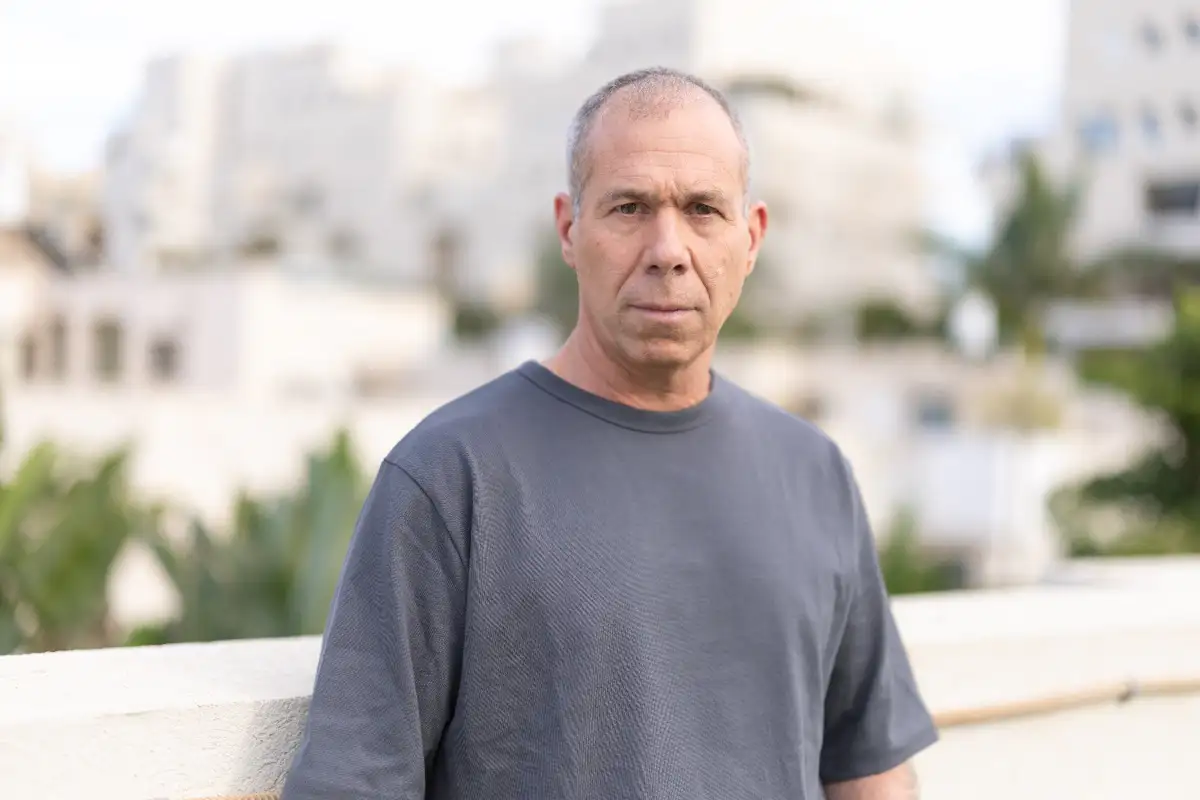 Avi Gil | Photo: Micha Brickman
Gil was there. He served under the Bennett-Lapid government, during which he was appointed military secretary. He was there through the turbulent months of the judicial overhaul. He was there when the security establishment warned the prime minister that something terrible could happen. He was there on the night of October 7, that morning and throughout the months that followed. He was as close to the prime minister as anyone could be, fully entrusted with his most sensitive secrets.
The military secretary serves as the link between the prime minister and the Defense Ministry, the Israel Defense Forces, the Shin Bet security agency, the Mossad, the Israel Atomic Energy Commission and several other organizations and individuals. He is also generally the prime minister’s confidant for special assignments. He attends every discussion and meeting, has access to all relevant material and participates in every consultation. He is the prime minister’s eyes, ears and voice within the security establishment, and the security establishment’s eyes, ears and voice with the prime minister.
That makes Gil a crucial witness. He was there. He saw. He heard. If Israel ever establishes a commission of inquiry into the October 7 disaster, Gil will be among the first to appear before it. He will submit the notes he made in real time. He has documented everything since his days as a young officer in the Paratroopers Brigade, and continued doing so until his final day in uniform.
When he left his post, he made sure not to take any classified material home. But the details were comprehensively documented, with references to the relevant records. For the first time, those records make it possible to establish who is telling the truth and who is lying about the fundamental questions that have dominated Israeli public debate for three years.
A gatekeeper
Gil took up his post in July 2021. He describes his working relationships with Naftali Bennett and Yair Lapid as professional. When Benjamin Netanyahu returned to office in late December 2022, Gil began working for him. Two weeks later, Herzi Halevi became IDF chief of staff. At their very first meeting, Netanyahu informed Halevi that he intended to replace Gil.
“I don’t know why. Maybe he thought I was identified with Bennett and Lapid.”
In mid-February, Netanyahu again asked Halevi to replace Gil. Halevi replied that Gil still had another year and a half left in the position. Netanyahu suggested interviewing several candidates, with Gil among them.
“On February 19, I went in to see him. I asked that we be alone. I told him I understood that he wanted to replace me, and that I wanted to say a few things. I said I had come to the Prime Minister’s Office to serve the institution of the prime ministership. From the day Bennett left and Lapid took over, Bennett was no longer relevant to my job. There was one prime minister, and his name was Lapid. And from the day Lapid left and Netanyahu took over, there was one prime minister, and his name was Netanyahu. I told him that if he decided to keep me, I would put my ego aside and gladly accept. But regardless of his decision, I had no intention of leaving before May 18.”
Why May 18?
“Because that was the date of the Jerusalem Flag March. It was an extremely sensitive event, and I had been coordinating the preparations with all the relevant parties. I didn’t think it would be right to experiment with replacing the military secretary at that particular moment. In any event, I told him I would respect whatever decision he made. And that was the end of the conversation.”
And you stayed.
“A few weeks later, someone from the Prime Minister’s Office contacted me and asked why, when I commanded the IDF Officers’ Training School, I had brought Breaking the Silence there. I immediately understood that someone was digging into my background. I replied that the story was not only untrue, but the exact opposite of what had happened.”
What actually happened?
“When I commanded the Officers’ Training School, I initiated visits by officer cadets to Hebron. Until then, the identity and heritage program had begun with a tour of the Armon Hanatziv area in Jerusalem. I told them that if we were dealing with identity, we should start at the Tomb of the Patriarchs. They told me that wasn’t possible because it wasn’t a consensus issue. I replied that Hebron was part of the State of Israel under a government decision, and that we would go there. Because the Education Corps opposed it, I contacted Rivka Hever, the wife of Zambish (settlement leader Ze’ev Hever). Through her nonprofit organization, we arranged transportation and began bringing cadets to Hebron.
“The only thing I requested was that they receive lessons there about values in combat, about what it means to fight in such a complicated environment. Among other things, I mentioned that the first testimonies collected by Breaking the Silence had originated there. Someone published a claim at the time that ‘Avi Gil is an excellent officer who hates religious people.’ I threatened to sue for defamation, he apologized, and that was the end of it. When Netanyahu’s office asked me about it, I told them the story. A few days later, Herzi informed me that I was staying.”
What was it like working with Netanyahu?
“It’s a position of trust. Not trust toward the prime minister, but trust toward the State of Israel. It’s a job that constantly requires you to strike a balance and remain balanced yourself. And it’s a job in which you have to remember that although you are the prime minister’s military secretary, you are only the prime minister’s military secretary. You don’t replace the heads of the security organizations. You’re the glue that holds them together and makes sure they work.”
Did you have disagreements?
“Of course. That’s part of the job. And not just because I came with baggage from having worked for Bennett and Lapid, with whom I also argued quite a bit. Disagreement is part of the job.”
“I realized there was no going back”
Gil completed a three-year term as military secretary. The rupture in his relationship with Netanyahu came in February 2024, following a report by Nadav Eyal in Yedioth Ahronoth that Gil had visited the home of opposition leader Yair Lapid, the former prime minister for whom he had previously worked, early in the war.
Gil was surprised when Netanyahu questioned him about the visit the following day. Now, for the first time, he reveals what really happened.
“On October 7, in the afternoon, Lapid came to the prime minister for a briefing. At the end of the meeting, he told Netanyahu, ‘Listen, this is a war. It’s not some minor intelligence briefing. I want to receive a briefing every two days.’ Netanyahu replied, ‘No problem. Avi will brief you.’ That immediately put me on alert. As soon as Lapid left, I told Netanyahu, ‘Prime Minister, why is this a good idea? You know how you are. He was my previous boss. Let someone else brief him.’ He answered, ‘You’re going to brief him.’
“Netanyahu put me on the front line more than once. I spoke to journalists and politicians at his direction, and I also briefed Lapid as instructed. I never contacted Lapid directly. Each time, my office requested authorization from the chief of staff’s office. Once approval was granted, I gave Lapid a short, unclassified briefing through a particular app. Afterward, I reported back to Netanyahu.
“On Thursday, October 12, I briefed Lapid and then reported to Netanyahu. He asked how I was communicating with Lapid. I told him it was through an app, and he responded, ‘What do you mean? Either on the secure red phone or face to face.’ Lapid didn’t have a red phone. So two days later, when we were on our way to the Gaza border communities, I stopped at his house with my secretary and driver. We delivered the phone, gave him a brief update and continued south.
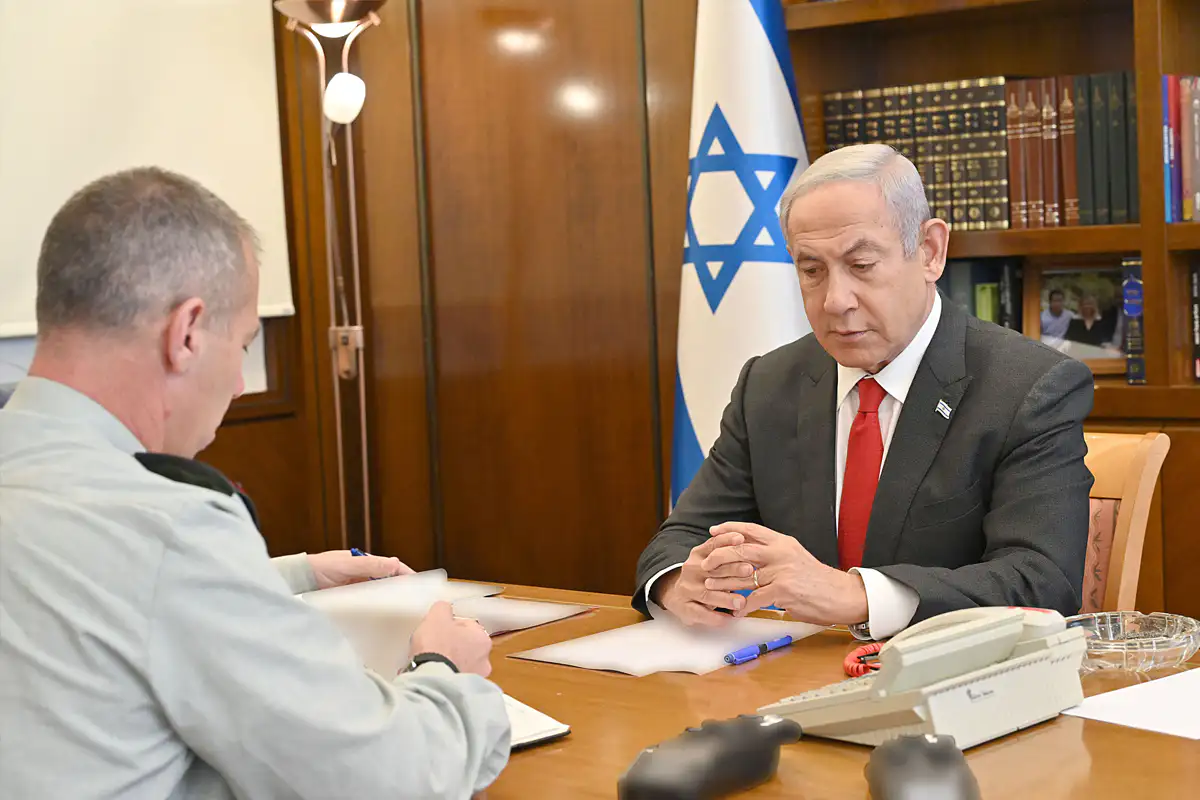 Gil and Netanyahu | Photo: Kobi Gideon/GPO
“The following day, at the Kirya military headquarters in Tel Aviv, we went down to a shelter during a rocket alert. There are two small rooms there for the security guards, and the prime minister was in one of them. He asked his chief of staff to leave, looked up at me and said, ‘Were you sitting in Lapid’s house yesterday?’ I told him yes, that he himself had instructed me to give Lapid a red phone so I could update him, that nothing had been done secretly, but openly, with a driver and secretary, on our way to Gaza. He answered, ‘Fine.’ And that was it.
“I shared the incident with three people: my wife, Liron, and two other people close to me because of my position. It was unusual, and I have no idea whether someone was following me, or Lapid, or whether security guards were talking. But clearly someone reported it. When it was published several months later, I asked to speak with Netanyahu. I told him someone was targeting me.
“I offered to undergo a polygraph examination at an institute of his choosing, to make it absolutely clear that nothing had leaked from me. I made it clear that if I was found to have lied, I would resign that very day. But if I was proven right, I expected an apology from him.
“He stood up, shook my hand and said everything was fine. But I understood that there was no going back. From that moment, efforts to replace me began moving forward.”
The mistaken doctrine
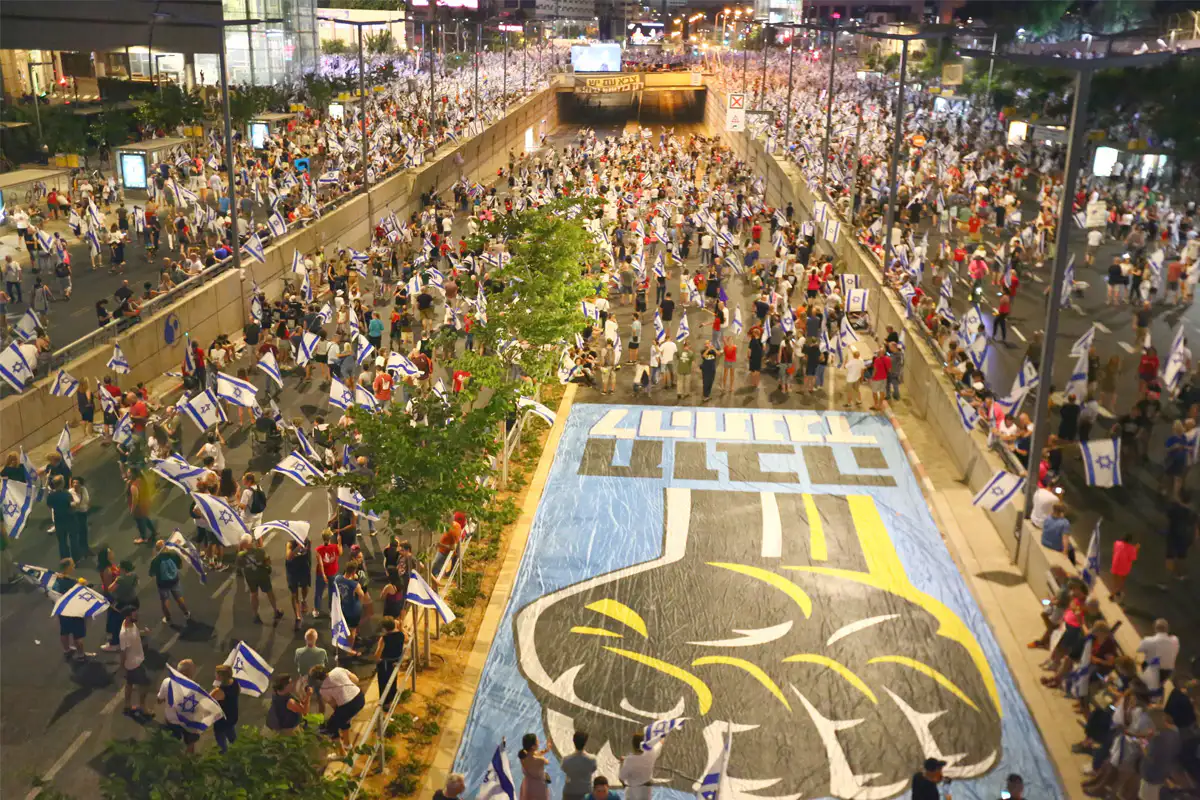
The months before the war were exceptionally tense. The government was advancing its judicial overhaul. The security establishment began warning that national resilience was fraying and that Israel’s enemies were detecting weakness. Public protests grew larger from one Saturday night to the next, and reservists began threatening not to report for duty.
Netanyahu, Gil says, knew everything. He read all the intelligence and heard all the assessments. Gil also made a point of regularly conveying the situation to him.
“Something extraordinary happened here,” he says. “On one hand, Netanyahu was aware of the threats facing Israel. He talked about them. He declared that the defense budget needed to be increased. And on the other hand, he fired the defense minister.”
What did he tell you?
“We had dozens of conversations, maybe hundreds. I tried to change the narratives, to explain to him that a 52-year-old man isn’t a draft dodger. He’s a volunteer who has decided to stop volunteering because he feels the state has broken its bond of trust with him.”
And amid all this, warning letters began arriving. For example, the four letters sent by Amit Saar, then head of the IDF Military Intelligence Research Division. How did Netanyahu react to them?
“There was a particular moment, and I can’t pinpoint exactly when, but I estimate it was sometime in February or March, when the prime minister began believing that everything was personal and directed against him. That everyone was plotting against him, and that the army was part of it. I assume he thought the warning letters were part of the same effort to pressure him. After all, he said so himself in an interview on Channel 14, when he described the warnings as exaggerated.”
Those letters, along with the many other warnings issued around the same time, did not explicitly predict a Hamas attack on the scale of October 7. But they did address the erosion of Israeli deterrence and the growing sense among Israel’s enemies that they had greater freedom to act against it.
Several incidents during that period should also have set off alarm bells: a failed Hezbollah terrorist attack at Megiddo Junction, where the explosive device detonated; a foiled attempt to assassinate former defense minister and IDF chief of staff Moshe (Bogie) Ya’alon, involving an explosive device that detonated in Tel Aviv’s Yarkon Park; Hezbollah’s establishment of a tent in northern Israel; and terrorist attacks in Judea and Samaria authorized and directed by Hamas’ command headquarters in Gaza.
Shin Bet chief Ronen Bar recommended taking action in Gaza, but his proposal was rejected. IDF Chief of Staff Herzi Halevi recommended an overt response in Lebanon to restrain Hezbollah. Netanyahu refused and authorized only a covert response, below the threshold of escalation.
“Netanyahu said explicitly at the time that what mattered to him was normalization,” Gil says, referring to diplomatic relations with Saudi Arabia. He believed that if the Arab world moved closer to Israel, the Palestinians would follow. That was the lens through which he viewed reality. And whenever something came up, there was an explanation for it. In any case, he thought everything was intended to influence him over the legislation, and that the security establishment was simply exaggerating things. The warnings never accumulated into a larger picture in his mind.”
How close were we to an agreement with Saudi Arabia?
“I’m not going to get into details. It’s a sensitive matter. I’ll only say that I think we were closer than people realize, even though we were only one side of a triangle that also included the Saudis and the Americans. At first, Netanyahu wanted to manage the process within a very small circle. I insisted that the IDF and the defense minister be brought into the process, and that’s what happened.”
Why would he want to keep them out? Suspicion? Credit?
“I don’t know, and it doesn’t matter. You can’t run a process like that solely with the Mossad and the National Security Council. It’s not serious. The defense minister and the military are important players, and they would find out about it anyway.”
Divide and rule
Gil witnessed at close range, sometimes serving as a human lightning rod, the mounting tension between Netanyahu and the heads of the security establishment. He describes numerous meetings and conversations, some of them difficult. Netanyahu accused the security chiefs of politicizing their work and deliberately trying to derail the judicial legislation. They responded that they were protecting Israel’s security.
Gil says Netanyahu was regularly presented with the gaps in the military’s readiness and operational capabilities. They discussed numbers of aircraft and pilots. They discussed deliberate efforts to drive a wedge between pilots and ground crews. They discussed the fact that Israel’s enemies could see and hear what was happening and might exploit the situation.
“Netanyahu kept saying that a handful of billionaires were fueling the protests and manipulating people’s minds. I told him, ‘Prime Minister, these aren’t a few billionaires. These are tens of thousands of people, and they’re among the cream of Israeli society. This is the Startup Nation. This is the cyber industry you’re so proud of. These aren’t a handful of subversives.’ Sometimes I felt he wasn’t really listening.”
Did he stop listening to the security chiefs?
“No. He always listened. But he met them separately. He spoke with all of them, but separately. He refused to meet them together, and it was clear that he was already deeply entrenched in the feeling that it was all directed against him, that it was political rather than professional.”
On the eve of the Knesset’s passage of the law restricting the judicial system’s use of the reasonableness standard in July 2023, Halevi asked to meet Netanyahu. At the end of their meeting, Netanyahu asked the chief of staff to meet Shas Chairman Aryeh Deri and Justice Minister Yariv Levin.
“I don’t know whether he genuinely wanted to influence them and soften the legislation, or merely wanted the chief of staff to see him as someone trying to influence them.”
Halevi requested another meeting with Netanyahu. It was scheduled for Sunday.
“We spent the entire Saturday on the red phone,” Gil recalls. “We discussed numbers. X out of Y weren’t operationally fit, and what that meant for the rate of airstrikes if we had to fight a war. These were figures you couldn’t ignore. On Sunday, Netanyahu was hospitalized, and the meeting with Herzi was postponed. Herzi asked me to deliver a document to Netanyahu. Its main points were that the enemy was detecting our weakness and seeing that the bonds holding Israeli society together were coming apart.
“At 8 p.m., I arrived at the hospital to see Netanyahu. He read Herzi’s letter and associated it with Kaplan (Street in Tel Aviv, the focal point of the anti-government protests). That was his mindset. Then Ronen spoke with him on my red phone. It wasn’t a short conversation. He told Netanyahu that this was a watershed moment.”
He delivered a “warning of war.” Those are the words Ronen Bar uses.
“Correct. He told Netanyahu it was a warning of war, but not a conventional warning with a specific time and place. He said he couldn’t say when, where or how, but that there was a very significant upheaval affecting national security.”
How did Netanyahu respond?
“Not in any particular way. He was also weak after a medical procedure.”
Let me ask it differently. How should any prime minister respond when receiving a warning of war? After all, this was unprecedented.
“The expectation is that the prime minister would immediately convene a meeting. To get the broader picture, examine what had happened over those months, go through each front and assess what we’d experienced there, and order a fresh review of the raw intelligence to determine whether we’d understood it correctly.
“Netanyahu refused to do that. To hear everyone. Not separately, together. I suggested several times that he sit down with the three heads of the security organizations. On one occasion he considered it, then refused.
“I told him it wasn’t political. He didn’t want to.”
Would that have shaken someone out of the prevailing doctrine?
“What matters is policy. Policy is the implementation of a national security doctrine, whether written or unwritten, built on several foundations: security, economic, social and diplomatic. The purpose of all of them is to bring resilience and prosperity to the country’s citizens. No country in the world goes to war over every little thing. Not everyone is like Itamar Ben-Gvir and the politicians of Otzma Yehudit, who see every problem as a nail simply because they have a hammer.
“Incidentally, that’s why the prime minister avoided bringing quite a few matters before the Diplomatic-Security Cabinet. Everything leaked from there, and the discussions weren’t always serious. Early on, he would even tell Ben-Gvir, ‘You don’t understand these things.’
“Israel’s policy is that you don’t go to war over every incident. Did that have an effect? Did some people in the security establishment become so attached to that approach that avoiding war at all costs became part of their agenda? Yes, there were people like that. But that was the policy. And when you combine it with the deception Hamas created, maintaining restraint and making us believe it had been deterred, it produced a mistaken doctrine. The entire system was caught up in it, with a constant fear of miscalculation.”
Explain.
“This was discussed extensively before October 7. Hamas suspected we were planning an operation, and there was concern it might interpret any unusual Israeli action as preparation for that operation and launch a preemptive attack. So many of the decisions that were made were intended to avoid giving Hamas an excuse to act. That was constantly on the table. It was part of the policy.”
Netanyahu claims that the security establishment made recommendations and he merely approved them. Security officials say it was his policy and they implemented it. What’s the truth?
“This new invention of separating leadership from responsibility is absurd. I’ll answer from the world I know.
“Suppose I’m commanding Duvdevan (an elite IDF undercover counterterrorism unit), and during operational planning I decide to take a particular route despite my subordinates recommending otherwise. The operation fails. I’m responsible. Now a second scenario: I accept my subordinates’ recommendation, change the plan, and the operation fails. I’m responsible. So I don’t understand this debate.
“You’re the leader. If it was your decision and you succeeded or failed, it’s yours. And if you followed a course of action others recommended and it failed, it’s still yours. The decision is yours and the responsibility is yours. It’s a pointless debate.”
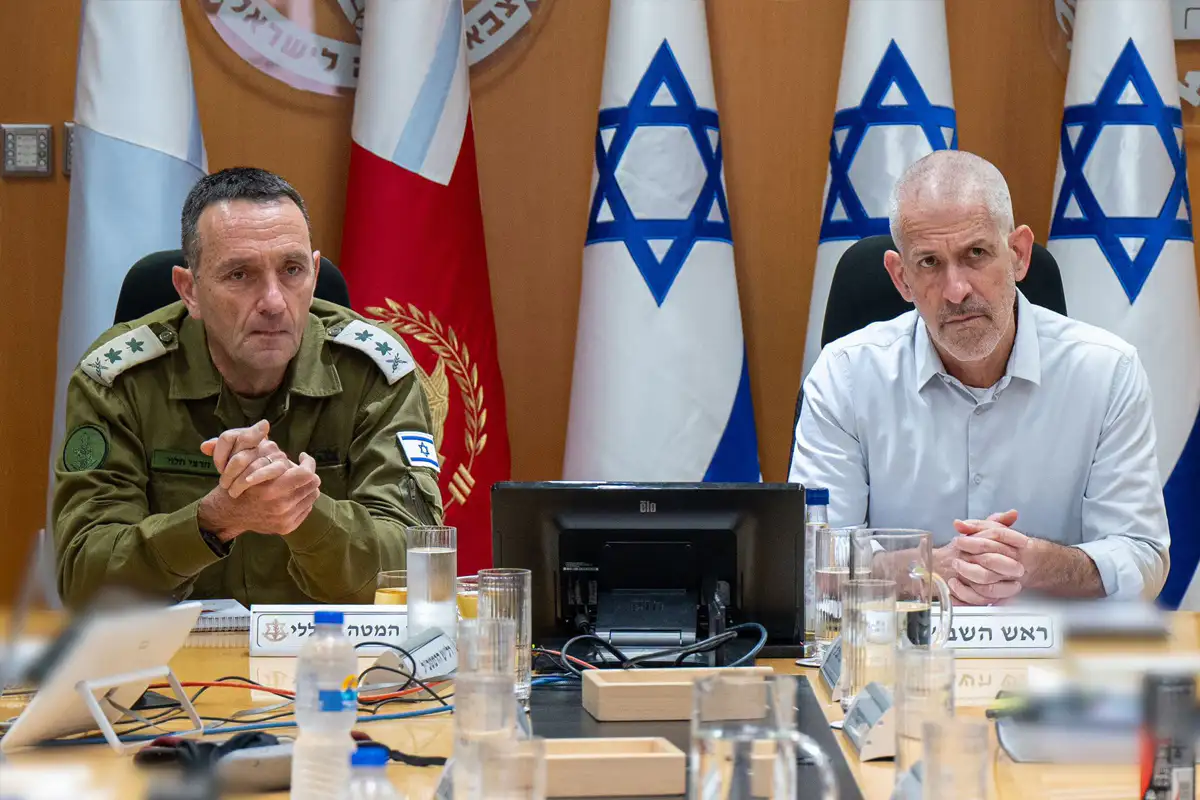 Ronen Bar and Herzi Halevi | Photo: IDF Spokesperson’s Unit
Were there recommendations to eliminate Hamas’ leaders?
“From time to time, recommendations were made for high-profile offensive operations that the prime minister did not approve. At almost every meeting, Ronen Bar presented the Shin Bet’s progress in tracking and building the intelligence case against Yahya Sinwar and Mohammed Deif. He showed surveillance footage of them and explained the intelligence gaps that remained. He recommended what he believed should be done. More than once, he recommended taking action. Herzi also made recommendations concerning Lebanon.
“I remember at least three occasions when Ronen recommended eliminating operatives in Gaza who were directing terrorism in Judea and Samaria, and preparing scenarios that went as far as targeting Sinwar and Deif. Those recommendations were not implemented, again because of the policy. It was said that there was concern it would lead to escalation. That it wasn’t the time for another round of fighting. That normalization was just around the corner.”
Netanyahu says Ronen Bar is lying. So I’ll ask again: Were there recommendations to carry out targeted killings in Gaza?
“I’m not a judge. I came here to lay out the facts. The answer is yes, with three exclamation marks. Was it the right thing to do? I don’t know. Did the prime minister have the right to reject the recommendation? Yes. Why are they now smearing the heads of the security organizations?
“That’s one of the reasons I decided to come forward and speak, to explain what really happened. Because you can’t submit partial documents to the state comptroller and use them in the Knesset when they don’t reflect reality.”
Were lies presented to the state comptroller?
“The lines presented to the state comptroller are authentic, but they aren’t the complete paragraphs or the documents in their entirety. It’s as though I showed you an elephant’s trunk without letting you see the elephant in the room.
“I would have been proud if the prime minister had said, ‘I decided not to do it because I saw broader national and diplomatic interests.’ That’s legitimate. What’s not legitimate is taking reality and twisting it to smear the heads of the security organizations. Calling the head of the Shin Bet a ‘criminal’ crosses a fundamental line. The Shin Bet chief, the IDF chief of staff and the head of Military Intelligence can all be judged for their mistakes and failures. But you cannot accuse them of treason.
“I state unequivocally: There was no betrayal. Anyone making such a claim should present evidence and prove it. If they can’t prove it, they’re betraying their duty, unraveling and damaging the fabric of Israeli society.”
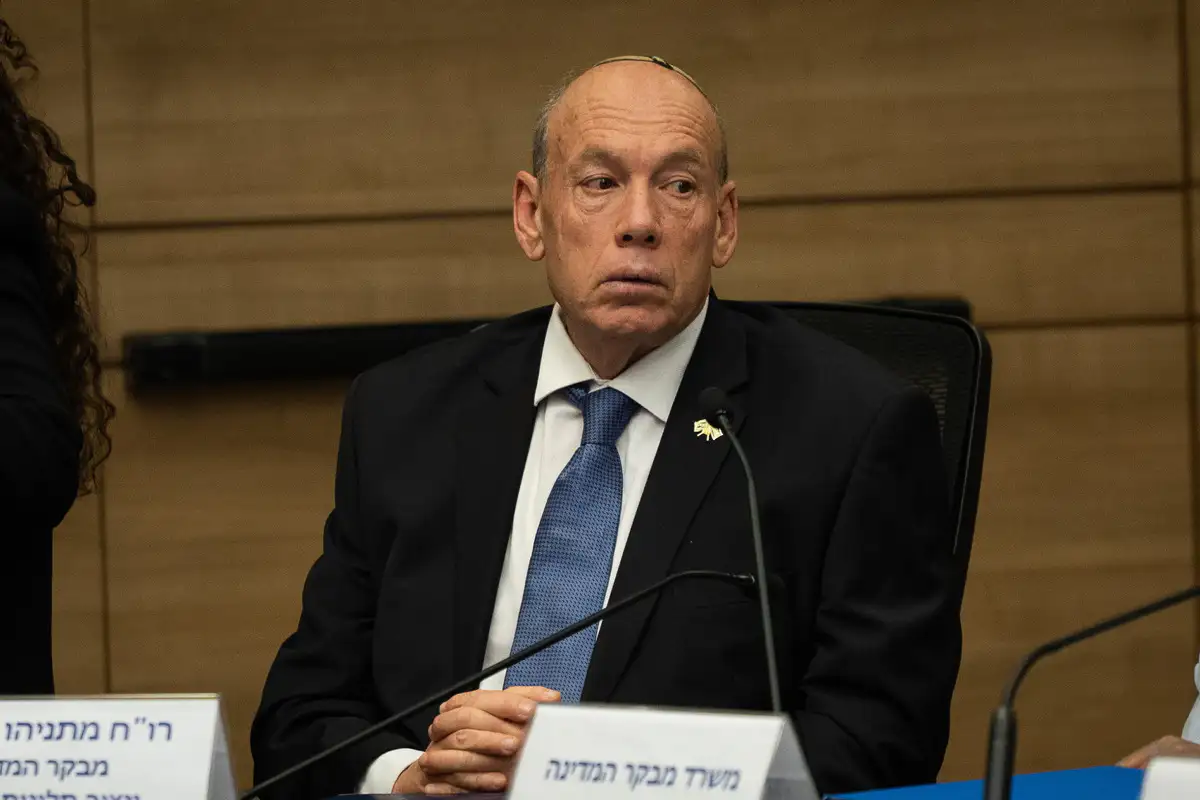 State Comptroller Matanyahu Englman | Photo: Oren Ben Hakoon
Did the Prime Minister’s Office encourage the betrayal conspiracy theory?
“Perhaps someone threw it around occasionally. I never heard the prime minister speak about it directly.”
Then where did it come from?
“It allows people to explain why the political leadership bears no responsibility, because the security establishment betrayed it. If there was betrayal by the security establishment, if there was a putsch, then the political leadership doesn’t bear an ounce of responsibility. After all, the prime minister led a policy, and he bears responsibility for it. But the moment you say there was betrayal, and amplify that claim, you disconnect the political leadership from October 7.
“It happened because people betrayed us. They wanted to bring down the government. They betrayed the government and the prime minister. It’s easy. After all, Tally Gotliv, who keeps amplifying this betrayal claim, has access to so much intelligence and information. And yes, of course I’m being sarcastic. What have we become? Someone sits there shouting all day, and suddenly she’s the great guiding light of humanity.”
What happened at 6:12 a.m.
On the night of October 7, Gil was asleep at home. At 6:12 a.m., the Shin Bet chief’s chief of staff woke him with a WhatsApp call and asked him to connect to the secure red phone. Gil asked whether they could speak on WhatsApp instead. He was told they could not. He asked what it was about. The answer was a single word: “South.” Five minutes later, the chief of staff called again.
“At 6:17, he called on the red phone. We spoke for five minutes. He told me that unusual SIM cards had been activated, but that this had happened before. That some senior Hamas figures had gone underground, but others hadn’t, including Sinwar. And that Islamic Jihad was also asking Hamas what was going on, whether something was happening, and Hamas wasn’t answering them.
“He added that another situation assessment would be held later, and that the Shin Bet chief had ordered a Tequila team (a rapid-response counterterrorism unit) to deploy south. I replied that I would speak with the IDF chief of staff’s chief of staff. It took a few minutes before we managed to connect, and just as our conversation began, the rocket fire started.
“We both immediately understood that something unusual was happening. I hung up, called Netanyahu and said, ‘Prime Minister, we’re at war. Hamas is firing on a massive scale, reaching as far as the Sharon region.’ I added that I was connecting this to the intelligence I’d received a few minutes earlier, and that Hamas had launched a very large surprise attack. I told him I’d gather information and get back to him. The call lasted less than a minute.”
What did he say?
“I wasn’t expecting him to answer. It was clear to both of us that the purpose of the call was simply to inform him. Anyone who thinks he would start issuing orders at that point doesn’t understand the situation. After we finished, I made several phone calls.
“Meanwhile, I asked my office to connect me to the prime minister on the red phone. That’s a process that takes a few minutes. The prime minister doesn’t have a red phone next to him. At 6:40 a.m., my office connected us on the secure line, and I had the now-famous conversation with him. I gave him a report based on what I understood at that point, and told him I was preparing to leave for the Kirya. I left home at 7:02 a.m. and arrived at the Kirya a few minutes later. On the way, I called in my staff.”
 Nova festival. Photo: AFP
The chief of staff and Shin Bet chief are being accused of failing to call Netanyahu directly to update him.
“That’s not how it works. You don’t just call him. The head of a security organization doesn’t call the prime minister directly. The IDF chief of staff, Shin Bet chief, Mossad director, everything goes through the military secretary. That’s proper procedure.
“The military secretary also needs to understand what the matter is about. He needs to prepare the ground. Sometimes the Shin Bet chief wants to deliver a warning, and the military secretary needs to check whether the Mossad director might see things differently. So the procedure is that the head of an organization requests a conversation with the prime minister. We ask what it’s about, clarify the matter, and then connect the prime minister.”
Should they have called you?
“There are two channels: Intelligence flows, and commander talk. The intelligence channel has procedures and systems through which information is transmitted. All the intelligence that reached the senior officials’ offices was also transmitted to the Prime Minister’s Office through the relevant databases and the WhatsApp groups associated with the red-phone system. We received all the intelligence reports accumulated during the night. Anyone who says information was concealed is lying.”
At 3:55 a.m., your intelligence assistant was woken up.
“He received a call from the intelligence operations center, alerting him to a message containing several elements. Suspicious SIM cards had been activated in the Gaza Strip, but it wasn’t considered unusual because it had happened before. Hamas was currently displaying routine patterns of activity. And another situation assessment would take place in the morning.
“The intelligence assistant, a professional, skeptical and serious officer, read the message and thought to himself that if it said ‘routine’ and ‘not unusual’ three times, and if another situation assessment wasn’t scheduled until morning, then it wasn’t urgent either. So he decided not to wake me. Was that legitimate? Given the information available, I think so. If he had woken me, would I have woken the prime minister? I don’t know.”
How did you normally communicate with the prime minister?
“If something important needs his approval, or if there’s something important he needs to know, I wake him. There had been similar incidents in Gaza in the past that weren’t reported in real time because they were thought to be exercises, and they turned out to be exercises. This time, the deception succeeded and the system failed.”
But at a certain point, Ronen Bar decided to send a Tequila team south. In other words, he did see something unusual.
“That’s why he also ordered that I be woken. That happened at the end of his situation assessment, at 5:30 a.m. His chief of staff was busy with other matters and called me only 42 minutes later. But Ronen Bar did give the order to wake me.”
Netanyahu claims that if he had been woken, he would have issued instructions that would have changed the situation. You were beside him in quite a few similar situations. Did he ever issue instructions during a brief telephone call that contradicted the assessments or recommendations of the IDF and Shin Bet leadership?
“It never happened that the prime minister issued an instruction contradicting the entire security establishment in a short phone call. But let’s assume he had been woken up. He would have heard from all the heads of the organizations that this was their operational interpretation of the intelligence: There were unusual signs, but they didn’t point to escalation, and they’d ordered heightened vigilance.
“I believe he would have backed their decisions and requested another situation assessment in the morning. Oh, and he would have instructed everyone to avoid a miscalculation, as he always did.”
According to the prime minister’s account, he didn’t arrive at the Kirya until 8:30 a.m. There was a war underway, chaos everywhere. Why did it take him two hours?
“I don’t know. Ask him.”
Some claim he wasn’t functioning during those hours, or throughout the first few days.
“I’m not a psychologist, and I don’t conduct assessments of how prime ministers function. I’m a military secretary who presents the facts, nothing more. People can analyze the schedule and ask whether he functioned well or not. Everyone can decide for themselves.”
Netanyahu’s people claim the IDF chief of staff and Shin Bet chief weren’t functioning that day.
“Just as I refuse to grade the prime minister’s performance, even though I was with him and beside him, I don’t think it’s appropriate for others to grade someone else’s performance. I heard Topaz Luk commenting on the matter. He didn’t see the IDF chief of staff or the Shin Bet chief until the evening, so I have no idea what he’s talking about. And in general, it would be better for everyone to examine their own performance.”
Netanyahu attacks the chief of staff and Shin Bet chief for failing to update him during the night. Why didn’t he speak to them in the morning, once the war had broken out?
“I don’t know. He didn’t ask.”
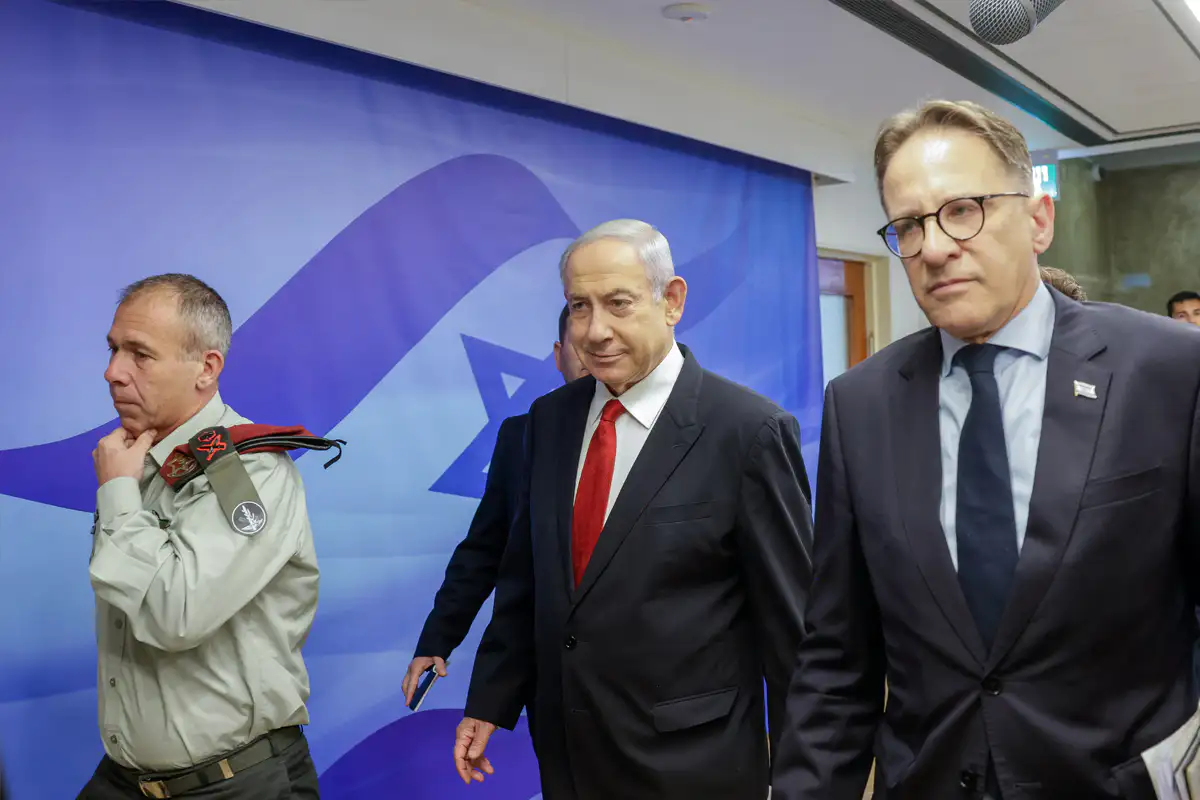 Former chief of staff Tzachi Braverman with Netanyahu and Gil | Photo: Mark Israel Sellem
A black box
In recent weeks, numerous reports have emerged about warnings Netanyahu allegedly received from foreign officials, including United Arab Emirates President Mohamed bin Zayed Al Nahyan and Egyptian intelligence chief Abbas Kamel. Gil says he is unfamiliar with those incidents. He was not in the office on the day of the purported conversation with bin Zayed, and has no idea whether such a conversation took place in his absence.
Could such a conversation have taken place without your knowledge?
“I don’t know. It’s possible.”
Is it proper for a conversation like that to take place without the military secretary being present or even knowing about it?
“In my view, no. Conversations like that have security implications that the heads of the organizations also need to know about. But there were incidents I wasn’t aware of. For example, the prime minister met Ofer Winter or Yitzhak Brik about military matters without my knowledge.”
Was there an Egyptian warning?
“I’m not familiar with one, but let’s talk about facts. An Egyptian intelligence aircraft landed in Israel and was here for a little over 60 minutes. That’s a fact. An aircraft like that doesn’t come for no reason. Either someone arrived on it to meet someone, or someone came to deliver something, a message, an envelope. Someone met someone or received something and didn’t report it.
“And if that happened, and it appears that it did, it absolutely should have been reported. Whoever met someone or received something is still concealing it today. And that’s another reason we need an investigation. Because something happened here, and the truth must be established. I hope it eventually comes out.”
Two weeks into the war, Gil realized that Netanyahu’s associates were carrying out what he describes as an “excessive collection of materials.”
“They were collecting stenographic records, transcripts and other documentation, mainly from the Bennett-Lapid government. This hasn’t been reported until now. The collection was intensive, and I decided to contact Attorney General Gali Baharav-Miara. I told her we were at war, that I wasn’t looking for people to blame and didn’t want this to become personal. I asked her to clarify the rules governing what was and wasn’t permitted when handling official transcripts. And that’s what she did.”
Who was collecting the material?
“People reported it to me, and I also saw the prime minister’s chief of staff walking around with piles of documents. That’s why the attorney general clarified the instructions. Everyone understood.”
What happened in January?
“We were between two meetings when one of the stenographers came into my office, closed the door and told me that the prime minister’s chief of staff had asked her for the transcript of my conversation with the prime minister on October 7 at 6:40 a.m. He asked her to change the time to make it appear that the conversation had taken place at 6:29 a.m. She told him that was a mistake and that the conversation had taken place at 6:40.
“He replied that he’d been on the call and that the actual time was 6:29. She continued to challenge him, telling him there was a digital timestamp showing that the call took place at 6:40. He told her, ‘Did you hear what I said?’ Then he took his blue marker and simply marked ‘6:29’ on the transcript. Immediately afterward, she came to me and told me what had happened.”
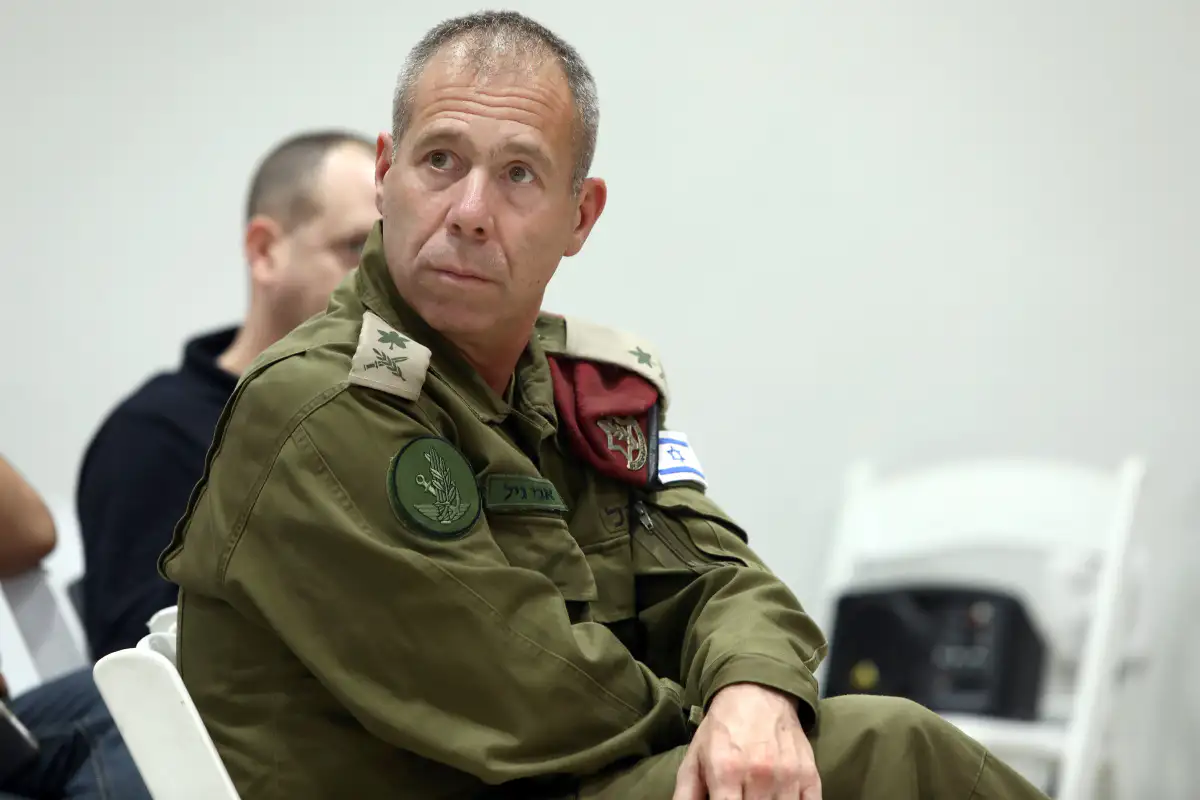 Avi Gil during his tenure as military secretary | Photo: Gideon Markowiz
What did you do?
“I took a piece of paper and wrote a handwritten note to the attorney general. I added that I had no idea why it had been done, but that it was criminal. Remember, this happened several months after the rules had been clarified, meaning the chief of staff knew he was doing something forbidden.”
Can you speculate about why he did it?
“First of all, we’re talking about a pattern of criminal behavior by people who think they’re allowed to do anything they want. And the chief of staff behaved like someone who believed he could do anything. It’s possible they were already working on the narrative we’re seeing today, that the prime minister was the only person functioning when the chaos began, because, supposedly, he issued all the necessary instructions from the very first second. That’s a serious scenario, but a plausible one.
“And there’s another scenario that’s extremely serious.”
Which is?
“Eleven minutes passed between the first and second calls. During those 11 minutes, I received intelligence and information that I didn’t have during the first call, intelligence and information that I passed on to the prime minister during the second call. If they can establish that this intelligence and information were already available at 6:29, that would mean someone knew even then what was about to happen. In other words, there had been a betrayal.”
Gil reported these incidents in real time. They became public only after he retired. Since then, someone has repeatedly tampered with his Wikipedia entry and posted false information about the affair, including a claim that police determined no falsification had occurred.
“There was falsification. The chief of staff falsified a transcript after he’d already been given a yellow card. That’s a fact.”
Should we assume that other transcripts were falsified as well?
“Any commission of inquiry that’s established must insist on receiving the complete recordings, not the transcripts, because I don’t know what was changed. I would expect the state comptroller to do the same, rather than rely on excerpts from transcripts supplied by the prime minister.”
Netanyahu claims the document he submitted to the state comptroller represents the complete truth.
“The document submitted to the state comptroller doesn’t reflect what actually happened. It’s part of the truth, but not the whole truth.”
Do you think Netanyahu knew?
“I find it hard to believe he didn’t. And even if he didn’t, that’s extremely serious. Narratives don’t come out of nowhere, someone is responsible for them, someone approves them. There was probably a discussion, and someone clearly thought it was important to change the time of that call.
“But let’s assume he didn’t know. Once I reported it, he knew. What did he do about it? Nothing.”
Gil refuses to address the question of when Netanyahu’s office began constructing narratives and identifying people to blame. A story circulating in the IDF concerns an incident allegedly involving several of the prime minister’s closest advisers as early as the second day of the war, October 8. According to the account, they gathered in a small room inside the Kirya’s underground command bunker and discussed the issue, including the names of senior security officials. They did not know that everything said in the room was being recorded.
“No comment,” Gil says.
Responsibility
Gil remained at Netanyahu’s side during the first months of the war, until his retirement in May. He witnessed the moves, the dilemmas and the decisions. When asked whether Netanyahu hesitated, as his opponents claim, or acted decisively, as his supporters insist, Gil smiles.
“That’s a debate that’s good for TikTok,” he says. “All this talk of ‘I ordered’ and ‘I instructed’ is ridiculous and far removed from reality. And that’s a good thing. I want a prime minister who thinks seven times before launching an attack or sending soldiers into battle. And I want that prime minister to know how to conduct a proper process of deliberation and decision-making, and ultimately make the right decision.
“All three prime ministers I worked for thought things through, examined the options, consulted others, hesitated, checked again and then made a decision. And I’ll say it again: That’s a good thing.”
Did Benny Gantz and Gadi Eisenkot contribute to the war cabinet, or did they do more harm than good, as people around Netanyahu now claim?
“Their contribution was immeasurable, they brought extraordinary value. And I’ll go further: Their presence was very convenient for the prime minister because they provided balance, because they were experienced and because they helped him think and make decisions.
“All that pompous talk of ‘We did this’ and ‘We decided that’ is good for the political base. In practice, I felt Netanyahu greatly appreciated what they brought to the table. And the fact is that he accepted their views on many occasions.”
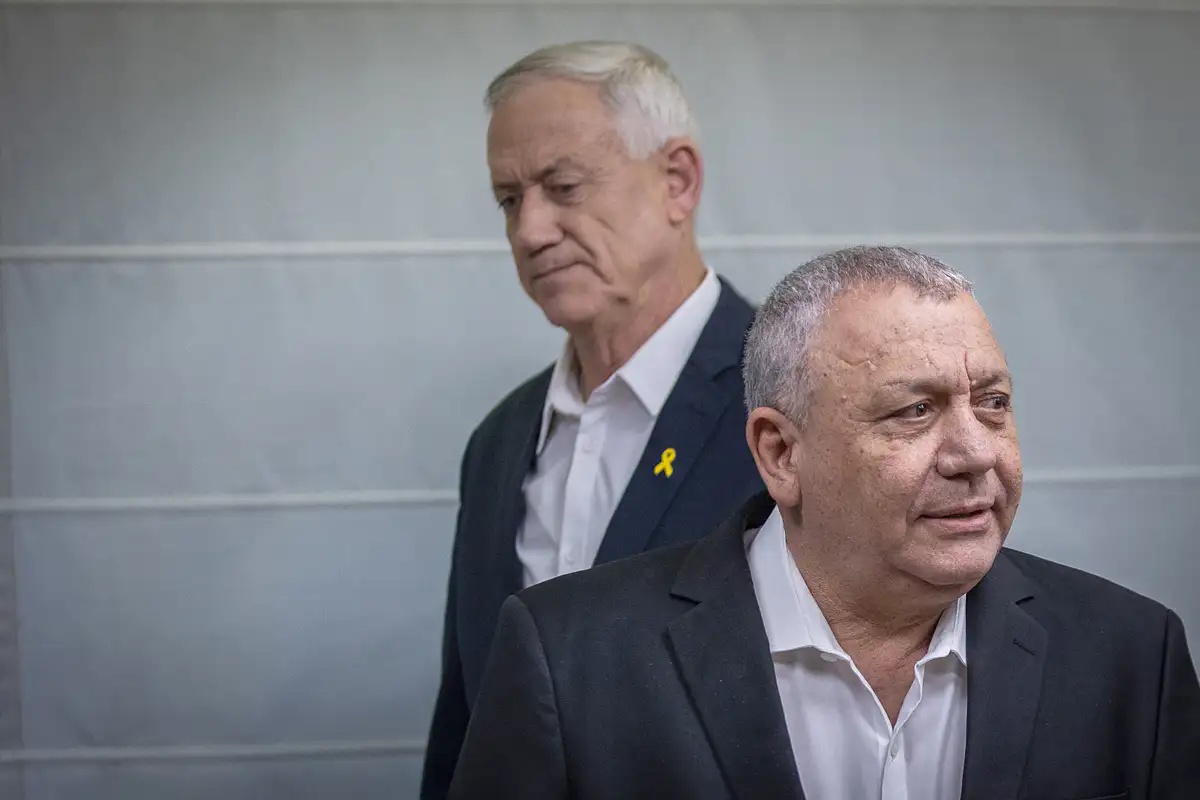 Gadi Eisenkot and Benny Gantz | Photo: Oren Ben Hakoon
Gil was the person who received the call informing him that Eisenkot’s son, Gal, had been killed in combat in Gaza in early December 2023. He was with the prime minister at the Northern Command headquarters, in the commanding general’s office, and went in to deliver the news. Netanyahu, he recalls, took it hard.
“He stepped backward a few paces and sat down. Notifications about casualties are always the hardest part of the job. In this case, because of the personal connection, it was especially difficult.”
Gantz and Eisenkot claimed that after the first hostage deal in November 2023, which secured the release of women and children, additional deals were torpedoed for political reasons.
“A prime minister operates within a triangle. At one corner is the national interest, at another the political interest, and at the third the personal interest. Netanyahu managed to get the first deal through by the skin of his teeth. I helped persuade ministers Bezalel Smotrich, Ofir Sofer and Orit Strock.
“They were concerned that Israel wouldn’t resume the war after the deal, and I told them that if that happened, I would resign. After that deal, the prime minister understood he no longer had a majority in the government, and the processes came to a halt.”
In other words, more hostages could have been brought home alive much earlier.
“Unequivocally, yes. We could have gone ahead with another deal and counted on Hamas to violate it, giving us a pretext to resume the war. There was even a document ready that Netanyahu had instructed me to present to the ministers and the cabinet. Then Smotrich went in to see him and told him that if he made a deal, he wouldn’t have a government. The prime minister instructed me not to present the document, and the deal was shelved.
“Legitimate? Illegitimate? People can argue about it, but that’s what happened. That’s politics.”
Did you feel politics played a major role in the conduct of the war?
“Of course. There was politics everywhere. Take humanitarian aid. We say we uphold humanitarian principles and don’t harm innocent people. And never mind the statements by ministers that caused us enormous damage internationally. The Israel Police were supposed to protect the tankers and trucks carrying supplies into Gaza, but the fact is that people managed to sabotage them again and again, with the support of the national security minister.
“And that’s just one example. Politics was always there. Of course, that was always true to some extent, but here it was more pronounced than ever.”
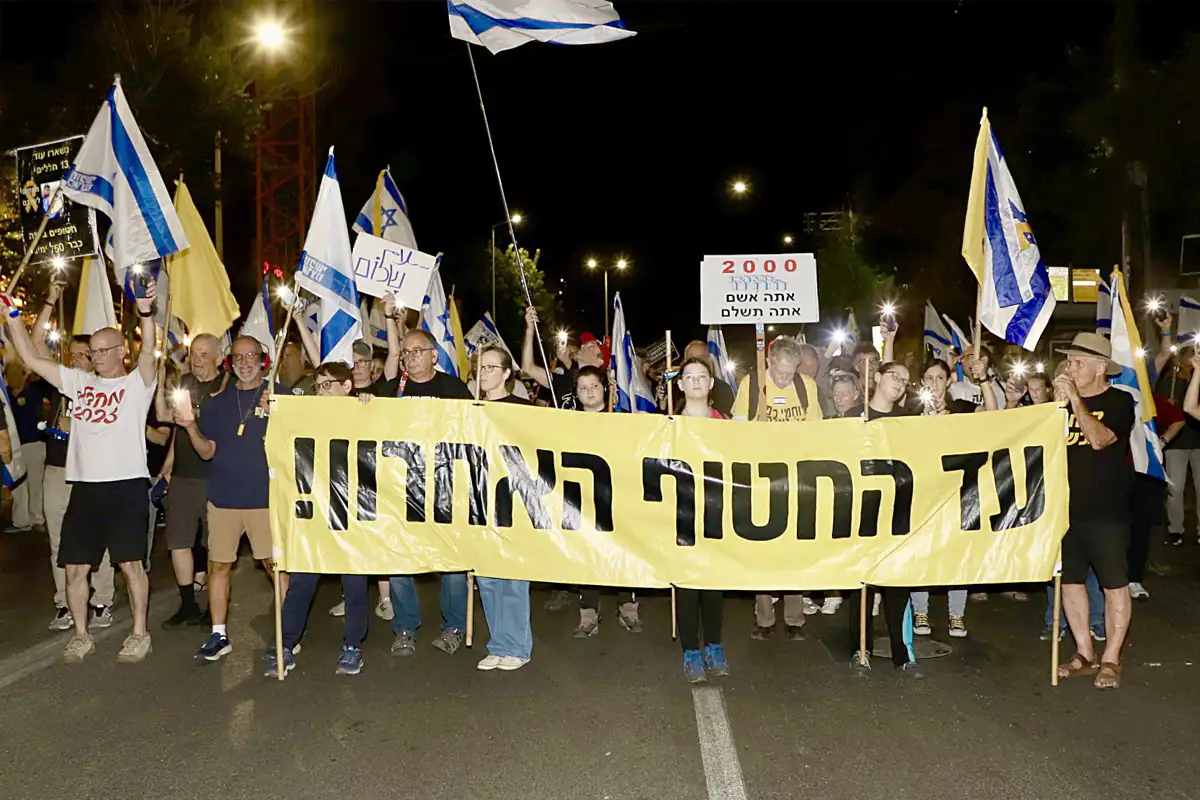 Demonstrations calling for the return of the hostages | Photo: Herzi Shapira
When the Qatargate affair became public, after you’d already left your position, were you surprised?
“I wasn’t aware of those matters. Looking back, I remembered that at the time I’d spoken with the head of the IDF Strategy Division about how strange it was that all sorts of reports had suddenly appeared accusing the Egyptians of violating the peace treaty and sabotaging hostage deals. It was strange, and we wondered who had an interest in promoting that. But I was busy with the war.”
And when you learned about the affair afterward?
“I don’t want to discuss individuals, but there were unacceptable things happening in the Prime Minister’s Office. Security clearances, for example, or attempts by people to enter classified discussions. There were quite a few such attempts, and I fought hard to prevent them.”
Because they lacked security clearance?
“Because I believed there were places where people who had no need to be there shouldn’t be there. There’s absolutely no reason for the prime minister’s entire entourage to descend into the Air Force’s underground command bunker. It’s disruptive, and they have no business being there.”
There have been accounts of unusual involvement by Netanyahu’s family in affairs of state. Did you encounter that yourself?
“Early in my tenure, Yair Netanyahu asked to speak with me. I asked my assistant to look into it and handle it. I made sure to keep my distance from all that.”
There are claims that Roman Gofman, your successor, was interviewed by Sara Netanyahu.
“Some people have described firsthand how she interviewed them. What would my answer add?”
How is it possible that Netanyahu took so long to visit the Gaza border kibbutzim devastated in the attack, including Nir Oz?
“Ask him.”
Did you suggest that he visit?
“Yes.”
I haven’t asked you about the word “responsibility.”
“What’s there to ask?”
Is the prime minister responsible for October 7?
“You have to make up your mind. If you’re responsible for nothing, then you’re responsible for nothing. Not the achievements, not what happened before, not what happened afterward. Nothing. But if you’re responsible for the achievements, for the targeted killings, for the pagers (the operation against Hezbollah’s communications devices), then you’re responsible for everything.
“What is a leader? A leader bears responsibility, and that responsibility comes with accepting the position. It doesn’t matter whether his name is Netanyahu, Bennett, Lapid or Eisenkot. Of course he bears responsibility. He does, and so does everyone who was around him.”
Including you.
“Of course. I was also part of the system in which I served for 35 years, and that system failed. It comes back to me at night, and certainly during the dozens of meetings I’ve had with bereaved families. When I finished serving as the prime minister’s military secretary, I was offered the opportunity to compete for other positions in the IDF. I considered it, and ultimately decided to retire.”
Do you believe October 7 will ever be investigated and the truth established?
“I don’t know anymore. I’m not sure.”
The fact is, it isn’t happening.
“Look at what happened last week with the aircraft. We’ve developed a culture of not investigating, not learning lessons and simply trusting that everything will be fine. It’s all more of the same.
“We aren’t learning. That’s a tragedy that will lead to the next disaster.”
The Likud party response
The Likud party said in response: “This interview is part of the false and politically motivated propaganda campaign against Prime Minister Netanyahu and Likud, aimed at bringing down the right-wing government and installing a left-wing government that would establish a Palestinian state.”
According to Likud’s response, “Prime Minister Netanyahu received no advance warning before Oct. 7 of an attack by Hamas from the Gaza Strip, as President Trump, President Biden’s adviser Brett McGurk, the UAE government, the Egyptian government and others have testified. The opposite is true. As shown in the official records Prime Minister Netanyahu submitted to the state comptroller, the heads of the security establishment repeatedly argued that Hamas was deterred, that it was interested in an arrangement and that humanitarian concessions should be granted in order to ‘preserve the quiet.’
“For example, an intelligence report from May 31 stated: ‘Hamas is looking for new arenas in which to operate in order to keep the Gaza Strip stable.’ An intelligence report from July 23 made no mention of any scenario involving escalation from the Gaza Strip, stating: ‘At this stage, in our assessment, the clear and immediate danger of escalation is primarily on the Lebanese front.’ On October 1, Brig. Gen. Amit Saar, head of the IDF Military Intelligence Research Division, stated: ‘Sinwar wants to restore calm.’ On October 3, the Shin Bet wrote to the prime minister: ‘Security calm in exchange for eased restrictions has the potential to preserve stability in the Gaza Strip, possibly even over the long term.’
“During the night of Oct. 7,” the Likud response continued, “there were those who saw all the warning signs in real time and did nothing. They did not inform the police, the local emergency response teams, the kibbutzim, the soldiers along the border, the people attending the Nova music festival or the prime minister. Had Prime Minister Netanyahu been updated in real time, everything would have looked different.
“Prime Minister Netanyahu was the one who decided on the ground maneuver in Gaza and stood firm against pressure from President Biden to make do with an aerial campaign. In the face of the heaviest pressure from Israel and abroad, Prime Minister Netanyahu was the one who led the conquest of Gaza and Rafah, the tremendous success in securing the release of every last one of our hostages, the pager operation that stunned the world, the elimination of Hassan Nasrallah, Yahya Sinwar and Mohammed Deif, the capture of the Mount Hermon summit, the elimination of Iranian Supreme Leader Ali Khamenei, the elimination of Iranian nuclear scientists and, above all, the rescue of Israel from annihilation by Iranian nuclear bombs.”