
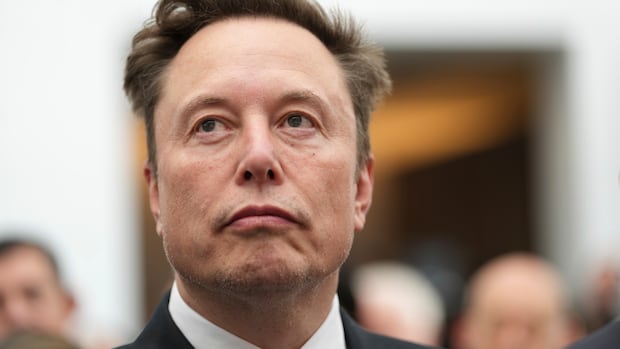

Listen to this article
Estimated 5 minutes
The audio version of this article is generated by AI-based technology. Mispronunciations can occur. We are working with our partners to continually review and improve the results.
When Elon Musk called for Quebec, Alberta and Saskatchewan to separate from Canada earlier this week, it may have been nothing more than the trillionaire engaging in some anti-Canadian trolling.
But it’s also possible, according to one Musk observer, that the Tesla and Space X CEO had something else in mind.
“I think with Musk, there’s often usually another game being played at the same time,” said Quinn Slobodian, a professor of international history at Boston University who co-authored the book: Muskism: A Guide for the Perplexed.
Earlier this week, Musk took note of a post on X that stated Parti Québécois premier-designate Paul St-Pierre Plamondon had declared his dream of independence “will be realized one day.”
‘Would be better off’
Musk responded: “Good. Quebec should separate.”
He followed up in another post: “They would be better off. Alberta and Saskatchewan should separate too.”
Canadian tech journalist Paris Marx, host of the Tech Won’t Save Us podcast and a regular critic of Musk, said people probably shouldn’t read too much into Musk’s posts.
It may be nothing more than Musk being a “right-wing troll who has a problem with countries he perceives as being more progressive or left-leaning relative to his personal politics or that he feels aggrieved by,” Marx said in an email to CBC News.
@Polymarket Good. Quebec should separate.
Musk’s remarks were quickly rejected by Alberta Premier Danielle Smith, Saskatchewan Premier Scott Moe and Prime Minister Mark Carney. On Friday, Conservative Leader Pierre Poilievre also dimissed Musk’s calls for separation.
WATCH | ‘Tweets and memes do not affect Canada’: Poilievre: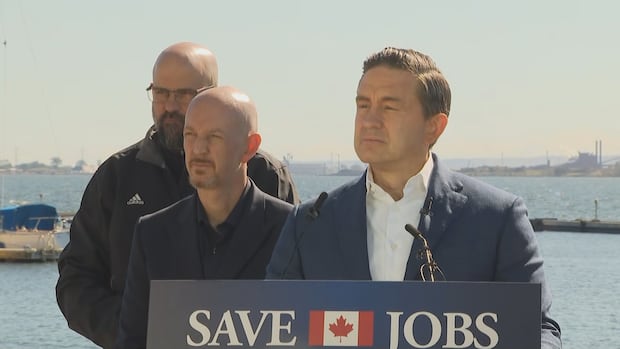
‘Tweets and memes do not affect Canada’: Poilievre responds to Elon Musk separatism comments
Asked whether he is concerned about foreign interference from the U.S. on separatist movements in Canada, Conservative Leader Pierre Poilievre says ‘we need to spend less time worrying about silly tweets by people who have no power over what Canadians do’ and instead focus on things like affordability. He says memes do not affect Canada, but the decisions made by Canadians do.
Marx said Musk sees separatist movements in Canada as an opportunity to weaken the government’s legitimacy.
Yet Marx said he doesn’t believe these posts were part of any calculated move on Musk’s part and that Musk likely hasn’t given much thought to the ramifications of the provinces separating from Canada.
Instead, Marx said the post about Quebec independence likely appeared on Musk’s timeline and he simply fired off a response.
“Many people reply to posts online with knee-jerk reactions,” Marx said. “Elon Musk’s replies just get news articles written about them because he’s incredibly rich and powerful.”
Musk, the world’s richest man and first-ever trillionaire, is a South African-born Canadian-American.
‘Canada is not a real country’
Musk’s mother Maye Musk is from Saskatchewan. Musk moved to Canada in 1989 and attended Queen’s University for two years before transferring to the University of Pennsylvania. Musk’s grandfather Joshua Haldeman was the leader of the Social Credit Party of Saskatchewan.
This isn’t the first time Musk has weighed in on Canadian issues.
In 2025, Musk posted on X that “Canada is not a real country” following a petition calling for his passport and citizenship to be revoked over his ties to U.S. President Donald Trump. The petition received more than 375,000 signatures.
Musk also commented on Canadian politics earlier last year when he criticized then-prime minister Justin Trudeau, referring to him as an “insufferable tool.” Meanwhile, he praised and endorsed Poilievre.
WATCH | Carney responds to Musk: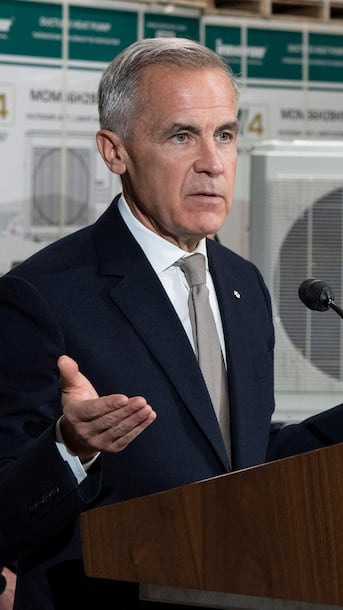
Carney responds to Elon Musk’s support for Quebec sovereignty
Prime Minister Mark Carney said Canada prioritizes living ‘free from interference from foreign governments and large tech firms that think they can tell us what to do,’ in response to comments from Elon Musk that called for multiple Canadian provinces to separate.
Slobodian said Musk has a reflexive dislike of Canada and what he perceives as its excessively progressive policies.
So when it come to separatism, “it’s like any enemy of Ottawa is a friend of mine,” Slobodian said.
But Musk has also shown a keen interest in political movements abroad, particularly in Europe. For example, he has been vocal in his supprt of the far-right, anti-immigration Alternative for Germany (AfD) party.
A Feb. 2025 NBC News report said Musk had been encouraging right-wing political movements, policies and administrations in at least 18 countries as part of a global push to slash immigration and curtail regulation of business.
Connection with far-right politics
Slobodian said he believes there is a connection between Musk’s recent comments on separatism and his affiliation with far-right politics in Europe.
With legacy parties across the European continent facing disruption from agile newcomers, Slobodian said Musk has a “pretty reasonable strategy” to create a bonds or affiliations with them.
“Then when they are the ruling parties, you’ve got an automatic buy-in or partner,” Slobodian said.
He said Musk sees the EU and Canada in their present forms as obstacles to his accumulation strategy, and that any disruption could open new opportunities for him and his products.
“I think his idea is to jump on the secessionist train early, and if it does come to pass, then he’s got kind of [a competitive] advantage,” Slobodian said. “And if it doesn’t, then so what? It just fades off into the background again.”