
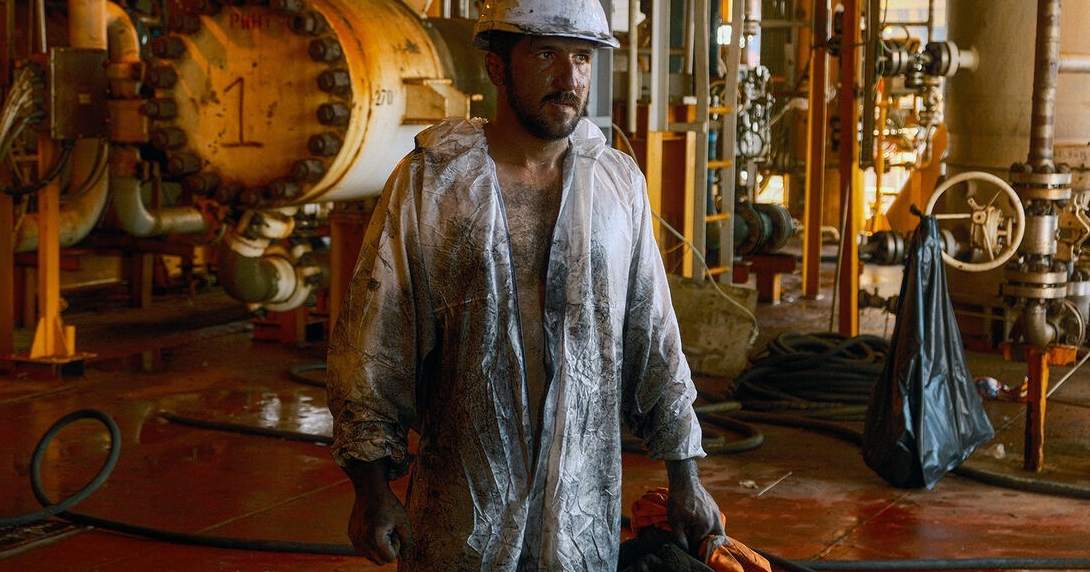
“Revenues from crude and condensate will drop to zero for the first time ever,” Homayoun Falakshahi told Iran International’s Eye for Iran, warning that Tehran could lose between $3 billion and $6 billion in monthly oil income.
That makes December the critical month as the last Iranian oil shipments already outside the blockade zone make their way to Chinese buyers.
According to Kpler, just eight million barrels of Iranian crude remain on the water outside the blockade, down from nearly 90 million barrels in mid-July. Falakshahi expects those remaining shipments to be discharged by around October 18.
With Chinese refiners typically taking another one to two months to settle payments, Tehran could receive its final proceeds from those shipments by mid-December.
The looming revenue shortfall follows a halt in Iranian oil shipments. Kpler data shows that Iran loaded no crude oil or condensate onto tankers throughout September, the first full month without loadings since the 1979 Islamic Revolution.
The last recorded loading took place around August 26 or 27.
Even during the 1979 revolution, the Iran-Iraq war and successive rounds of Western sanctions, Iranian crude continued reaching international buyers. During the COVID-19 pandemic, shipments fell as low as 300,000 barrels per day in some months, compared with typical volumes of around 1.7 million to 1.8 million, but never stopped entirely.
“This is a first in history,” Falakshahi said.
A financial lifeline under threat
Oil exports remain Iran’s largest source of foreign currency despite years of efforts to reduce the government’s dependence on petroleum income.
Falakshahi said much of Iran’s oil trade with China continues to be settled in dollars despite US sanctions, making the disappearance of those payments particularly consequential for an economy already struggling with currency depreciation.
He said expectations of dwindling oil income may have contributed to the rial’s recent decline. A prolonged loss of foreign exchange could put further pressure on the currency and government finances.
The squeeze could also affect Tehran’s ability to finance regional allies, although Falakshahi said the extent would depend on government priorities. Tehran could choose to preserve such support while cutting spending at home.
Sustained economic pressure could also affect Tehran’s negotiating calculus with Washington, he said, though he doubted the leadership was ready to make significant compromises over its nuclear program.
Why sanctions-evasion methods may not work
Iran has spent decades developing networks to circumvent Western sanctions and maintain oil exports, but Falakshahi said a physical blockade makes those methods far more difficult to replicate.
Unlike financial restrictions, which Tehran has historically navigated through intermediaries, disguised shipments and alternative trading arrangements, the current blockade prevents tankers from physically leaving Iranian waters.
One potential workaround has attracted attention as independent Chinese refiners increasingly turn to Iraqi crude to replace Iranian supplies: transporting Iranian oil through Iraq and disguising its origin before exporting it to China.
But moving even 50,000 to 70,000 barrels per day across the Iraqi border would require thousands of truck movements, Falakshahi said.
“You’d probably see videos of it on the internet,” he said.
He estimated that moving enough crude by truck to fill a single large tanker could take around 20 days, compared with roughly one large tanker Iran previously loaded each day.
Iraq continues to import Iranian natural gas, but payments owed to Tehran are held in a restricted account at Iraq’s central bank because of US sanctions. Falakshahi said Baghdad would be unlikely to facilitate large-scale Iranian oil shipments at the risk of further US sanctions.
Overland routes offer little relief
Rail offers limited alternatives. Falakshahi said the connection to China reaches Tehran, far from Iran’s main oil-producing regions, while the pipeline supplying the capital has capacity of only around 200,000 barrels per day.
Turkmenistan is also reportedly restricting rail transit through its territory over concerns about US sanctions.
Even if Tehran managed to move small quantities through neighboring countries, road and rail would be unlikely to replace the volumes previously exported by sea.
“Iran has a history of evading sanctions successfully to an extent,” Falakshahi said. “But this seems a lot more challenging.”
Pressure extends beyond oil
The blockade is also restricting Iran’s ability to import commodities as oil revenue approaches a potential halt.
Falakshahi said shipments of agricultural products, including corn and wheat, have declined sharply, while alternative supply routes through the Caspian Sea offer only a fraction of the capacity available through Persian Gulf ports.
For Tehran, the immediate question is whether the blockade will remain in place long enough to exhaust the final payments from oil already sold.
If it does, December could mark the first time in Iran’s modern oil-producing history that crude and condensate export revenue falls to zero, cutting off the Islamic Republic’s principal source of foreign exchange with no clear route to restoring exports while the blockade remains in place.