
The issue returned to the spotlight this week when retired Maj. Gen. Avi Gil, Netanyahu’s former military secretary, gave his first media interview since the massacre. Gil said he would have preferred to provide his account before an official state commission of inquiry rather than in a televised interview.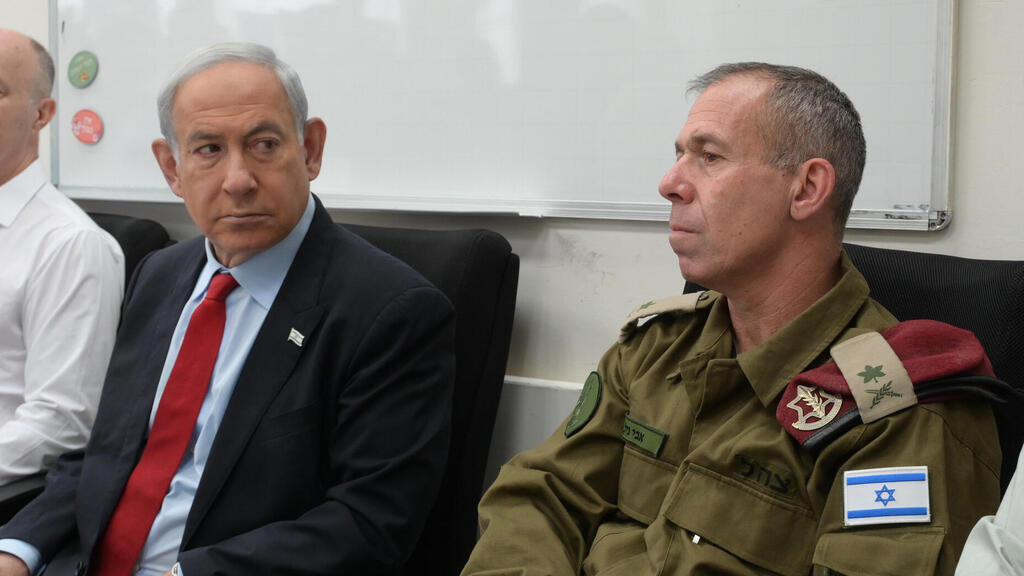
Prime Minister Benjamin Netanyahu and Maj. Gen. Avi Gil, Netanyahu’s former military secretary
(Photo: GPO)
Netanyahu remains the only senior political or security figure who held a leading position on October 7, 2023, who has not endorsed the establishment of a state commission of inquiry. Former IDF chief Herzi Halevi, former Military Intelligence chief Aharon Haliva, former Shin Bet director Ronen Bar and former defense minister Yoav Gallant have all expressed support for such an investigation.
In the early months of the war, establishing a state commission appeared to command broad political support, including among some Likud lawmakers and ministers. Over time, however, alternative proposals emerged, including a government-appointed panel and a commission whose members would be chosen through an agreement between coalition and opposition representatives.
None of those proposals has resulted in an inquiry.
On October 25, 2023, less than three weeks after the massacre, Netanyahu publicly addressed the question of responsibility for the first time.
“The failure will be investigated thoroughly. Everyone will have to provide answers, including me,” he declared, calling October 7 a dark day in Israel’s history.
But Netanyahu also attached a condition to his promise: the investigation would take place after the war.
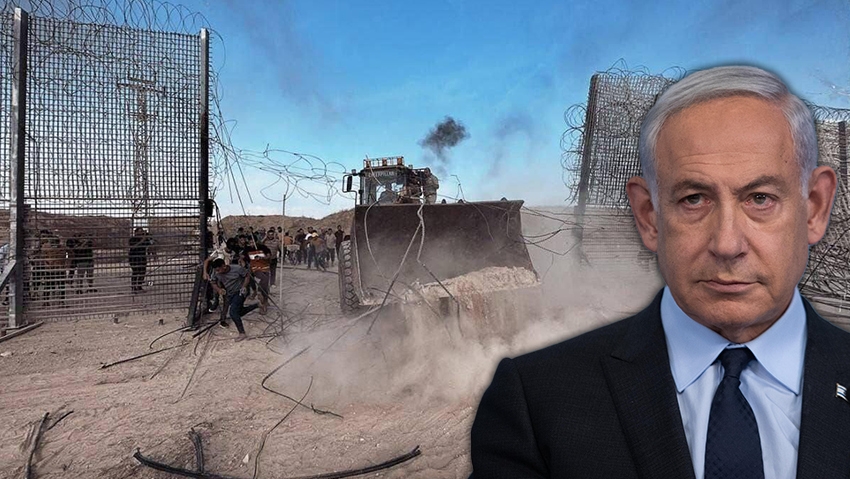
That position became a recurring feature of his statements over the following three years. While repeatedly acknowledging the need for an investigation, he delayed its establishment and left open the question of what form it would take.
In January 2024, asked specifically about establishing a state commission of inquiry, Netanyahu said investigations should take place “at the end of the war, certainly not in the middle of it.”
He argued that military commanders should not have to spend time consulting lawyers while directing combat operations. He also made clear that the government would determine the appropriate investigative mechanism when the time came.
Under Israeli law, a state commission of inquiry is established by a government decision, but its members are appointed by the president of the Supreme Court. That distinction would become central to the political dispute.
Throughout 2024, coalition lawmakers began promoting alternatives to a traditional state commission of inquiry, including a government-appointed body or one established with agreement between the coalition and opposition.
Opposition leaders rejected those arrangements, insisting on an independent state commission under the existing law.
President Isaac Herzog also proposed a compromise involving Chief Justice Yitzhak Amit and his deputy, conservative Justice Noam Sohlberg, in forming a state commission. Netanyahu rejected the proposal.
By March 2025, Netanyahu was publicly setting out additional conditions for an investigation.
“It is important and essential to thoroughly investigate everything that happened to us on October 7 and what preceded it,” he told the Knesset, calling for an “objective, balanced and independent” commission.
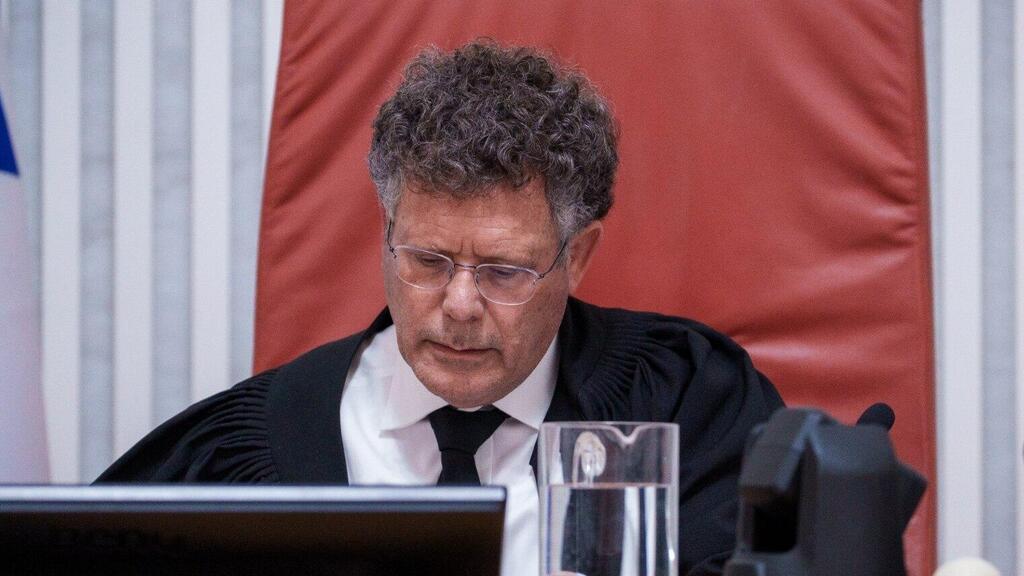
Chief Justice Yitzhak Amit
(Photo: Shalev Shalom)
He also warned against establishing a commission “whose conclusions are already known in advance,” reflecting his objections to the existing appointment process.
The disagreement was no longer simply about when an investigation would begin. It increasingly concerned who would select the investigators and whether the resulting commission would command sufficient public trust.
In the summer of 2025, after the government informed the Supreme Court that it did not intend to establish a state commission at that stage, Netanyahu again addressed the issue during a closed meeting of the Knesset Foreign Affairs and Defense Committee.
“I am still trying to understand what happened,” he said. “How could they enter here wearing flip-flops and carrying Kalashnikovs? Such a small force. How could this happen? I demand answers. I need answers.”
Netanyahu acknowledged that he could have established a government commission earlier but argued that such a body would lack public confidence.
“I could have established a government commission of inquiry yesterday, but it would have no public trust,” he said.
He then outlined his preferred alternative: a commission composed of 50% coalition representatives and 50% opposition representatives.
Netanyahu has repeatedly described that model as a commission representing the people. His opponents argue that a politically appointed panel could not provide the independence required to investigate the government’s own conduct before and during the massacre.
In November 2025, Netanyahu again defended his approach during a Knesset debate.
“The question is not only what is investigated. The decisive question is who investigates the truth,” he said, arguing that substantial parts of the public would not accept a commission established through the existing mechanism.
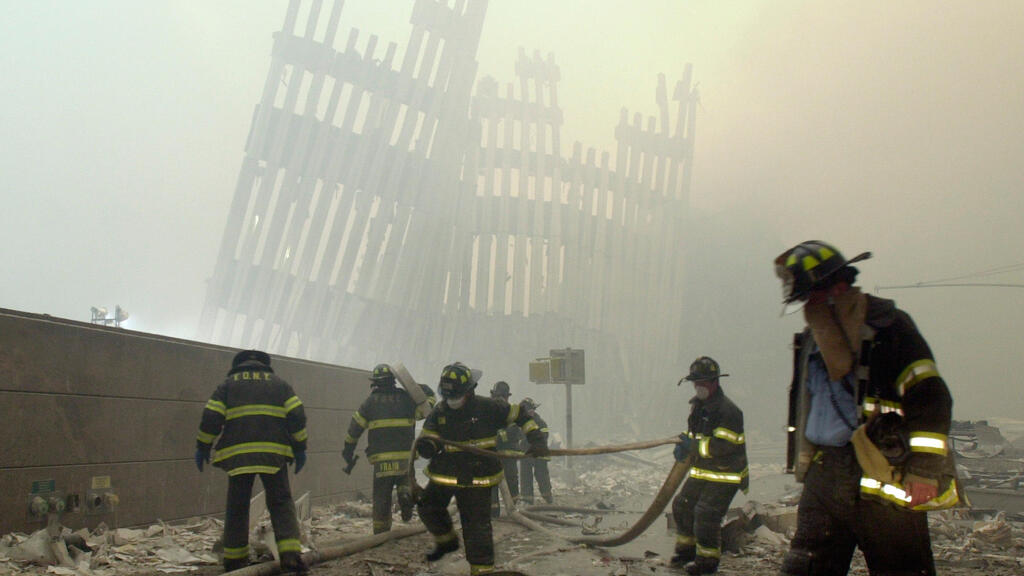
The September 11, 2001, terrorist attacks on the World Trade Center’s Twin Towers
(Photo: AP Photo/Mark Lennihan, File)
Netanyahu also pledged to cooperate with the eventual investigation.
“I will be the first to appear and answer every question,” he declared.
Legislative efforts followed. In December 2025, lawmakers advanced a proposal for a special inquiry mechanism. In February 2026, Netanyahu reiterated that the State Comptroller’s examination of the failures could not replace a dedicated commission and again called for a politically balanced national inquiry.
In July 2026, legislation proposing a state-national commission of inquiry passed its first reading in the Knesset. The bill received 59 votes in favor, with the opposition boycotting the vote.
However, the legislation was not completed before the Knesset was dissolved, leaving the proposed commission without the legal framework required for its establishment.
Three years after the massacre, neither a conventional state commission nor Netanyahu’s preferred alternative has begun investigating the events.
With Israel’s October 27 election approaching, the dispute over the October 7 investigation has become a significant political issue.
Opposition leaders, including Gadi Eisenkot, have pledged that establishing a state commission of inquiry under the existing law would be among their first decisions if they form the next government.
Such a move would have precedents in recent Israeli history.
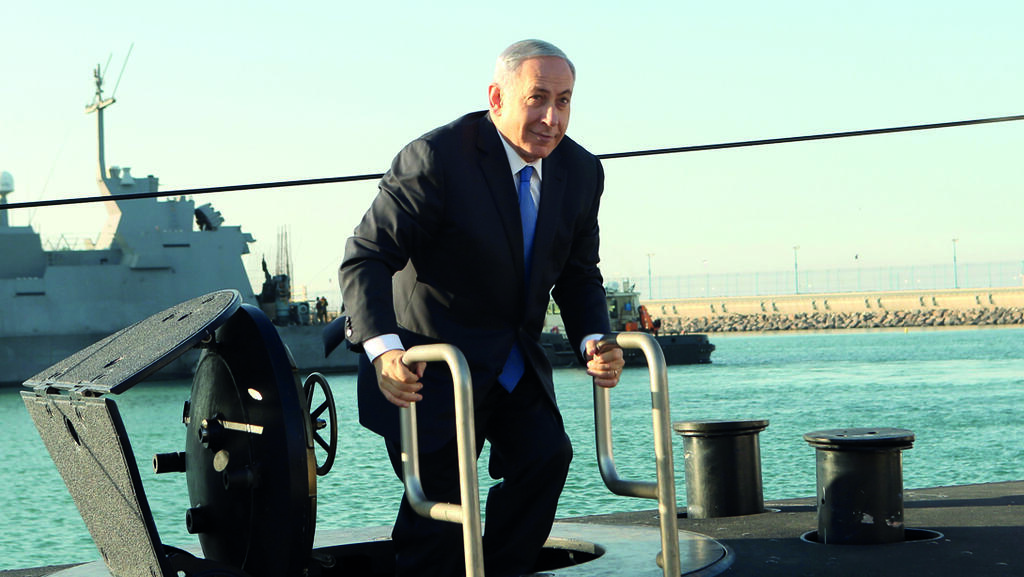
The Bennett-Lapid government established a commission of inquiry into the submarine affair
(Photo: Elad Gershgon)
In June 2021, during its first meeting, the government led by Naftali Bennett and Yair Lapid approved the establishment of a state commission of inquiry into the Mount Meron disaster, which killed 45 people. The decision came just 52 days after the tragedy, which occurred under Netanyahu’s previous government.
For now, the October 7 investigation remains unresolved. Netanyahu has never withdrawn his promise that the failures would be investigated and that he would answer questions, but his government has not established a commission to carry out that investigation.
As Israel prepares to vote, the central dispute remains the same: not whether October 7 should be investigated, but who will be entrusted with finding the answers.