
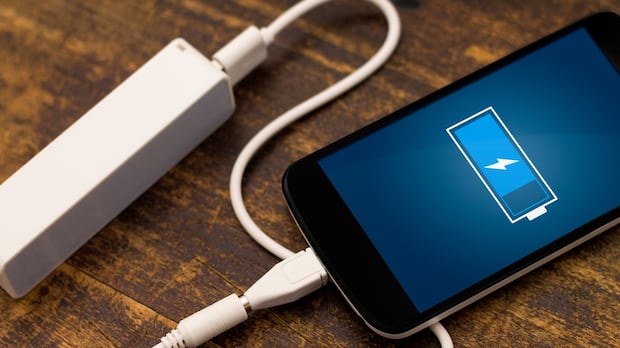
The small but mighty lithium batteries that run e-scooters, tablets and most cellphones may be convenient but they can also cause destructive fires.
That’s the message firefighters want New Brunswickers to understand, as they warn of the dangers that come with the ion-powered batteries found in devices commonly left charging in people’s homes. All but the oldest of cellphones are powered by lithium batteries.
Lithium batteries and how to safely charge devices are at the centre of this year’s Fire Prevention Week.
Here’s what you need to understand about the power source, and what experts in Saint John and Fredericton say is best practice to protect yourself and your home.
How do lithium batteries catch fire?
Lithium-ion batteries work by sending ions back and forth between two points in the battery.
If the conduit breaks, essentially short-circuiting the process, that can cause a fire.
The battery also generates heat, which is why it can also catch fire when the battery is overcharged or improperly charged.
“When that heat continues to build up, it can damage the battery and cause it to fail, which is what causes those fires,” said Nathaniel Watson, division chief for fire prevention and investigation for the Saint John Fire Department.
WATCH | Why lithium batteries are so dangerous: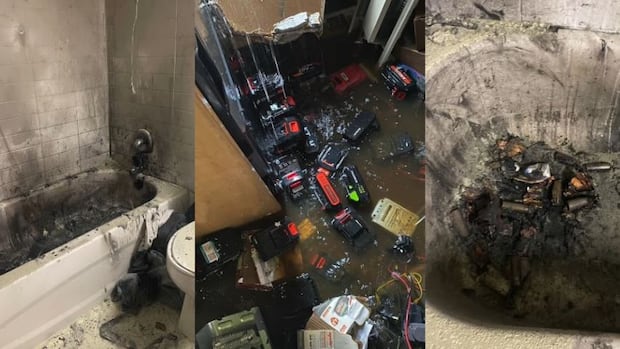
Why lithium-ion batteries are so dangerous
Toronto has seen more than 200 per cent growth in lithium-ion battery fires since 2022, according to Toronto’s Fire Chief. CBC’s Lane Harrison explains what’s behind the surge and why these fires are so difficult to fight.
Watson said his team is not seeing a large number of fires related to lithium batteries, but the number has been rising since the technology has become more popular.
Firefighters in Fredericton responded to a lithium-battery fire as recently as Oct. 6 on the University of New Brunswick campus, according to Fredericton’s fire chief, Dwayne Killingbeck.
At the scene, they determined a charging bank to plug in phones and other portable devices had overheated and burned up.
Firefighters were able to contain the damage to the device and the countertop it was sitting on.
Lithium batteries produce a lot of energy, or thermal run-off, as Killingbeck called it. That makes it harder to fight, and it requires more resources.
“We use copious amount of water to deal with that thermal run-off,” he said.

Fredericton fire Chief Dwayne Killingbeck says lithium batteries cause a lot of run-off energy when they catch fire, making it challenging for firefighters to extinguish the fires completely. (Ian Curran/CBC)
The energy emanating from the battery also makes it more likely to ignite flammable objects left around it, Killingbeck said.
The Canadian Association of Fire Chiefs estimates there were 1,500 fires caused by lithium batteries in 600 communities in Canada last year.
Simple ways to reduce the risk
Making sure you buy certified and safe lithium battery-powered products is key, Killingbeck said.
A product marked with CSA, CUL or CETL means it has been tested and certified in Canada to meet safety standards.
Using the right cable to charge your device with a lithium battery in it also matters.
Watson said people often use charging cables other than the one provided by the device manufacturer. Such alternatives can use different wattage and increase the risk of overheating.
“When we go to the gas station and we just grab any old cable, it’s designed to meet a variety of needs,” he said. “They may not be made for your device.”
Device should also be charged on a hard, flat surface.
“You don’t want to put your device under a pillow or close to anything that might be affected by the heat,” Killingbeck added.
It’s best if people charge their devices during the day, when they can be monitored, as opposed to overnight.
And Watson said cables should not be plugged into an extension cord or other adapter. It’s safer to plug the cable directly into the wall.
WATCH | What can you do to prevent a lithium-ion battery fire in your home?:
What can you do to prevent a lithium-ion battery fire in your home?
The Montreal fire department says there’s been 40 of these fires so far this year, including a major fire at the Port of Montreal. In 2021, there were fewer than 10 in the city.
Watson said there are more and more safeguards built into devices with lithium batteries, from phones to drills, to prevent overcharging.
The idea is known as smart charging.
“They actually have a microchip on the battery that disconnects the battery from the electrical source to prevent it from getting into that state of being overpowered, being overcharged and overheating,” Watson said.
The feature found in many cellphones that tells users what time a charge will be complete is an example of that, but it does not stop the device from charging.
Watson said it puts the phone into a cycle where it will cool itself down between charging periods, which is helpful in reducing the risk of fire.
Despite built-in features, Killingbeck suggests monitoring batteries frequently for indications of it becoming hot to the touch, swelling, leaking or smoking.
Those can all be indications of a higher risk of fire, he said.
The same advice goes for charging tools, e-scooters and e-bikes with lithium batteries.
Users should avoid bringing a bike’s battery into a home to charge because it could be putting too much strain on the home’s electrical circuits.
Once they are no longer of use, lithium batteries should not be thrown in the trash, Killingbeck said. They should be brought to local landfills or recycling centres to be disposed of alongside other hazardous materials.