
Facebook
Twitter/X
LinkedIn
Pinterest
Reddit
Email
Print
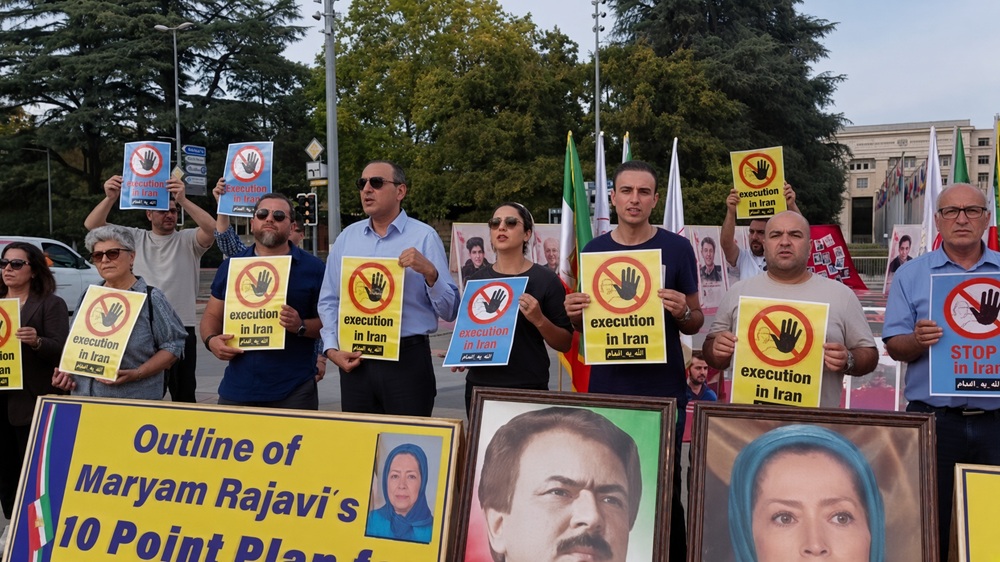
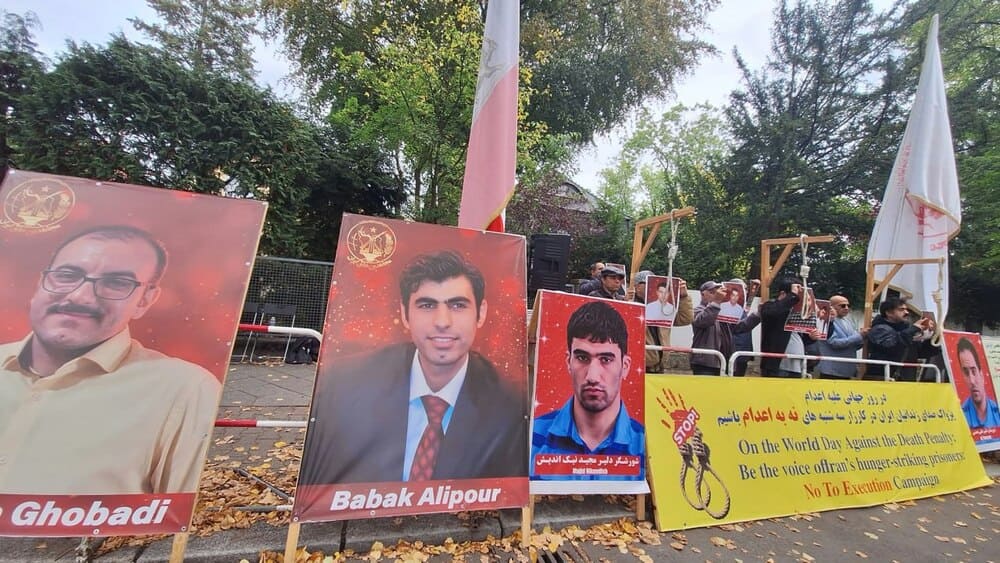 October 9, 2026: For the 224th consecutive day, NCRI supporters maintained their sit-in protest outside the Iranian regime’s embassy in Berlin, Germany
THIS PAGE WILL BE UPDATED WITH THE LATEST NEWS
UPDATE: 9:30 AM CEST
Iranian Political Prisoners Defy Execution Threats and Demand International Action to Stop Tehran’s Killing Machine
On the eve of the World Day Against the Death Penalty, political prisoners across Iran issued a series of statements condemning the Iranian regime’s escalating execution campaign, warning against international inaction, and reaffirming their determination to continue resisting the ruling dictatorship.
Published on October 9, 2026, the messages came from PMOI/MEK supporters in eight prisons, five women political prisoners in Evin Prison, and individual prisoners in Evin, Ghezel Hesar, and Bandar Abbas.
The prisoners repeatedly insisted that their statements be broadcast through Simay-e Azadi, the Iranian Resistance’s television network, so their voices could reach Iranian youth and the public regardless of the consequences they might face.
Their messages reflect a shared conviction: the regime is using executions to suppress dissent and prevent another uprising, but neither imprisonment nor the threat of death will extinguish the struggle for freedom.
Zahedan Resistance Units Condemn Executions, Declare “No Shah, No Mullah” and Demand a Democratic Republic
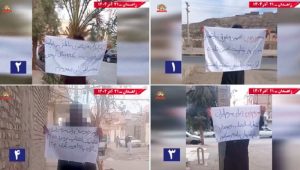
On October 9, 2026, rebellious youth associated with the People’s Mojahedin Organization of Iran (PMOI/MEK) Resistance Units in Zahedan displayed banners and placards condemning executions, supporting student protests, and demanding freedom and a democratic republic in Iran.
The activities highlighted the Iranian people’s opposition to the ruling clerical regime and rejected any return to hereditary monarchy as an alternative to the current dictatorship. Their messages emphasized a central political principle: Iran’s future must be based on popular sovereignty, equality, and freedom from all forms of authoritarian rule.
The banners featured messages from Maryam Rajavi and Massoud Rajavi, alongside slogans calling for resistance against repression, the abolition of executions, the liberation of universities from government control, and the overthrow of the clerical dictatorship.
The slogans also underscored the rejection of both the shah and the mullahs, presenting the establishment of a democratic republic as the alternative to successive forms of dictatorship.
Iran’s Democratic Future Cannot Be Built on the Return of Hereditary Dictatorship

Iran’s struggle for freedom cannot be separated from its struggle against dictatorship in all its forms. Whether imposed under a hereditary monarchy or a theocratic system, authoritarian rule has repeatedly sought to deny the Iranian people their fundamental rights and sovereignty.
Against this historical background, attempts by Western institutions to elevate Reza Pahlavi, the son of Iran’s deposed shah, as a symbol of freedom raise profound questions about the meaning of democracy and the political future being promoted for Iran. Bestowing prestigious awards in the name of freedom on a figure whose principal political credential is his family connection to a former dictator risks rehabilitating a system remembered for its prisons, torture chambers, censorship, and political repression.
Such initiatives do not erase the history of the Pahlavi monarchy. Nor do they establish a democratic mandate for its heirs. Instead, they risk replacing the Iranian people’s struggle for self-determination with a political project centered on a personality whose claim to leadership rests heavily on hereditary association.
Failure to Recharge $5 Food Voucher Credit Hits Iran’s Poor
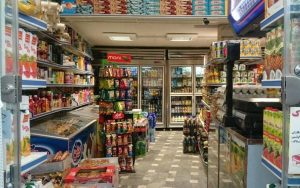
In recent days, the food voucher program has once again become one of the most important livelihood issues for low-income households. The program’s credit was scheduled to increase starting October 7. A figure of 13 million rials (approximately $5) per person was among the amounts discussed in recent weeks. However, the latest reports indicate that the increase has not been implemented uniformly for all eligible recipients.
On October 7, food voucher credits were loaded for some households. Investigations indicate that approximately 11 million people covered by the Imam Khomeini Relief Committee and the State Welfare Organization of Iran received the food voucher credit.
However, the increase has not been extended to all low-income households or all of the bottom five income deciles. This means that the status of the promised credit increase for approximately 42 million people in the bottom five income deciles remains uncertain.
Unemployment in Iran: 40% of Jobless People Are University Graduates
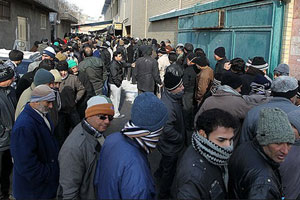
The failure to employ university graduates in the labor market is considered one of the most significant economic, occupational, and social consequences of the country’s education system. The phenomenon of educated unemployment points to a deep disconnect between the higher education system and the existing economic structure.
Official statistics and data published by news agencies and analytical reports in recent days in October 2026 show that higher education graduates account for more than 35% to 40% of the country’s total unemployed population. These figures underscore that more than one-third of job seekers in Iran hold university degrees. Examining the various dimensions of this challenge reveals its far-reaching consequences for the economy, mental health, social conditions, and people’s outlook on the future.
From the perspective of development economics, investment in higher education is a form of investment in human capital. Families bear substantial costs to educate an individual through undergraduate, master’s, and doctoral programs.
Failing to secure a job in one’s field of expertise effectively reduces the value of an academic degree to zero. Educated unemployed people are forced to take unrelated jobs or precarious, low-paying work, which reduces their average real income over the long term.
Iran: The Death Penalty, Political Repression and the Role of the Judiciary
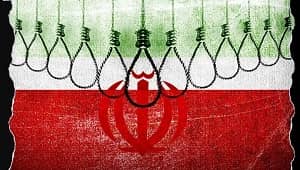
The World Day Against the Death Penalty was first observed on 10 October 2003 at the initiative of the World Coalition Against the Death Penalty. Marked annually on 10 October, it seeks to draw international attention to the right to life, the situation of prisoners under sentence of death and the need to abolish capital punishment.
As the observance enters its twenty-fourth year, the number of executions recorded in Iran presents a deeply concerning picture. At least 2,167 people were executed in 2025, compared with 993 in 2024 and 850 in 2023. A further 1,135 executions were recorded during the first nine months of 2026. These figures represent the minimum number of documented cases; the actual total may be higher.
Alongside the rising number of executions, the execution of detained protesters and political prisoners, new death sentences in security-related cases and public instructions by senior judicial officials to expedite proceedings have raised serious concerns regarding the right to life and fair trial guarantees. This report focuses on the judiciary’s stated policies, prominent political execution cases, prisoners at risk of execution, protests within prisons and responses by international human rights mechanisms.
Gholamhossein Mohseni-Ejei, Head of the Judiciary of the Islamic Republic of Iran, repeatedly called for faster proceedings in protest-related and security cases during 2025 and the first months of 2026. In January 2026, he stressed the need for swift action against detained protesters; on 16 February 2026, he instructed prosecutors to issue indictments more rapidly against individuals he described as the “main elements of the unrest”.
Women Under the Shadow of the Death Penalty in Iran
On the eve of the World Day Against the Death Penalty, the fate of women sentenced to death in Iran once again raises fundamental questions about the right to life, gender discrimination and the State’s responsibility to protect women. In a country where forced and early marriage, domestic violence and economic deprivation continue to affect the lives of some women, the judiciary has a duty, in cases leading to qisas (retribution in kind) or execution, to examine carefully any history of violence, claims of self-defence, coercion and the defendant’s individual circumstances. Documented cases indicate that some women who were executed had themselves endured abuse and a lack of effective protection before facing the death penalty. This heightens concerns about discriminatory laws and government practices affecting women.
According to information documented up to 8 October 2026, at least 29 women have been executed in Iran since the beginning of the 2026 calendar year. Over the 12-month period from October 2025 to October 2026, at least 54 women were executed. These figures cover different reporting periods and must not be added together. Communications blackouts, restrictions on reporting and the failure to announce many executions have also prevented a complete picture from emerging.
Behind these figures are the experiences of women who faced forced marriage, sexual violence, poverty or responsibilities for caring for children. Any failure by the judiciary to consider such circumstances before imposing an irreversible sentence has profound human and legal implications.
Iran Rejects Enrichment Cuts and Stockpile Transfer as Hormuz Oil Traffic Recovers
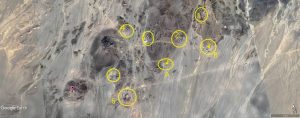
As most non-Iranian oil flows through Hormuz recover, Tehran is simultaneously insisting on retaining its uranium enrichment program and stockpile in negotiations with Washington.
Iran’s nuclear chief has rejected two key U.S. demands — halting or significantly reducing enrichment and resolving the fate of its highly enriched uranium stockpile — as oil exports from other Gulf states through Hormuz recover to much of their pre-war levels while Iran’s own exports remain under pressure from the U.S. naval blockade.
Mohammad Eslami, head of the Atomic Energy Organization of Iran, said this week that Tehran would not stop enriching uranium or hand over its stockpile of enriched uranium, a position that has further exposed the central divide between Iran and the United States in ongoing negotiations aimed at ending the war. Eslami said enrichment is “an integral part of the nuclear process” and that Iran would “under no circumstances” abandon it.
Ahead of World Day Against the Death Penalty, Berlin Protesters Condemn Iranian Regime’s Executions
Berlin, Germany — October 9, 2026: For the 224th consecutive day, supporters of the People’s Mojahedin Organization of Iran (PMOI/MEK) maintained their sit-in protest outside the Iranian regime’s embassy in Berlin, ahead of the World Day Against the Death Penalty. The demonstrators condemned the executions carried out by the mullahs’ regime, with particular emphasis on the execution of political prisoners and the ongoing wave of executions targeting protesters arrested during the uprisings across Iran. They also reiterated their call for an end to the death penalty.
The protesters called for the closure of the embassy, as a center of espionage and terrorism operated by the Iranian regime in Germany. They are also demanding accountability for the regime’s systematic repression, human rights violations, and continuing executions in Iran.
PMOI Supporters in Effretikon and Lugano Raise Alarm Over Rising Executions in Iran
Effretikon and Lugano, Switzerland – October 9, 2026 – Supporters of the People’s Mojahedin Organization of Iran (PMOI/MEK) held rallies featuring photo exhibitions and book tables in Effretikon and Lugano, Switzerland, ahead of the World Day Against the Death Penalty. The events aimed to raise public awareness of the Iranian regime’s continued and escalating use of capital punishment, both broadly and, in particular, against political prisoners and protesters arrested during Iran’s recent uprisings.
The photo exhibitions highlighted the plight of prisoners facing execution and paid tribute to those who lost their lives in the struggle for freedom. The book tables provided opportunities to inform the public about the ongoing wave of executions in Iran and the growing concerns over the fate of political prisoners and detained protesters at risk of execution.
The gatherings also expressed solidarity with the “No to Execution” campaign, calling for an end to executions in Iran and urging the international community to pay greater attention to the escalating use of the death penalty, particularly against political prisoners and protesters.
Bern Rally and Photo Exhibition Highlight Rising Executions in Iran Ahead of World Day Against the Death Penalty
Bern, Switzerland – October 9, 2026 – Supporters of the People’s Mojahedin Organization of Iran (PMOI/MEK) held a rally featuring a photo exhibition and a book table in Bern, in the lead-up to the World Day Against the Death Penalty. The event aimed to raise public awareness of the Iranian regime’s continued and escalating use of capital punishment, both in general and, in particular, against political prisoners and protesters arrested during Iran’s recent uprisings.
The photo exhibition highlighted the plight of those facing execution and paid tribute to the victims of the regime’s repression, honoring those who lost their lives in the struggle for freedom. The book table provided an opportunity to inform the public about the ongoing wave of executions in Iran and the cases of political prisoners and detained protesters at risk of execution.
The gathering also expressed solidarity with the “No to Execution” campaign, calling for an end to executions in Iran and urging the international community to pay greater attention to the escalating use of the death penalty, particularly against political prisoners and protesters. Through the exhibition and public outreach, participants sought to preserve the memory of those who lost their lives and amplify the call for freedom, justice, and an end to executions.