
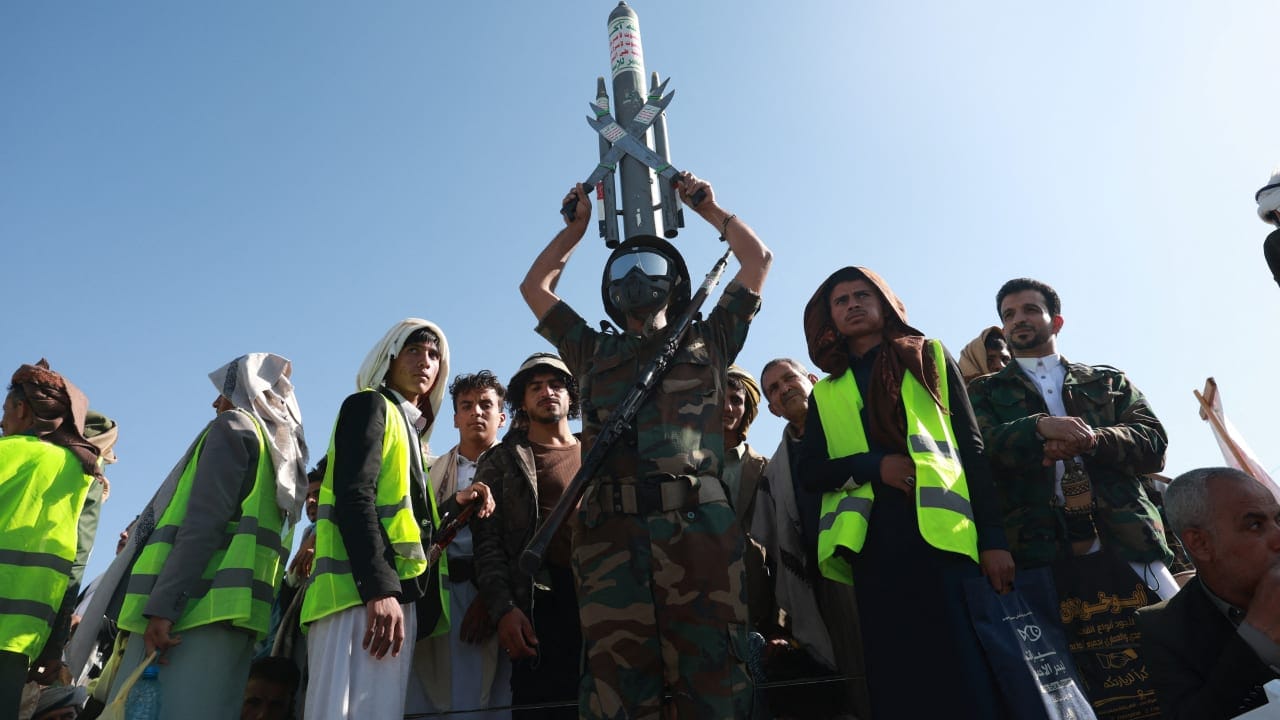
Saudi Arabia has vowed a firm response to a deadly attack on Riyadh’s King Khalid International Airport that killed 12 people and wounded 309 others on October 10.
The attack is part of a growing campaign by the Iranian-backed Houthis in Yemen targeting Saudi Arabia’s airports and civilian infrastructure. It comes as fighting intensifies in Yemen and maritime security concerns spread across the Gulf.
This deadly attack will require a response. The attack was designed to spread terror and strike at strategic infrastructure. Similar to how Iran targeted US bases in the region, Iran’s allies in Yemen are seeking to disrupt civilian life in Saudi Arabia by getting airports closed and flights canceled.
This is a challenge for Riyadh. Saudi Arabia has expensive air defenses. However, the Iranians and Houthis have proven in the past that they can penetrate these defenses, not only in Saudi Arabia but also in the Gulf and sometimes even when attacking Israel.
“The attack on King Khalid International Airport is a terrorist act and will be met with a firm response,” Maj. Gen. Turki Al-Maliki, spokesman for the Saudi-led Coalition to Support Legitimacy in Yemen, said in a statement carried by the Saudi Press Agency, according to Arab News. Al-Maliki described the attack as a “full-fledged war crime” and said the coalition would respond in accordance with international humanitarian law.
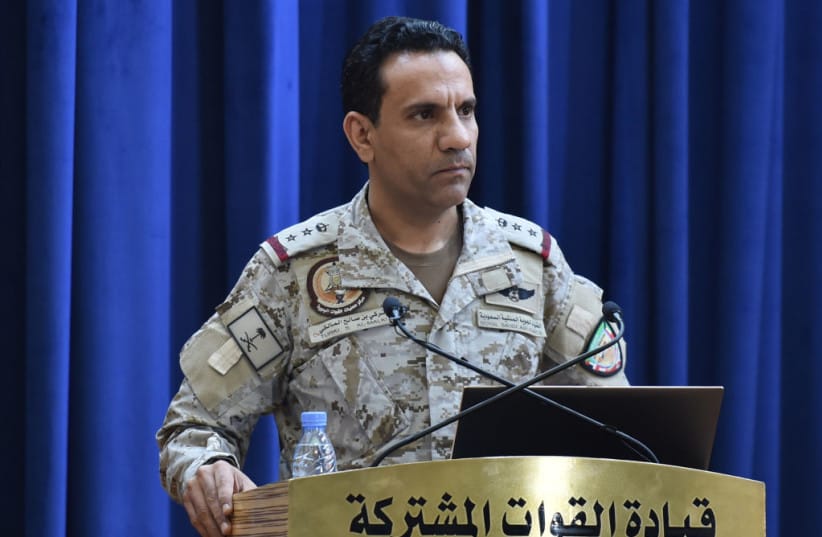 Spokesman of the Saudi-led military coalition Colonel Turki al-Maliki speaks during a press conference in the Saudi capital Riyadh, on September 30, 2019. (credit: Fayez Nureldine/AFP via Getty Images)
“The Joint Forces Command of the Coalition will respond to this terrorist attack firmly and in accordance with international humanitarian law and its customary rules,” he said, according to the Arab News report.
Riyadh is building a case now to respond, and the question is how. It has already been using its air force to strike at the Houthis. The Houthis have less to lose than Saudi Arabia. They don’t have a lot of strategic infrastructure. Riyadh has already been fighting them since 2015.
Saudi Arabia’s General Authority of Civil Aviation said on October 11 that the attack killed four Saudi citizens and eight foreign nationals, including citizens of Bangladesh, Palestine, the United States, Egypt, Jordan, Syria, and Sudan. “The attack also left [many] others injured, including individuals in critical condition,” the authority said, according to Arab News.
The attack forced authorities to suspend operations at the airport while damage was assessed. Arab News reported, citing FlightAware, that at least 291 flights were canceled over a 24-hour period. International airlines have also suspended services to Saudi airports.
The attack followed several days of Houthi strikes on Saudi aviation infrastructure. On October 6, two women, one Moroccan and one Algerian, were killed in an attack on Abha International Airport. A Sudanese man was killed in an attack on Riyadh’s airport the following day.
On October 8, there were other attacks on Riyadh airport that killed three people, including Saudi pilot Capt. Hamoud Ali AlKalthami, whose aircraft was struck while on the ground. “This attack comes amidst ongoing blatant assaults targeting civil aviation facilities in the Kingdom,” the Saudi aviation authority said.
The Houthis have also targeted other Saudi cities and infrastructure, including Khamis Mushayt, Jazan, and Najran. According to Arab News, a projectile fell near King Fahd International Airport in Dammam on Saturday. Saudi forces also reported intercepting a drone targeting the eastern region and a ballistic missile over Al-Kharj. The US has condemned the attacks on Saudi Arabia. It is not yet clear if the US will also help the Saudis carry out airstrikes. The US has been supporting the Saudis in other ways. Pakistan and Turkey are also backing Riyadh.
Rubio condemns Houthi attack on Saudi airport
US Secretary of State Marco Rubio condemned the attacks, noting that an American citizen was among those killed. “These reprehensible attacks demonstrate a blatant disregard for innocent civilian life. They must stop now,” Rubio wrote on X/Twitter. He also noted that “the United States strongly condemns the recent attacks on the Kingdom of Saudi Arabia by the terrorist Houthis, including today’s strike on King Khalid International Airport in Riyadh that took numerous innocent lives, including an American citizen.”
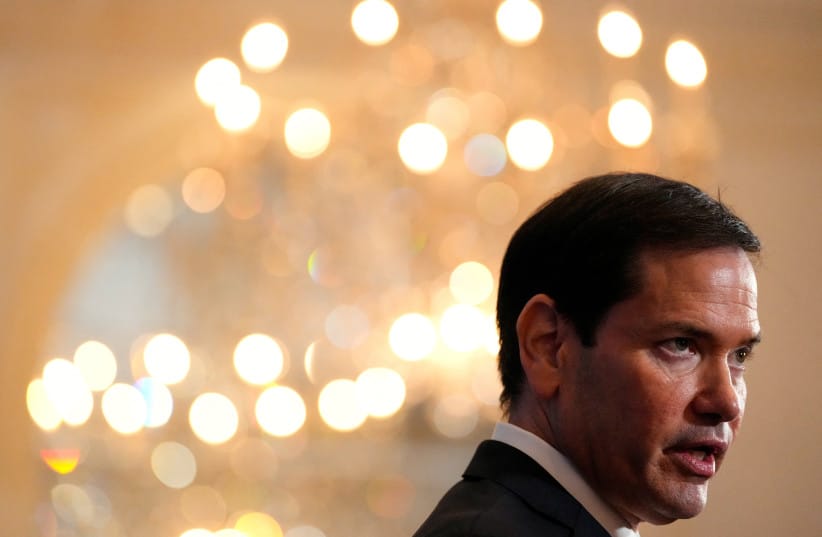 United States Secretary of State Marco Rubio speaks to the media after meeting with Russian Foreign Minister Sergey Lavrov, in New York, US, September 23, 2026. (credit: Yuki Iwamura/Pool via REUTERS)
He went on to note that “we stand with the Kingdom of Saudi Arabia and its people and extend our condolences to the victims and their families.”
The latest escalation by the Houthis has focused partly on Yemen’s western coast and the strategic Bab el-Mandeb Strait, which connects the Red Sea with the Gulf of Aden. Last week, the Yemeni government forces launched a counter-offensive to try to push the Houthis back on some fronts. According to Al-Ain News, the Southern Giants forces said on October 10 that they had destroyed five Houthi armored vehicles during an attempted advance toward Dhubab Airport, west of Taiz.
The forces said they “destroyed 5 Houthi armored vehicles and killed those on them, during the militias’ desperate attempt to advance towards Dhubab Airport on the west coast.”
Military sources told Al-Ain that the Houthis were mobilizing fighters in the Al-Shamaitain district, south of Taiz, and may be preparing to attack Al-Mudharabah Al-Ulya and outflank the Giants forces.
Region faces maritime insecurity amid attacks on oil tankers
The renewed fighting threatens shipping routes at a time when the wider region is already experiencing increased maritime insecurity. This means that Iran is not only involved in backing the Houthis but also continuing threats along a frontline that stretched from Bab el-Mandeb to the Strait of Hormuz to Iraq.
In a separate incident over the weekend, the United Arab Emirates National Guard announced on October 10 that its Coast Guard had rescued 22 crew members from an oil tanker that caught fire in the Arabian Gulf. According to Arab News, the National Guard said emergency teams responded to a distress call, located the tanker, and evacuated all 22 crew members. They received first aid and were reported to be in stable condition.
The announcement followed an incident involving the Panama-flagged tanker Gem No. 2, which was struck by an unidentified projectile off the UAE coast on October 9, sparking a fire. The UK Maritime Trade Operations agency said the vessel was hit approximately 13 nautical miles west of Al Jazirah Al Hamra. No group claimed responsibility, and the available reports did not establish whether the rescue involved the same tanker.
The combination of Houthi attacks on Saudi Arabia, renewed fighting around Bab el-Mandeb and threats to shipping in the Gulf illustrates how the Yemen conflict is increasingly intertwined with the broader regional confrontation. This has always been the Iranian modus operandi. It sees the region as a 3,000-mile frontline.
When Hamas attacked Israel on October 7, 2023, Iran also mobilized its proxies in Lebanon, Syria, Iraq, and Yemen. Although Iran lost Syria when the Assad regime fell, it still has powerful partners in Hezbollah and the Houthis. There are also Iraqi militias that support Iran.
Saudi Arabia has said it will not allow Yemeni territory to be used as a launchpad for attacks on the Kingdom or threats to international navigation. With Riyadh promising further action and the Houthis continuing their attacks, the escalation poses growing risks to civilian aviation, regional infrastructure and commercial shipping.