
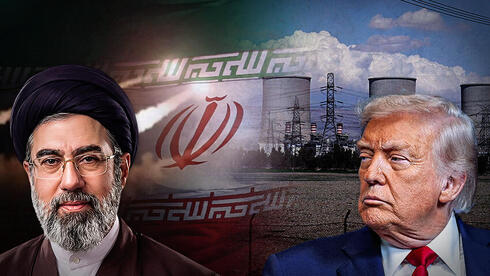
Washington continues to portray the partial reopening of the Strait of Hormuz as a success. However, U.S. preparations for another strike suggest a growing recognition in Washington, and probably in Jerusalem as well, that economic pressure on Iran does not guarantee its submission to American demands, much less the collapse of the Islamic Republic.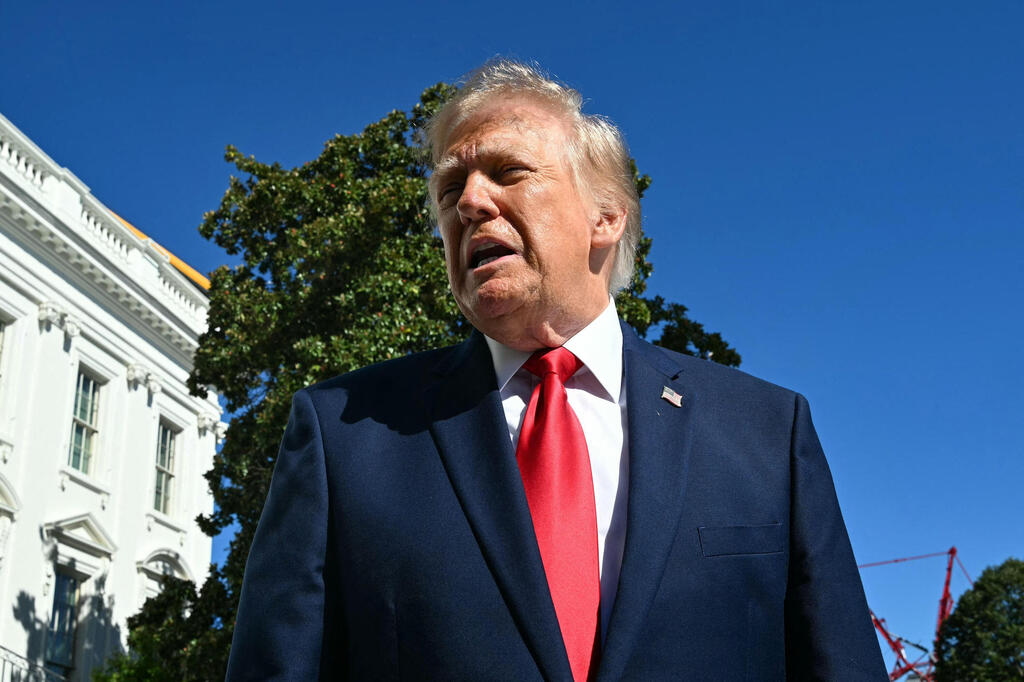
US President Donald Trump
(Photo: Alex WROBLEWSKI / AFP)
Iran is indeed paying a heavy economic price, but that does not mean the United States can maintain the current status quo indefinitely. The Trump administration continues to pay a political price for the war, which will likely be reflected in the midterm election results. At the same time, while the campaign to reopen the Strait of Hormuz has made it possible to restore oil exports to levels similar to those before the war, securing shipping requires a sustained and costly military presence.Moreover, the recovery in oil exports remains vulnerable to attacks by Iran and its regional proxies, which have intensified in recent days. Meanwhile, troubling reports continue to emerge about Iranian progress in the nuclear field, including efforts to prepare Pickaxe Mountain for possible future uranium enrichment and to restore sites previously struck by Israel that were used in Iran’s nuclear weaponization efforts.
For its part, Iran has shown no willingness to make the concessions demanded of it despite the mounting pressure. The leadership in Tehran is digging in its heels and showing little genuine willingness to soften its positions. There are several main reasons for this.
First, there is a complete lack of trust in the Trump administration. From the Iranian leadership’s perspective, even if Tehran agrees to the required concessions regarding Hormuz and its nuclear program, there is no guarantee that the war will end permanently or that Iran will receive the economic benefits it demands: an end to the naval blockade, the lifting of sanctions on oil exports and the release of its frozen assets.
Iran therefore demands tangible guarantees that the war will end, its assets will be released and the blockade will be lifted as a condition for reopening the Strait of Hormuz, let alone making potential concessions on the nuclear issue.
Concessions do not guarantee survival. On the contrary, they could expose weaknesses that Iran’s enemies might exploit later. The cost of compromise is therefore still perceived as greater than the cost of resistance.
Second, Tehran believes it can still outlast the United States and the West in a contest of endurance. Iran has patience and is convinced that Trump does not share that quality. He does not want the war to remain at the center of the American agenda during the second half of his term.
Moreover, Iran retains additional options for escalation: intensifying attacks in the Gulf, expanding the war through its allies in Yemen and Iraq and, in extreme scenarios, stepping up direct attacks on U.S. forces in the region, launching surprise military operations against its neighbors or undertaking dangerous nuclear initiatives.
Tehran already regards some developments in recent months as achievements that serve its long-term strategy. These include the completion of the U.S. withdrawal from Iraq, the reduction of the American military presence at some regional bases and the continuing economic cost of restrictions on shipping through Hormuz.
That strategy is aimed not only at ensuring the regime’s survival but also at reshaping the regional order by securing recognition of Iran’s status and highlighting the burden that the American presence places on countries in the region.
Concern over the continuing economic deterioration
This does not mean the leadership is ignoring the economic hardship. Senior Iranian officials, including President Masoud Pezeshkian and Parliament Speaker Mohammad Bagher Ghalibaf, have already expressed concern over the continuing economic deterioration.
Nevertheless, the Iranian regime believes a survival economy can buy it sufficient time. Such measures could include adjusting the value of shopping vouchers, local efforts to tighten controls on rising prices of basic goods to cushion the impact on lower-income groups, continued use of foreign currency reserves accumulated in recent years and, if necessary, economic austerity measures.
Even if protests resume, the regime believes it can contain them, as it has in the past. Senior Iranian officials have already warned in recent weeks that any attempt to renew the protests will be met with brutal and uncompromising repression.
Ultimately, the Iranian regime views the current confrontation with the United States as an existential threat. Iranian officials believe that threats by senior U.S. figures, particularly Trump, to wipe out Iranian civilization reinforce their view that the ultimate goal of the United States and Israel is not merely to topple the regime but to bring about the collapse of the Iranian state and even its breakup.
Under these circumstances, concessions do not guarantee survival. On the contrary, they could expose weaknesses that Iran’s enemies might exploit later. The cost of compromise is therefore still perceived as greater than the cost of resistance.
As time passes, it is becoming increasingly clear that even if both sides are adjusting to the new status quo of “neither war nor peace,” it cannot last indefinitely. As pressure fails to produce the desired results, the United States is increasingly tempted to resort to force again, while Iran faces a growing temptation to escalate in order to break the deadlock.
Even if the U.S. elections delay the moment of decision, it is doubtful they will provide a solution. The question will then arise once again: Can another round of fighting help achieve the strategic objectives that remain unmet even after two military campaigns against Iran — blocking its path to nuclear weapons and destabilizing the regime to the point of collapse — or will it merely open another chapter in an endless war?
Dr. Raz Zimmt is director of the Iran and Shiite Axis Program at the Institute for National Security Studies (INSS).