
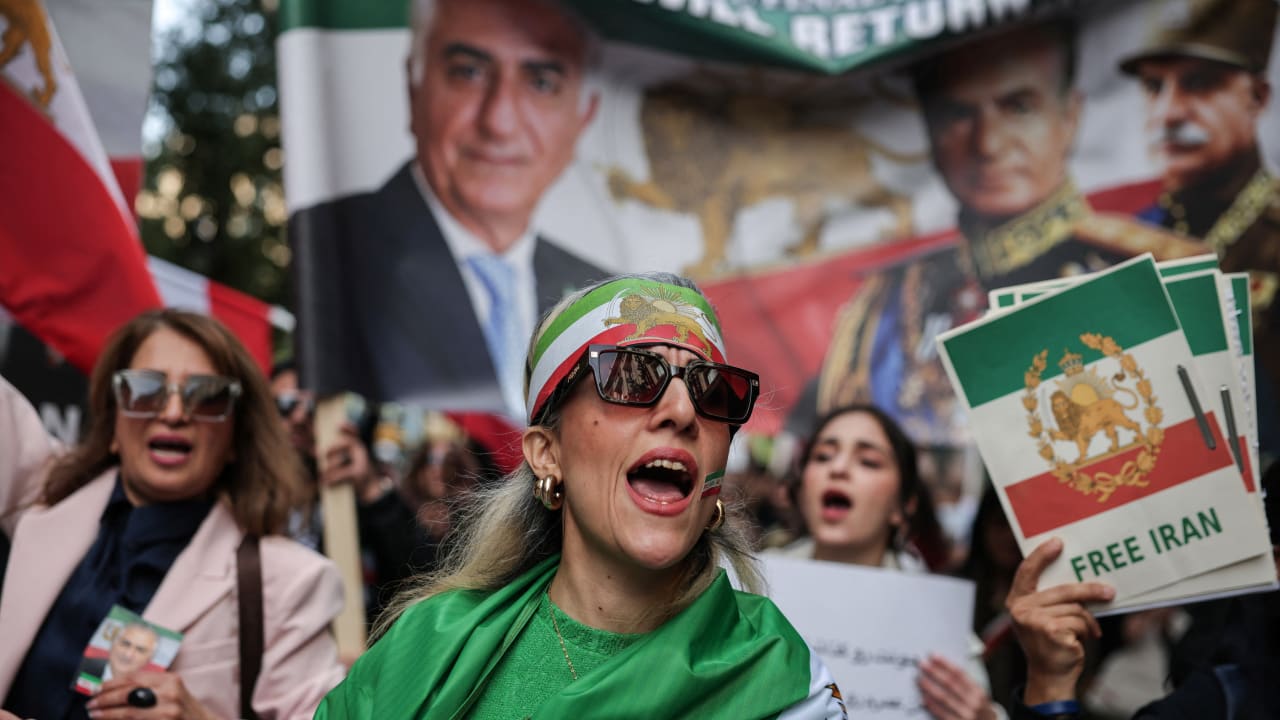
My recent article in The Jerusalem Post issued a critical warning to Israeli and Western strategists: Do not jeopardize the historic, civilizational bond with the Iranian people by flirting with marginal, transnational separatist factions. Predictably, the piece provoked a flurry of angry, highly personalized reactions from anonymous quarters and regionalist echo chambers.
Rather than addressing the hard geopolitical, demographic, and historical facts I raised, these counter-arguments resorted to emotional deflection and historical revisionism. This visceral anger and the complete evasion of historical evidence, however, only serve to validate the core arguments of my thesis. To misread the reality of Iran at this critical historical juncture is a luxury neither Israel nor the free world can afford. The narrative presented by these critics is fundamentally detached from reality, completely falling apart when confronted with seven undeniable truths.
Seven undeniable truths from Iranian history
FIRST, MY critics deliberately misinterpret antiquity and my invocation of Bistun and Taq-e Bostan. I referenced these monumental landmarks in the Kermanshah province to highlight an undeniable civilizational continuity. These ancient monuments prove that for over 2,500 years, this region has been a foundational pillar and a vital core of Iranian national sovereignty and territory, not a peripheral borderland waiting to be fractured.
Second, they attempt to obscure the clear line I drew between ordinary citizens and transnational separatists, calling it a “false dichotomy.” This is a classic distortion. My article explicitly separated the patriotic majority of the population from “transnational separatist movements.” It is these transnational cults and factions that actively pursue separation, whereas the actual population remains deeply integrated into the fabric of the nation.
Third, they entirely erase the strongholds of Iranian nationalism: Kermanshah and Ilam. My critics imply that the identity of the people in the western provinces is entirely defined by the political ambitions of armed rebel groups. They conveniently ignore the demographic and ideological reality of major urban centers including Kermanshah, the most populous Kurdish city in the region, and Ilam that have historically stood as fortresses of Iranian patriotism. In Kurdish regions, the local cultural identity is recognized not as an opposition to Iran, but as the most authentic and ancient narrative of being Iranian.
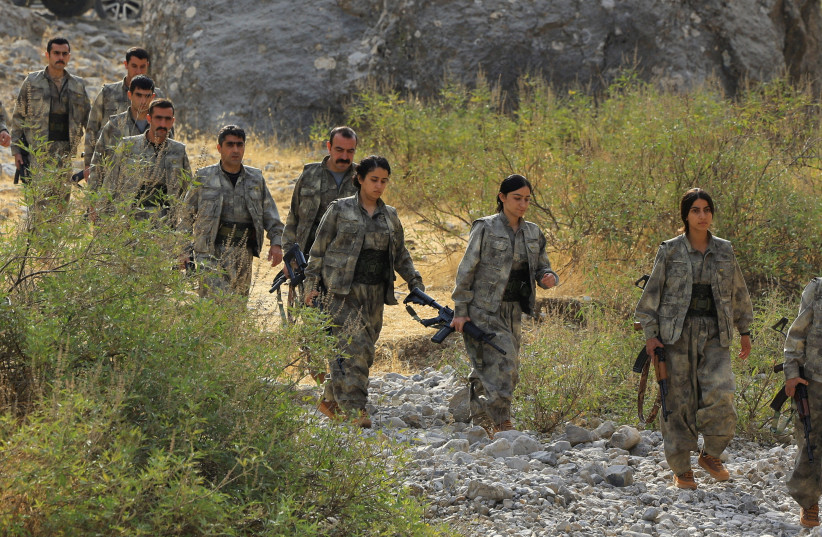 Fighters with the Kurdistan Workers’ Party (PKK) walk for a disarmament ceremony marking a significant step toward ending the decades-long conflict between Turkey and the outlawed group, in the Qandil mountains, Iraq October 26, 2025. (credit: REUTERS/Thaier Al-Sudani TPX IMAGES OF THE DAY)
Fourth, they politically exploit shared suffering, attempting to weaponize selective regional cases to paint a picture of an isolated, uniquely targeted territory. This is not a valid analytical response; it is a distortion of tragedy. The Islamic Republic’s brutal execution apparatus does not target an isolated area; it commits atrocities across the entirety of Iran. Just on Monday, October 5, 2026, the regime executed Alireza Sepahi and Alireza Raeisi, two young protesters arrested during the uprisings in Isfahan. When young citizens from the heart of Isfahan face the exact same gallows, it proves that state terror is a structural affliction holding the entire nation hostage. Weaponizing this universal Iranian tragedy to legitimize the political ambitions of armed, factional groups is a grotesque deflection from a shared national struggle against a common oppressor.
Fifth, there is a telling and total silence from my critics regarding the Kurdistan Workers’ Party (PKK), its leader, and their anti-Israel legacy. This glaring omission is proof of intellectual bankruptcy. They completely evade the fact that many transnational separatist movements look up to Abdullah Ocalan as a foundational figure, despite Ocalan’s continuous anti-Israel legacy. Furthermore, they have no defense against the historical fact that the PKK operated as a proxy for the Assad regime, trained alongside armed anti-Israel Palestinian factions in Lebanon’s Bekaa Valley front, and fought directly against Israel. Because certain armed groups operating in Iran are direct branches of this terrorist PKK network, my critics completely censor this history, knowing it destroys their attempt to appeal to an international audience.
Sixth, my critics deliberately rewrite the history of the 1979 catastrophe to hide their own role in Iran’s destabilization. Armed regional factions were an active part of the disastrous 1979 coalition – alongside Islamists, Marxists, and Mossadeghists – that brought down the nation. Leaders like Abdul Rahman Ghassemlou openly pledged allegiance to Ayatollah Khomeini, only to later clash over the spoils of the revolution when the Islamists turned around and purged them.
If these timed factions, disguised as political parties, truly sought a democratic, unified Iran rather than secession, why did they immediately exploit the country’s chaotic vulnerability just days after February 11, 1979, the exact day the previous regime fell and the Islamists seized power? Specifically, on February 20, 1979, a mere nine days after the revolution, they aggressively raided and looted the national army garrison in Mahabad, assassinating its commander and stealing heavy weaponry, including tanks, heavy artillery pieces, and thousands of rifles. They then marched on Sanandaj, and had it not been for the fierce resistance of the Iranian National Army’s 28th Division garrison, they would have completely captured the city.
Let us ask an honest question to an international audience: Would the Israeli government or public ever tolerate a so-called political faction that raids and captures an IDF base? Calling these militant groups “freedom fighters” is an insult to sovereign nations.
Finally, they seek to erase the historical reality of local resistance, such as the Paveh events of August 1979. They imply that armed groups have always naturally represented the collective will of the local population. History records otherwise. During that critical juncture, it was the local, indigenous patriotic population of Paveh in Kermanshah province who actively took up arms and resisted the violent, armed incursion of separatist factions. This historical event proves that the people themselves have historically been the first line of defense for Iran’s territorial integrity against armed groups.
ULTIMATELY, THE angry reactions to my piece fail to counter its core warning. By flirting with marginal, transnational separatist elements, outside powers risk alienating the patriotic majority of the Iranian public.
The true, lasting strategic asset for Israel and the West is the 2,500-year-old civilizational bond with a unified Iranian nation, not short-sighted investments in armed factions like the PKK and its branches that carry a historical legacy of hostility toward the West. We must look toward a future democratic Iran based on historical territorial integrity, national unity, individual liberty, and equality before the law.
The writer is the communications director to Prince Reza Pahlavi and an Iranian journalist who previously served as editor-in-chief of news at Manoto TV, a UK-based Persian-language television network.