
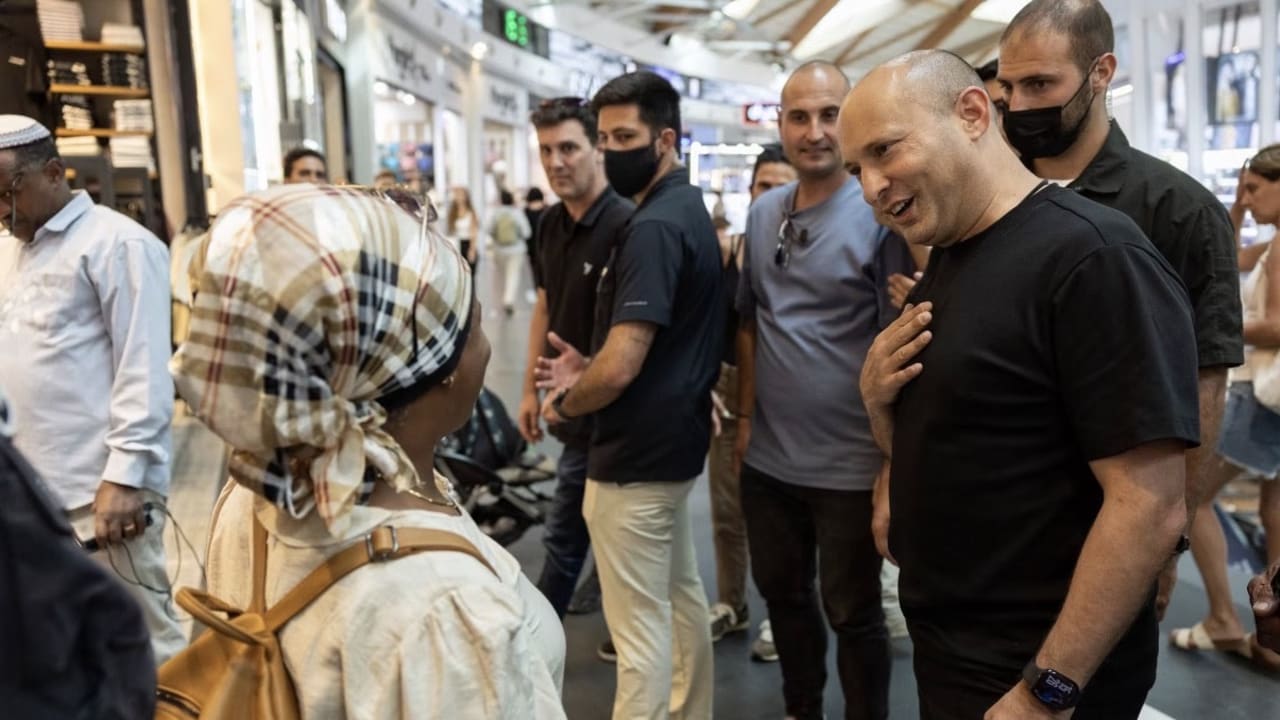
A few weeks ago I visited Nahariya. It is a beautiful town for Israeli families by the sea, known for years as the pearl of the Western Galilee, a place tourists should flock to.
But tourists simply weren’t there, and they haven’t been for a long time. The old hotels along the seafront tell the story: several are no longer hotels. They’ve been turned into old-age homes.
While it’s easy to attribute this reality in Nahariya, and other towns like it, to the security situation facing the North and the country as a whole, the truth is far more complicated.
The neglect of Israel’s tourism sector
What is happening in Nahariya is a symptom of a much bigger problem: the years-long neglect of Israel’s tourism sector. This neglect is now having a negative ripple effect across the entire economy.
Inbound tourism is down 71% from 2019. The cost is staggering: an estimated NIS 70 million a day, money that never reaches tour guides, restaurants, hotels, and the thousands of small businesses that depend on tourists.
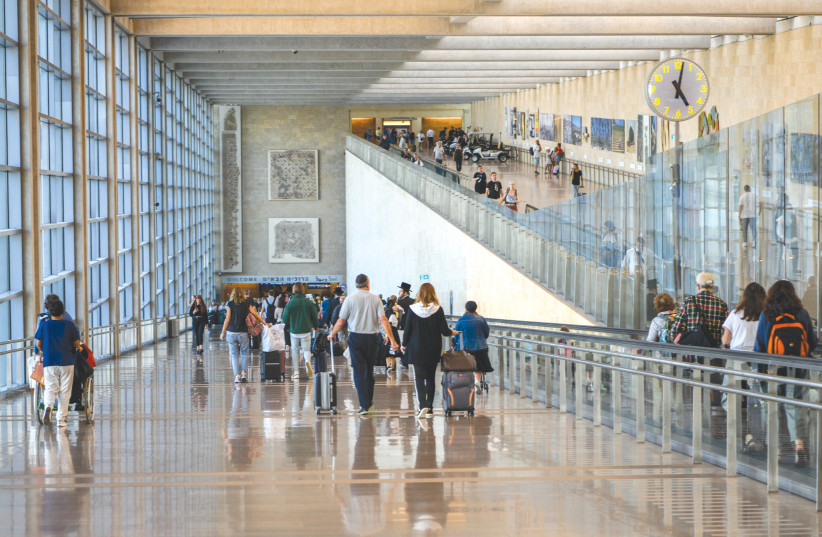 TRAVELERS COME and go at Ben-Gurion Airport (credit: Arie Leib Abrams/Flash90)
The war explains some of it. But the truth is we were pushing and pricing ourselves out of the market long beforehand.
The problems begin at our airport. Again and again, we hear horror stories from travelers who have sat for hours on hot runways, waited endlessly for luggage, and watched flights get canceled over a strike that never should have happened.
We run almost the entire economy through one overloaded airport, and despite more than a decade of promises, a second one still hasn’t been built. When our single, grossly mismanaged gateway buckles during peak season, there’s nothing to fall back on.
That same mismanagement, driven by political appointments run amok and inconsistency from state authorities, often repels foreign airlines from maintaining or increasing their presence in Israel, ultimately driving up flight prices both for foreign visitors and Israelis who want to conduct business, travel, or visit family abroad.
Next, Israel is short around 12,000 hotel rooms. This impacts not only incoming foreign tourists – too little supply means no real competition, and no competition means prices climb. For many Israeli families, a domestic vacation has been put out of reach.
A week in Israel has become a luxury for a visitor from abroad and a serious expense for a family that just wants a holiday at home. Many who would gladly holiday here find it cheaper to fly abroad, and the Israeli economy loses out.
This lack of hotel infrastructure is the result of poor regulation.
Building a hotel in Israel can take five to 10 years. An entrepreneur who wants to invest has to fight through a maze of planning authorities and licensing bodies. Most take one look and put their money somewhere else.
None of this had to happen. It’s the result of a government that treats tourism as an afterthought. The health minister, Haim Katz, is also responsible for Israel’s tourism, one of several portfolios piled onto the same person.
When a government lets one minister hold numerous jobs at once, it’s telling you exactly how little it values those ministries and the people they serve.
IT DOESN’T have to be this way. Look at Croatia, another Mediterranean country, roughly our size, with a coastline and history to sell, and no greater natural advantages than we have.
A decade ago, its tourism sector earned a little over €8 billion a year. Today it earns more than €15b., almost double, and tourism now supports around 150,000 jobs and more than 7% of the country’s entire workforce.
In that same time, Israel has moved in the opposite direction: we had 4.5 million tourists in 2019, a collapse to zero during COVID, and a recovery to 2.5 million tourists during Naftali Bennett’s time as prime minister.
His government understood the industry’s importance, and since the current government took office, it has collapsed again.
It’s easy to attribute this to the war, but Israel’s long-held, built-in advantages haven’t disappeared. We have a government that’s incapable of properly handling obstacles and challenges when they arise.
I spent more than 20 years in senior management in the advertising world, and I can tell you with total confidence that we have the best product on Earth.
We are blessed with some of the finest beaches, historical sites, natural beauty, and food anywhere in the world, and we are leaving money on the table.
Everything I learned in the private sector points to the same answer: we must build more, cut the red tape, give real power to the people on the ground, and do a better job selling our product to the world.
If elected, B’Yachad, under Bennett, will push to build mid-range (three- and four-star) hotels and guest rooms across the Galilee, the Negev, and the communities near Israel’s border.
Every hotel is far more than a place to sleep. It’s an anchor that lifts a whole regional economy: restaurants, wineries, farms, local attractions, transport, and the jobs that come with all of them.
This can greatly contribute to growth and recovery in communities like those in the Gaza border communities, Eilat, Kiryat Shmona, Nahariya, and more.
To make this possible, we’ll create a single “fast lane” that brings land, planning, and licensing under one roof with firm deadlines, so a new hotel gets approved in 18 months instead of five years. We’ll have the same fast lane for the communities’ small businesses that grow up alongside it.
We’ll also move power out of Jerusalem. You can’t run tourism in the Galilee or the Negev from a desk in the capital.
We’ll divide the country into about eight tourism regions, each with its own professional manager, targets, and plan, working directly with the developers who actually know the ground.
We’ll also invest in a marketing approach rooted in achieving defined metrics: bookings, overnight stays, and revenue for local businesses. The next generation of hospitality professionals, with discharged soldiers first in line for training and jobs.
All of this means more income for businesses, revenue for local councils, and good-paying jobs in every corner of the country.
This is the work of the “Government of Repair.” While the current government maneuvers to stay in power, we’ve spent our time diagnosing the damage, writing concrete plans to fix it, and putting the right team in place to execute them.
Today, the plan is ready, the team is in place, and we intend to get our country moving again – including its tourism industry.
We have the best product in the world. It’s time we started acting like it.
The writer is the former head of the Keren Hayesod/UIA Marketing Division and one of B’Yachad’s candidates for Knesset.