

Listen to this article
Estimated 3 minutes
The audio version of this article is generated by AI-based technology. Mispronunciations can occur. We are working with our partners to continually review and improve the results.
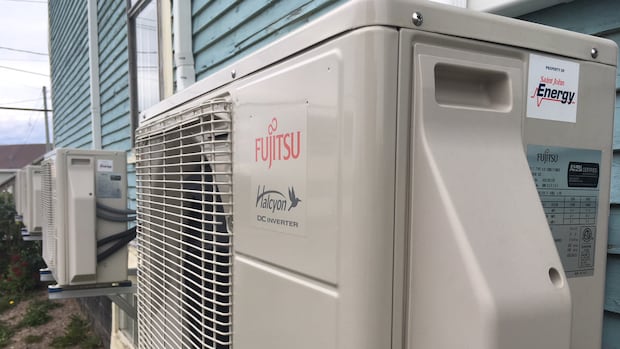
After news broke Tuesday that the Canadian government will pay $2 billion to homeowners who install heatpumps, starting early next year, CBC News Sudbury reached out to experts to learn more about how effective the technology is in frigid temperatures.
Do heat pumps work in low temperatures?
Heat pumps are rated on a scale called SEER, or Seasonal Energy Efficiency Ratio, explained Anthony Davis, the operations manager at Greater Sudbury Plumbing, Heating, and A/C. The higher the SEER rating, the more efficient a heat pump is.
He said the most efficient heat pumps available in Canada right now can handle around -35 degrees celsius, give or take.
Those are often called “cold climate heat pumps,” said Steve Filioglou, the general manager at Tombari HVAC in Sault Ste. Marie.
But both Filioglou and Davis said they recommend pairing a heat pump with another heat source — be it natural gas, propane or electric heat — for those times in northern Ontario when the temperature dips to -40 degrees celsius and below.
Davis said that he thinks the day is coming when a heat pump will be the home’s only and primary heat source, and the technology is “improving substantially, year after year.”
Martin Luymes, the vice president of government and stakeholder relations for the Heating, Refrigeration and Air Conditioning Institute of Canada, told CBC News that consumers should be careful which contractor they work with, because there’s a mistaken impression among some contractors that the latest heat pump technology can’t handle cold temperatures.
“[The contractor] will say, ‘well, I don’t know, I don’t really trust that equipment,'” said Luymes. “What they’re really saying is, ‘I don’t understand it. I’ve not taken the time to master it, so I’m gonna recommend an alternative solution,’ which is likely a natural gas furnace or boiler, right, because that’s what they’re comfortable with. That’s a bit of a problem in the industry.”
Is it worth it to install a heat pump?
Even though they recommend having a heat pump installed alongside an additional heating system, Filioglou and Davis both agreed that installing a heat pump is worth it for the savings.
A heat pump is cost-effective because of how energy efficient it is, Davis explained, calling the operating costs “just fantastic.”
“You’re only getting -40 [temperatures] for maybe a week or two in the middle of late January, early February, whenever it comes,” Davis said.
“Or maybe we don’t see it at all; sometimes we get mild winters. So that heat pump might be working 365 days a year, saving you money.”
Filioglou said a lot of people in rural areas, who are on forced air propane or forced air oil, have been able to supplement that with centralized heat pumps.
“Especially with oil and propane prices, they’re astronomical these days, so a lot of people in those rural areas wanna offset [that],” said Filioglou.
“The nice thing with these systems is that you get the best of both worlds, right?”
Both Filioglou and Davis said they frequently get requests for heat pump installations, and expect to hear from a lot more customers after the government’s announcement.
How a heat pump works: