

Listen to this article
Estimated 4 minutes
The audio version of this article is generated by AI-based technology. Mispronunciations can occur. We are working with our partners to continually review and improve the results.
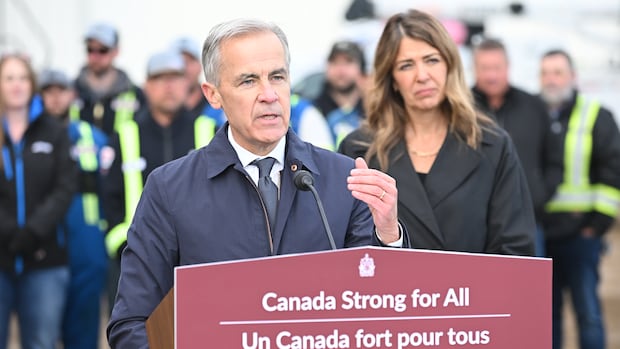
Prime Minister Mark Carney is expected to be in Alberta in the coming week, as the days tick down to a crucial referendum vote on Oct. 19, CBC News has learned.
Voters will cast their final ballots on a number of issues, including the key question of separating from Canada.
The outcome of that vote won’t automatically trigger the province’s separation — it’s just the first step in gauging whether a binding referendum on leaving Canada would be held — but whatever the outcome, it will send a message to those vying to keep Canada together and those trying to pull it apart.
For the federal government’s part, it designated the Pacific Link oil pipeline, which runs from Alberta to the B.C. coast, the first major project of national interest this month — a move that Alberta Premier Daneille Smith touted at the time as “demonstrating that co-operative federalism can work in action.”
But for one Albertan voting in the referendum, the timing raises red flags about Ottawa’s intentions.
“Those announcements could have been made months ago, but they weren’t,” Angela Tabak, co-founder of Alberta Women’s Independence Network, told Rosemary Barton Live in an interview airing on Sunday.
“The political games that get played on the Canadian people, Albertans are not that stupid. We see through it.”
In Tabak’s view, “Our voices and our opinions, our way of life, our economies do not count as much when it comes to the federal government making certain decisions as other areas of the country.”
WATCH | A look into both sides of the separation debate: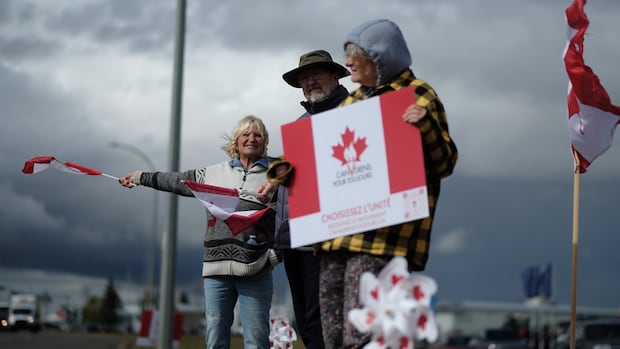
Will Alberta leave Canada? The campaigns trying to sway the vote
On Oct. 19, people in Alberta will go to the polls to decide if the province should pursue separation from Canada. Ahead of the historic referendum, CBC’s Nick Purdon hits the road with both sides of the debate as they try to sway the vote.Foreign interference allegations
While Carney faces the task of attempting to change that narrative for Albertans who feel similarly to Tabak, another challenge remains: The prime minister says his government is tracking allegations of foreign interference in the upcoming referendum.
It comes as Canada’s new foreign influence commissioner said he notified more than 60 groups and individuals involved with the Alberta referendum campaign about legal obligations to report foreign influence.
On Oct. 3, the Globe and Mail reported that as recently as April, some of those campaigning for Alberta independence had met on both sides of the border with U.S. entities.
Pro-separatist organizers were said to have discussed offering U.S. operatives greater access to Alberta’s oil and freshwater resources in exchange for supporting the province’s independence.
WATCH | How should Canada respond to foreign interference threats?: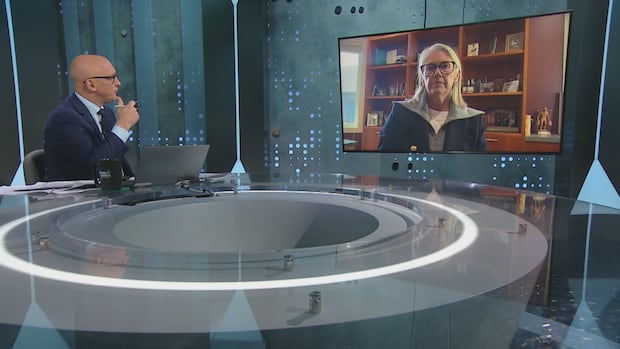
Should Canada publicly call out foreign meddling in Alberta’s referendum?
There’s mounting evidence foreign actors are targeting Albertans, with just 10 days to go before they vote in a referendum on separation. Does Canada have the tools to deal with this threat? A former national security adviser to Justin Trudeau weighs in.
Speaking with CBC chief political correspondent Rosemary Barton in an interview airing on Sunday, Intergovernmental Affairs Minister Dominic LeBlanc played down concerns about interference.
“I don’t think it’s more intense than we would have expected. We have for some time been aware of different foreign actors that seek to interfere in democratic processes in Canada. It’s not new.”
Asked about the Globe and Mail’s reporting, LeBlanc said, “We’ll let those people explain to Albertans why they thought it was useful to take some trip to Washington and meet some people in a foreign administration to hold out some kind of commitments that they may or may not ever be able to deliver.”
Even more overtly, Tesla and SpaceX CEO Elon Musk waded into the separatism debate last week, calling for Alberta, Quebec and Saskatchewan to separate from Canada on X, his social media platform.
@Polymarket They would be better off.
Alberta and Saskatchewan should separate too.
Musk’s comments were quickly rejected by Carney, Smith and Saskatchewan Premier Scott Moe.
Conservative Leader Pierre Poilievre also weighed in, saying that “we need to spend less time worrying about silly tweets by people who have no power over what Canadians do” and instead spend more time focusing on issues such as affordability.
Poilievre has also said he will travel to Alberta ahead of the referendum.
WATCH | Poilievre responds to Musk’s posts urging separation: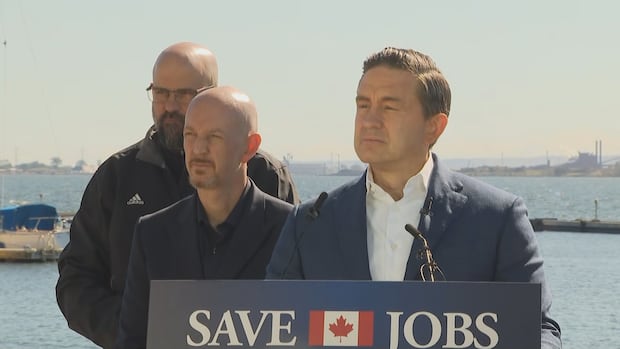
‘Tweets and memes do not affect Canada’: Poilievre responds to Elon Musk separatism comments
Asked whether he is concerned about foreign interference from the U.S. on separatist movements in Canada, Conservative Leader Pierre Poilievre says ‘we need to spend less time worrying about silly tweets by people who have no power over what Canadians do’ and instead focus on things like affordability. He says memes do not affect Canada, but the decisions made by Canadians do.
But for some, Musk’s unsolicited advice to Canadians sparked further concerns of foreign influence on the upcoming vote.
“I think that folks who are thinking that there’s something to be gained for Albertans by separating ought to ask themselves why certain folks south of the border think they have something to gain from Alberta separating,” former Alberta NDP premier Rachel Notley told Rosemary Barton Live.
As that vote inches closer, LeBlanc said the power remains in the hands of Albertans.
“I’m very, very confident that these decisions, if it’s in a referendum or if it’s in an election, are made by Canadians who go to polling stations and cast their ballots.”