
US President Donald Trump lives in a transactional foreign policy universe. You give, you get. You don’t give, don’t expect much.
Israel has given a lot and, in return, gotten a lot. It has fought wing to wing with the US in Iran, provided valuable intelligence and demonstrated the military capabilities Washington wants to see in an ally.
In April, US Defense Secretary Pete Hegseth said, “To our Israeli allies, thanks for being a brave, capable and willing ally on this battlefield. The rest of the world and the rest of our so-called allies saw what real capabilities look like. They should take some notes.”
America’s “legacy” allies – from NATO countries to South Korea – have not stepped up to anywhere near the same degree. They have consequently been on the receiving end of more than just harsh words.
Trump ordered joint military exercises with South Korea scaled back, citing Seoul’s refusal to help with the Iran campaign, and threatened to cut off trade with Spain after Madrid denied Washington the use of its bases for strikes on Iran.
And then there is Saudi Arabia.
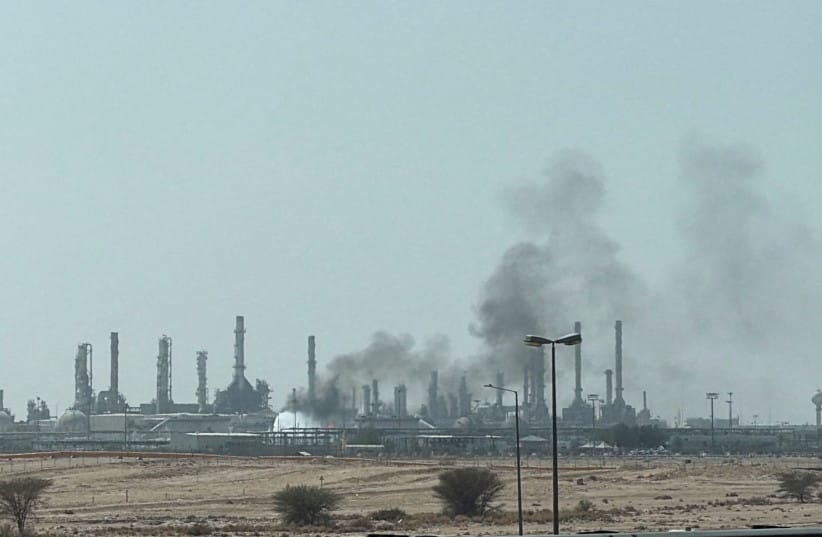 Smoke rises from a fire at the Aramco refinery south of Riyadh, Saudi Arabia, October 3, 2026. Picture taken with a mobile phone. (credit: REUTERS/STRINGER)
Many have been puzzled by Washington’s reluctance to intervene directly in the Saudis’ battle with the Houthis. This battle took a particularly deadly turn on Saturday when the King Khalid Airport in Riyadh was struck by a missile, killing 12 people and injuring more than 300, the most serious attack in Saudi Arabia in a decade.
This came as tensions between the Saudis and the Houthis steadily escalated – Saturday’s attack was the third such attack in a week, since the Saudis launched a counter-offensive against the Houthis to push them back from the strategic Bab el-Mandeb Strait.
Despite all that, Trump has wavered. Washington has provided intelligence and targeting assistance, but the president has so far stopped short of direct military intervention. On Saturday, he said he was considering joining the Saudi strikes.
Why the hesitation?
The explanations offered range from reluctance to become engaged in another major military campaign less than a month before the midterm elections to concern about weapons stocks depleted by the war in Iran.
Saudi Arabia’s refusal to join the Abraham Accords
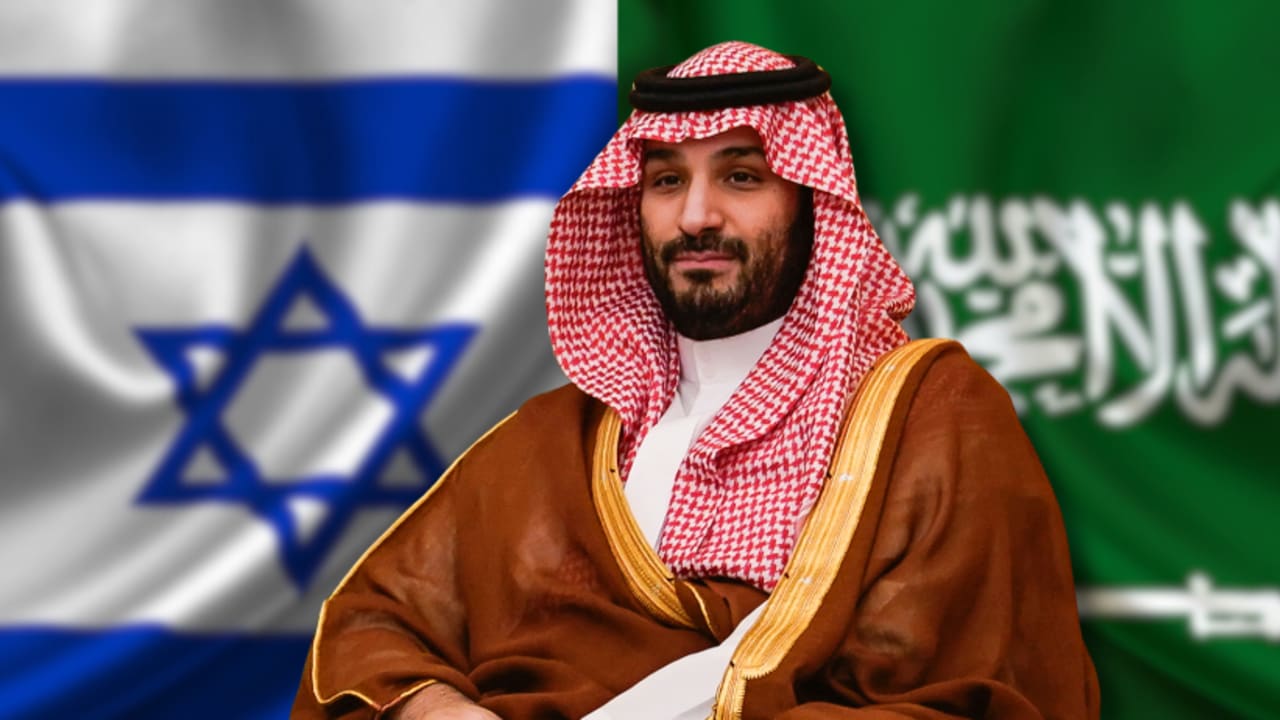
Another possible explanation is Trump’s frustration with Saudi Crown Prince Mohammed bin Salman’s steadfast refusal to join the Abraham Accords. Saudi normalization with Israel would have given Trump an important diplomatic prize before the elections.
If this is indeed the case, then it fits into a pattern. In July, the US and Saudi Arabia signed a nuclear cooperation agreement, opening the door to a major commercial role for American companies. Trump then said he would not proceed unless the Saudis joined the Abraham Accords.
You give, you get.
Saudi normalization with Israel has long been the Middle East’s diplomatic holy grail.
Prime Minister Benjamin Netanyahu’s former military secretary, Avi Gil, said this weekend in a long, revealing interview with Israel Hayom that the desire to bring Saudi Arabia into the Abraham Accords helped explain Israel’s restraint toward Hamas and Hezbollah in the run-up to October 7.
Israel wanted to avoid an escalation that could derail the normalization process. He said the two countries were “closer than people realize” to a deal.
But Israeli action didn’t scuttle the process. Hamas did that all on its own.
Since then, the Saudis have made clear – even as the Iranian threat loomed larger and normalization with Israel made good strategic sense in trying to create a new security architecture for the region – that without a pathway to a Palestinian state, they were not going to normalize.
That leaves a familiar gap between strategic logic and political feasibility, since – with October 7 so fresh and raw – it is highly unlikely that any Israeli government in the foreseeable future would agree to a Palestinian state.
Israel and Saudi Arabia face threats from Iran and its allies. Both have an interest in preventing the Houthis from threatening shipping, airports, and regional stability. Those shared interests provide a strong argument for cooperation. They have not, however, proven enough to overcome the political obstacles to establishing an open relationship.
Further evidence of where Riyadh was looking for its regional security architecture came in August, when it signed a joint defense pact with Pakistan and Turkey. Rather than bringing its relationship with Israel into the open, Saudi Arabia was strengthening an alternative framework with two Muslim powers.
The pact’s promise was sweeping: an attack on one would be considered an attack on all. So far, the response to the Houthi campaign has not matched that rhetoric. Turkey has reportedly begun providing defensive and technical assistance, but that is a long way from joining Saudi Arabia in striking the enemy attacking it.
Signing this pact showed that Saudi Arabia – while interested in maintaining intelligence cooperation with Israel and keeping it discreet – was seeking far-reaching security arrangements elsewhere.
Then an Omani pilot planned to crash a flydubai plane full of Israeli passengers into Ben-Gurion Airport, only to be thwarted by some brave and resourceful passengers and crew members, and Jerusalem got an unvarnished view of where it stands with the Saudis.
Yes, the Saudis allowed a distressed plane full of Israeli passengers to land at a civilian-military airfield in Tabuk. And, yes, Saudi medical personnel cared for Israeli passengers. Both were consequential acts of assistance in a moment of acute danger.
But Riyadh adamantly refused Israel’s request to send its own aircraft to collect the passengers. A replacement flydubai plane brought them home.
Cooperation, but to a point
This exposed the boundary between practical cooperation and public acceptance. Allowing an Israeli plane to pick up the passengers would be one gesture too far on the road to normalization: one which would have been staunchly opposed by much of the Saudi public and undoubtedly weaponized against the Saudis by the Iranians.
Whatever the precise calculations behind that refusal, the political message was clear: cooperation could proceed, but only so far.
Ten days later, Saudi Arabia’s own airport was targeted, and all of a sudden it is looking for allies in its fight with the Houthis.
That attack inevitably led to speculation that this might bring Israeli-Saudi security cooperation into the open and lead to closer ties to combat a common threat. Weakening the Houthis, after all, would serve Israeli interests as well as Saudi ones. The group’s hostility toward Israel is not exactly a secret.
But shared enemies don’t necessarily lead to joint military operations. Public Israeli involvement could carry political costs for Riyadh and provide ammunition for those seeking to portray the Saudi campaign as serving Israel.
The Saudi leadership would have to weigh those costs against the benefits of the assistance. Israel, in turn, would have to decide what risks it should take on the Saudis’ behalf and what it could expect in return.
While the airport attack does not guarantee a breakthrough between Israel and Saudi Arabia, it does force Riyadh to face this question: does it make sense to keep one of its potentially strongest regional partners at arm’s length?
And for Israel, the question is a variation on Trump’s transactional theme: How much should it give when the Saudis are still unwilling to publicly be seen taking?