

Former Prime Minister Naftali Bennett unveiled what he called a “service revolution” on Sunday, promising extensive financial benefits for soldiers and reservists while cutting state support for those who evade military service. At the same time, Ofer Winter, leader of the Amcha Yisrael party, presented a competing conscription plan that would recognize up to 25% of each ultra-Orthodox draft-age cohort as full-time Torah scholars, effectively allowing them to avoid military service.
With just over two weeks remaining before Israel’s October 27 election, the rival proposals place the contentious issue of ultra-Orthodox military enlistment at the center of the campaign.
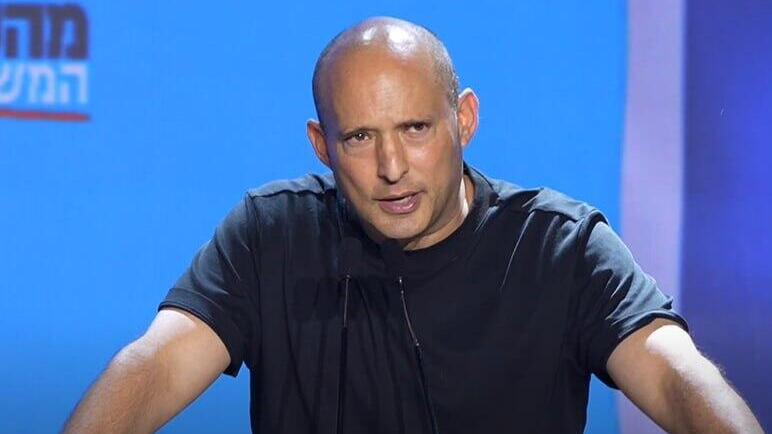
Bennett vows to shift 30 billion shekels from draft dodgers to troops
Speaking at an election event, Bennett, chairman of the Beyachad party, outlined a package that includes free daycare for reservists, 50% discounts on certain payments and a housing subsidy of 1 million shekels for eligible service members.
“A vote for Netanyahu and Deri, who promise another four years of state-funded draft evasion, is a vote that guarantees the next disaster,” Bennett said, referring to Prime Minister Benjamin Netanyahu and Shas leader Aryeh Deri.
“For 17 years, Netanyahu has funded draft evasion in exchange for staying in power. Netanyahu is dismantling the IDF, and he knows it. The chief of staff has raised 10 red flags. Hamas is building up its strength along the borders, and the IDF is crying out for reinforcements. It is short 20,000 soldiers.”
Bennett argued that the government could no longer continue providing financial support to those who avoid service while the military faces severe personnel shortages.
“As long as Netanyahu, Deri, Smotrich and Goldknopf keep paying people not to enlist, who exactly is going to provide our soldiers with the reinforcements they need?” he asked.
“We will take 30 billion shekels from the draft dodgers and transfer that money to those who serve. That is the service revolution: Anyone who does not serve the country will not receive a single shekel from the state.”
Winter’s Amcha Yisrael party also released the main points of its proposed military service reform on Sunday, pledging to make combat soldiers and reservists a national priority.
According to the party, the plan rests on three elements: legislation and financial benefits, establishing military service frameworks adapted to different populations, and Defense Ministry supervision and enforcement of recognized religious study institutions.
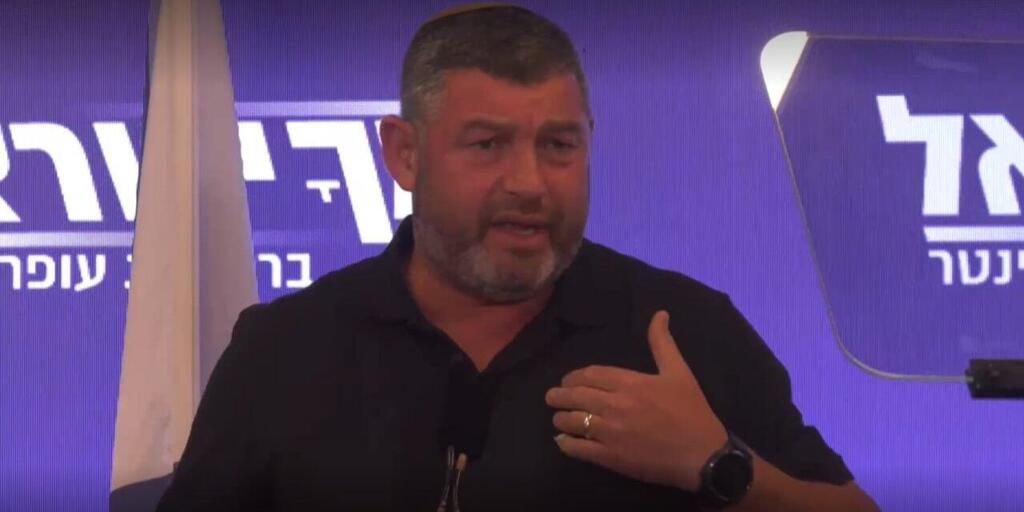
Ofer Winter, leader of the Amcha Yisrael party
(Photo: Miki Schmidt)
The party said implementation would be anchored in a future coalition agreement and the state budget, including the necessary legislation, regulations and enforcement mechanisms.
Among its proposals is a substantial increase in salaries for soldiers performing mandatory service, with combat soldiers receiving double their regular pay toward the end of their service.
However, the proposal also creates a formal exemption mechanism for some Haredi men.
Under the plan, the number of yeshiva students eligible for recognition as full-time Torah scholars would depend on the IDF’s operational requirements and its ability to absorb new recruits, with an upper limit of 25% of each Haredi draft-age cohort.
That would leave a significant share of eligible ultra-Orthodox men outside military service, despite Winter’s repeated declarations that he intends to end widespread draft evasion.
The party said its model would establish a clear legal framework governing each citizen’s obligations to the state and the benefits available according to their contribution.
“The guiding principle is clear: Those who give will receive. Those who do not give will not receive,” the party said.
Every citizen reaching service age would be required to report to the authorities and establish their status through one of three tracks: military service in the IDF, national or civilian service, or enrollment in a recognized and supervised religious study program.
The party said the arrangement would ensure that every citizen has a defined legal status, an established service track and a corresponding set of rights and obligations.
It also pledged to pass the necessary legislation before the next government is sworn in, rather than settling for a general commitment to address conscription at a later stage.
Under the proposal, the defense minister and Defense Ministry would oversee the implementation of the different tracks, including eligibility criteria, enforcement and supervision.
The ministry would be required to submit a report every six months to the Knesset Foreign Affairs and Defense Committee detailing oversight of yeshivas.
According to the party, the framework would also help protect young ultra-Orthodox men who choose to enlist and their families.
Winter has previously declared that Amcha Yisrael will not join a government unless legislation integrating Haredi men into military service is passed before the coalition is formed.
“We intend to integrate the Haredi public into the IDF without compromises and without delays,” Winter said previously. “No more of the same. What was will not be again. Those who have failed to integrate Haredim into the IDF until now will not succeed in doing so in the future. If Amcha Yisrael is strong in the next government, these things will happen.”
While Winter has repeatedly stated that he would recommend only Netanyahu for prime minister, Likud is conducting an aggressive, paid social media campaign aimed at preventing Amcha Yisrael from crossing the electoral threshold required to enter the Knesset.
“He did say he would go with Netanyahu, but we’re not sure that’s true,” a senior Likud official said.
The campaign uses targeted advertising aimed at specific voter groups, featuring dozens of videos and past statements by candidates on Winter’s electoral list, including comments made several years ago.
Likud’s goal is to drive voters away from Amcha Yisrael and keep it below the electoral threshold.
The campaign has focused particularly on Winter’s second-ranking candidate, Arab Israeli activist Yoseph Haddad.
One widely circulated video features an interview Haddad gave approximately five years ago in which he expressed support for a two-state solution and the establishment of a Palestinian state.
Social media users pointed out that the interview took place roughly two months after Operation Guardian of the Walls, Israel’s military operation against Hamas in May 2021, even though Haddad has said that his views changed following that conflict.
The dispute follows earlier attempts by Netanyahu’s office to break up Winter’s party before the deadline for submitting electoral lists.
According to sources familiar with discussions involving Netanyahu’s aides and Haddad’s associates, much of the effort focused on persuading Haddad to leave Amcha Yisrael in exchange for a reserved position on Likud’s Knesset list.
The approaches reportedly continued until shortly before Amcha Yisrael formally presented its candidates.
Haddad rejected the offers, leaving Winter’s party intact as it heads into the election while facing pressure from the very party whose leader Winter has promised to support.