
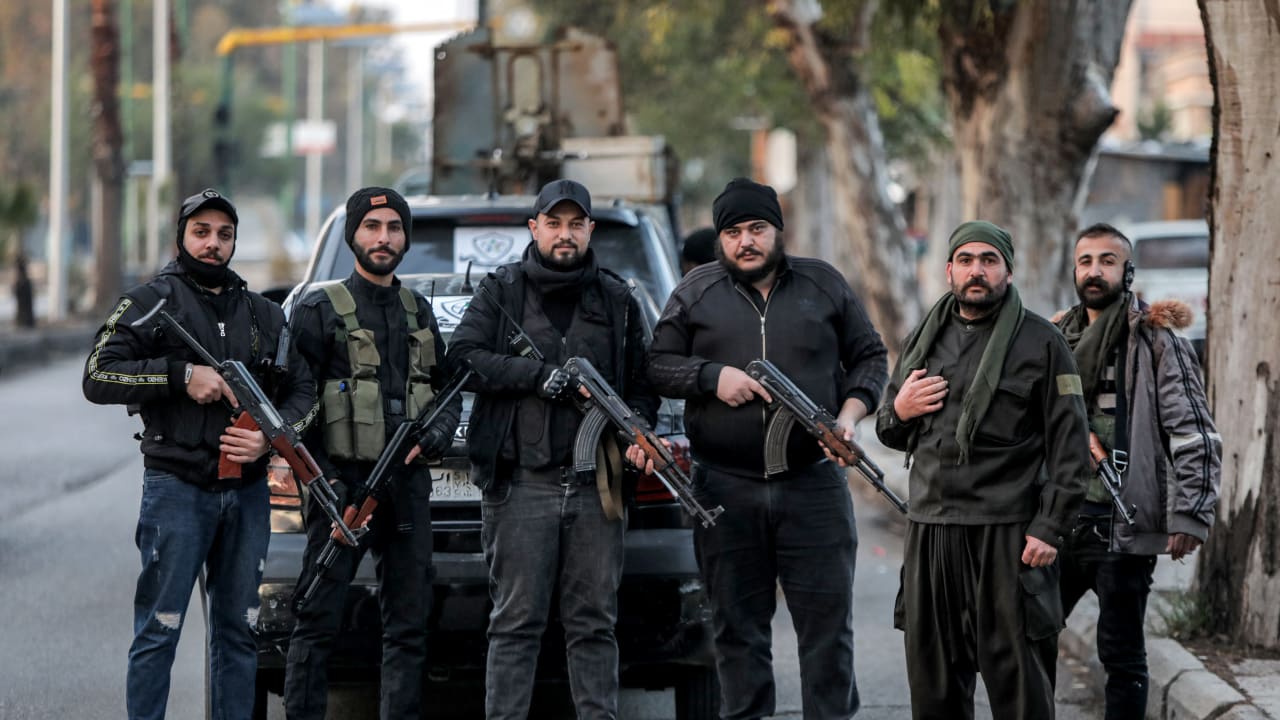
Groups believed to be operating under the direction of the Islamic Republic continue to threaten Israel and IDF personnel in southern Syria, according to a new analysis published by the Alma Research and Education Center on Sunday.
The latest incident occurred on Friday, when the IDF targeted a vehicle near the Lebanese-Syrian border carrying Yusuf Ali al-Hassoun, a Syrian terrorist whom the military said had “planned and advanced attacks” against IDF soldiers under Tehran’s direction.
Based on al-Hassoun’s operational patterns, the center assessed that he was likely operating under Iranian direction and may have belonged to one of Iran’s operational networks in Syria, particularly those associated with Unit 840, the Quds Force’s special operations unit, or Branch 4000 of the IRGC Intelligence Organization. The center also noted the possibility that he was operating under Hezbollah’s direction.
Al-Hassoun’s location at the time of the strike, near the town of Hawsh al-Sayyed Ali in the Hermel district on the Lebanese side of the border, could indicate that he was on his way to meet Iranian or Hezbollah handlers, the center suggested. Both Iran and Hezbollah have operated local cells directly and through Syrian intermediaries.
According to the Alma Center, these networks were established under the Assad regime with the direct involvement of members of Syria’s military and security apparatus. However, their activities have continued since Ahmed al-Sharaa’s forces seized control in 2024.
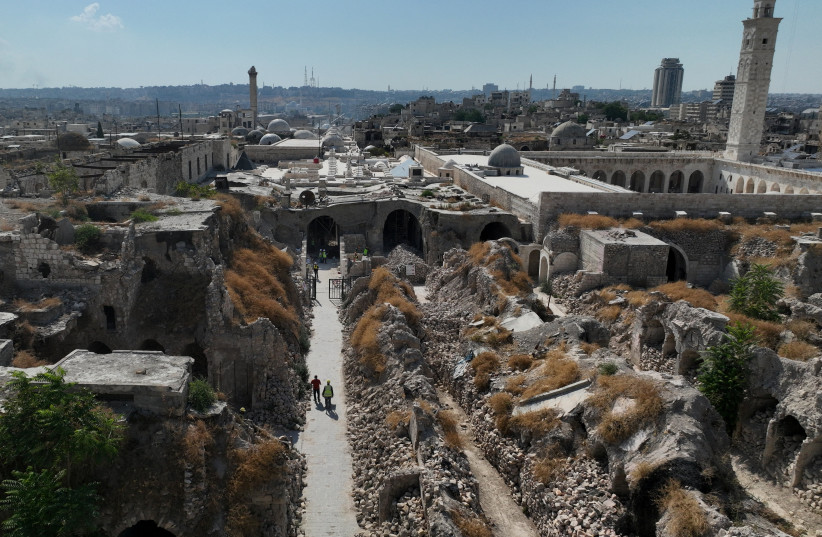 A drone view shows the old city of Aleppo and restoration work being done in the old markets of Aleppo, Syria, August 19, 2026. (credit: Mahmoud Hassano/Reuters)Iran, Hezbollah recruit extensively in Shiite, Sunni, Druze communities
Since the fall of the Assad regime, Iran and Hezbollah have continued efforts to reactivate local networks, including through remnants of the former regime, the center said. Their recruitment efforts reportedly extend beyond the Shiite community, with both groups seeking members of Syria’s Sunni and Druze communities through financial incentives rather than ideological appeal.
The Druze community itself remains divided over Israel’s role in Syria. Sheikh Hikmat al-Hijri, the spiritual leader of the Druze community in Sweida, has expressed support for Israel, particularly following the aid it provided to the community after the July massacres. Fellow Druze spiritual leaders Sheikh Hammoud al-Hinnawi and Sheikh Yusuf Jarbou, however, have distanced themselves from such support, instead voicing support for al-Sharaa and opposing external involvement in the sectarian violence.
A series of incidents points to continued Iranian and Hezbollah activity in southern Syria, the Alma Center said, describing Friday’s strike as the latest in a string of cases suggesting efforts to establish or activate local networks.
IDF incidents in southern Syria
In July 2025, the IDF arrested local operatives in southern Syria who had allegedly been directed by the Quds Force. In September 2025 and April 2026, cells preparing to launch rockets toward Israel were uncovered in the Quneitra area.
On June 28, the IDF killed two armed Syrian Shiite operatives who had traveled from northern Syria to carry out attacks near the village of Hader in the south. They were believed to have been dispatched under Iranian or Hezbollah direction.
More recently, on September 29, Syrian security forces announced the arrest of a three-member cell affiliated with Hezbollah in the Yarmouk Basin in western Daraa. The cell had reportedly been working to establish infrastructure for launching rockets toward Israel.
Two further incidents last week raised concerns about possible attempts to test IDF readiness. On the night of October 4, a 22-year-old Palestinian resident of Damascus was killed while attempting to infiltrate an IDF position in the al-Hamidiyah area. The following day, troops fired at two individuals who approached another IDF position in the area on a motorcycle under unusual circumstances.
“The recent incidents, even if they are unrelated, illustrate the continuing threat emanating from southern Syria, both through Iran and Hezbollah’s attempts to activate local networks against Israel and through possible efforts to test the alertness of IDF forces operating in the area,” the center concluded.