
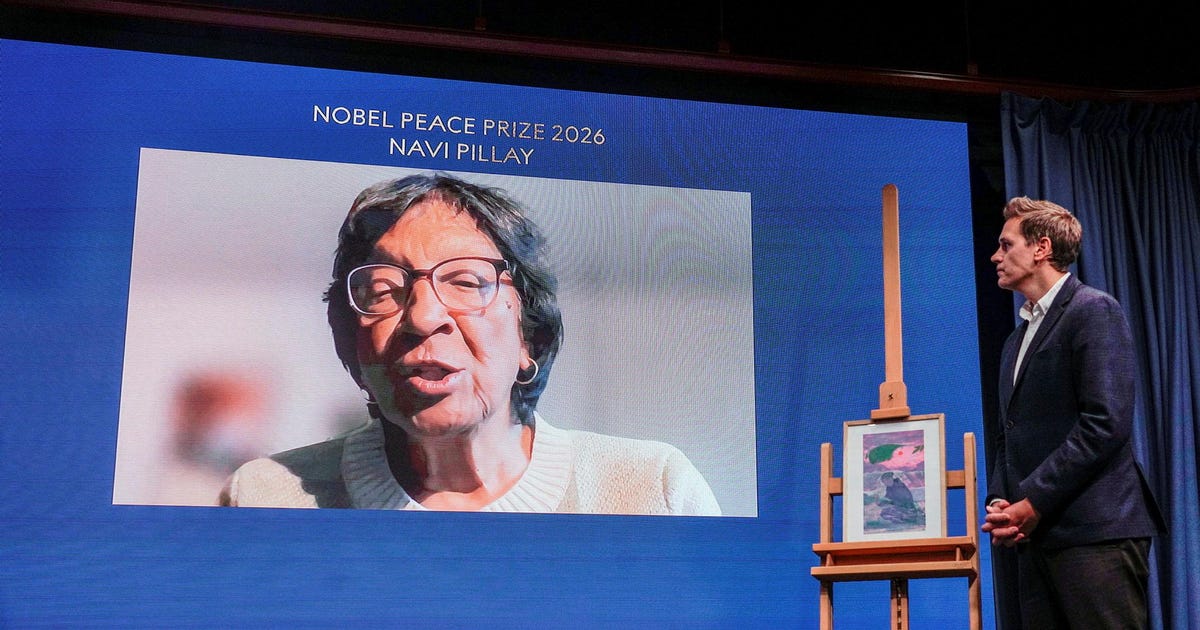
The announcement that South African human rights lawyer Navi Pillay won the Nobel Peace Prize apparently knocked off balance the Israeli Foreign Ministry’s social media staffer.
“If there were an award for lies, hatred, and blood libels, Navi Pillay wouldn’t just be a contender. She’d be a frontrunner,” the ministry wrote on the day the prize was awarded. It added: “Now that the Nobel commission has rewarded the biggest lie of the 21st century, Joseph Goebbels is certainly applauding from hell.”
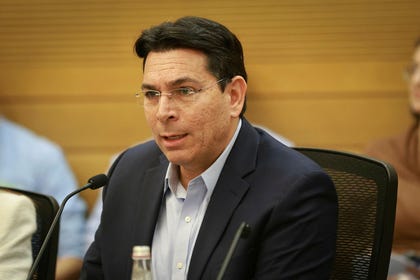
Israel’s ambassador to the United Nations, Danny Danon, also raised the dead when he wrote that Menachem Begin, Henry Kissinger and Martin Luther King were turning in their graves.
 Related Articles
These reactions reflect the chasm that has opened in the last decade between Israel on one side and UN agencies and the mainstream of international law on the other. The relationship with Pillay, which has mostly seen downturns since 2011, is a mainstay of this chasm that will largely shape Israel’s relations with the world in the coming decades.
Pillay went from a state visit to Israel in 2011 to severe criticism of the occupation and Israeli human rights violations in the West Bank. Heading a UN commission of inquiry, she went from lambasting Hamas’ crimes on October 7 to harsh reports on suspected Israeli war crimes in Gaza, even concluding that Israel’s actions amounted to genocide.
 Close
Close
Danny Danon, Israel’s ambassador to the United Nations. Leaders like Menachem Begin, Henry Kissinger and Martin Luther King Jr. are “turning in their graves,” he wrote. Credit: Noam Revkin-Fenton
Danny Danon, Israel’s ambassador to the United Nations. Leaders like Menachem Begin, Henry Kissinger and Martin Luther King Jr. are “turning in their graves,” he wrote. Credit: Noam Revkin-Fenton
In her reports, Israelis can find not only detailed documentation of crimes by both sides but also evidence and conclusions on Israel’s failure to protect its citizens. To some extent, Pillay also entered the vacuum created by the government’s refusal to form a state commission of inquiry.
Pillay, 85, has served as an anti-apartheid activist, the UN human rights commissioner, the first non-white woman justice on South Africa’s Supreme Court, and a member of the tribunal that prosecuted the perpetrators of the Rwandan genocide. So her opinion can’t be easily dismissed. The detailed reports she heads are packed with facts and legal analyses.
In the absence of a state commission of inquiry, Pillay’s UN report is a broader and more detailed document than any published by the Israeli government on the events of October 7.
In 2011, when she served as UN human rights commissioner, she was the last person in that office to visit Israel. She met with senior officials at the time including President Shimon Peres and Supreme Court President Dorit Beinisch. She even visited Yad Vashem.
Such a trip has now become unimaginable, after Israel’s radicalization and distancing from the UN and international law. All commissioners after Pillay have been boycotted by Israel, which ceased cooperation with the UN Human Rights Council.
In 2021, the council held a special session following the events of May that year – an air war between Israel and Gaza and Jewish-Arab violence in Israel. The council appointed an independent commission of inquiry for the region and put Pillay at its helm. With some justification, Israel argued that the commission enjoyed a broad mandate compared to similar UN committees. Its brief included not only the West Bank and East Jerusalem but also Israel itself and even the right to investigate the “roots of the conflict.”
The commission’s mandate also does not require periodic renewal but renews automatically. All told, the wide mandate and Pillay’s stature made her reports crucial in shaping the international legal discourse on Israel.
In October 2022, the commission recommended that the UN General Assembly request an advisory opinion from the International Court of Justice in The Hague on the legality of the occupation. The opinion handed down two years later was unequivocal: Israel violates international law and its control of the West Bank is illegal. The opinion, approved by the General Assembly, became a milestone in how the international community views Israel and the occupation. For example, recent decisions by European countries to boycott products from the settlements are largely based on this decision.
In May 2023, the commission published a report on civil society in Israel and the parts of the West Bank governed by the Palestinian Authority. The report was highly critical of both sides, addressing Israel’s restrictions on journalists and rights activists, as well as infringements on freedom of expression and restrictions on civil society organizations and journalists in PA territory and Hamas-ruled Gaza.
Later that year, the commission began investigating the events of October 7. Its basic rule was that an event was verified when there was supporting information from at least “two independent and reliable sources.” In cases of sexual violence or torture, where verification of testimony can be particularly difficult, a single reliable primary source or consistency with a pattern of similar events may suffice.
On this basis, the commission published two reports in June 2024. The first dealt with the events of October 7, and the wide mandate it received three years earlier allowed it to address Hamas crimes’ in Israel.
The report on October 7 spans 59 pages and includes close analyses of the main sites including kibbutzim, army bases, Zikim Beach and Sderot. In fact, in the absence of a state commission of inquiry, the UN report is a broader and more detailed document than any published by the Israeli government on the events of October 7. (The Israeli army has published detailed investigations into most of the major events, but Israelis have still not received a comprehensive report on what happened in the Gaza border communities.)
 Close
Close
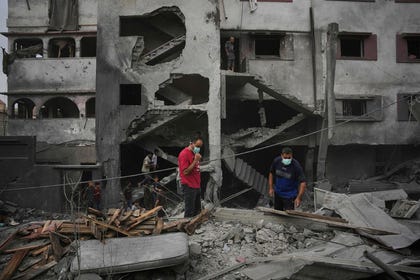
A heavily damaged building in central Gaza on Sunday. As evidence mounted of possible war crimes by Israel, Pillay’s reports became increasingly harsh. Credit: Abdel Kareem Hana/AP
A heavily damaged building in central Gaza on Sunday. As evidence mounted of possible war crimes by Israel, Pillay’s reports became increasingly harsh. Credit: Abdel Kareem Hana/AP
The commission determined that Hamas committed a long list of war crimes including murder, abductions, torture, beheadings, the desecration of bodies, the burning of bodies and sexual violence. But according to the panel, the Israeli authorities failed to protect the citizens, security forces were not deployed quickly enough, and the activation of the so-called Hannibal Directive, which allows “all means” to prevent the capturing of soldiers – caused the deaths of at least 14 civilians.
Lacking a state commission of inquiry’s conclusions, Israelis can at least be content that a commission headed by a Nobel Peace Prize laureate determined that the authorities abandoned the citizens. Immediately after this report was published, a second document addressed Israel’s response to Hamas’ attack and included harsh criticism of the bombings and harm to innocent civilians in Gaza.
As evidence mounted of possible war crimes by Israel, Pillay’s reports became increasingly harsh. Throughout 2024 and 2025, she published reports on systematic sexual violence against Palestinian detainees and civilians and the destruction of Gaza’s healthcare system. In September 2025, the commission published its most scathing report, declaring that Israel had committed genocide.
The commission determined that the Israeli army and other security forces committed four out of five acts considered genocide under the 1948 UN Genocide Convention: killing members of a group, causing serious bodily or mental harm, deliberately inflicting conditions of life designed to physically destroy the group in whole or in part, and imposing measures intended to prevent births in the group. The fifth act, of which Israel was not accused, is “forcibly transferring children of the group to another group.”
“It is clear there is an intent to destroy the Palestinians in Gaza through acts that meet the criteria set forth in the Genocide Convention. The responsibility for these atrocity crimes lies with Israeli authorities at the highest echelons who have orchestrated a genocidal campaign for almost two years now with the specific intent to destroy the Palestinian group in Gaza,” Pillay said. The report joined numerous others by rights groups and petitions by legal scholars.
Due to Pillay’s standing and the commission’s meticulous investigation, the panel has special status in the world of international law. Israel, of course, angrily rejected the report and berated its authors and conclusions. But the chasm that has opened between Israel and the doyens of international law can no longer be bridged.
International law doesn’t behave like domestic law. It is heavily influenced by the political balance of power, and the backing of the Trump administration has so far allowed Israel to keep ignoring it. The wheels of international justice grind even slower than the judges in Prime Minister Benjamin Netanyahu’s corruption trial.
But they do grind, and, as Pillay’s reports show, the chasm that has opened between Israel and international norms will shape Israel’s image for the foreseeable future.