
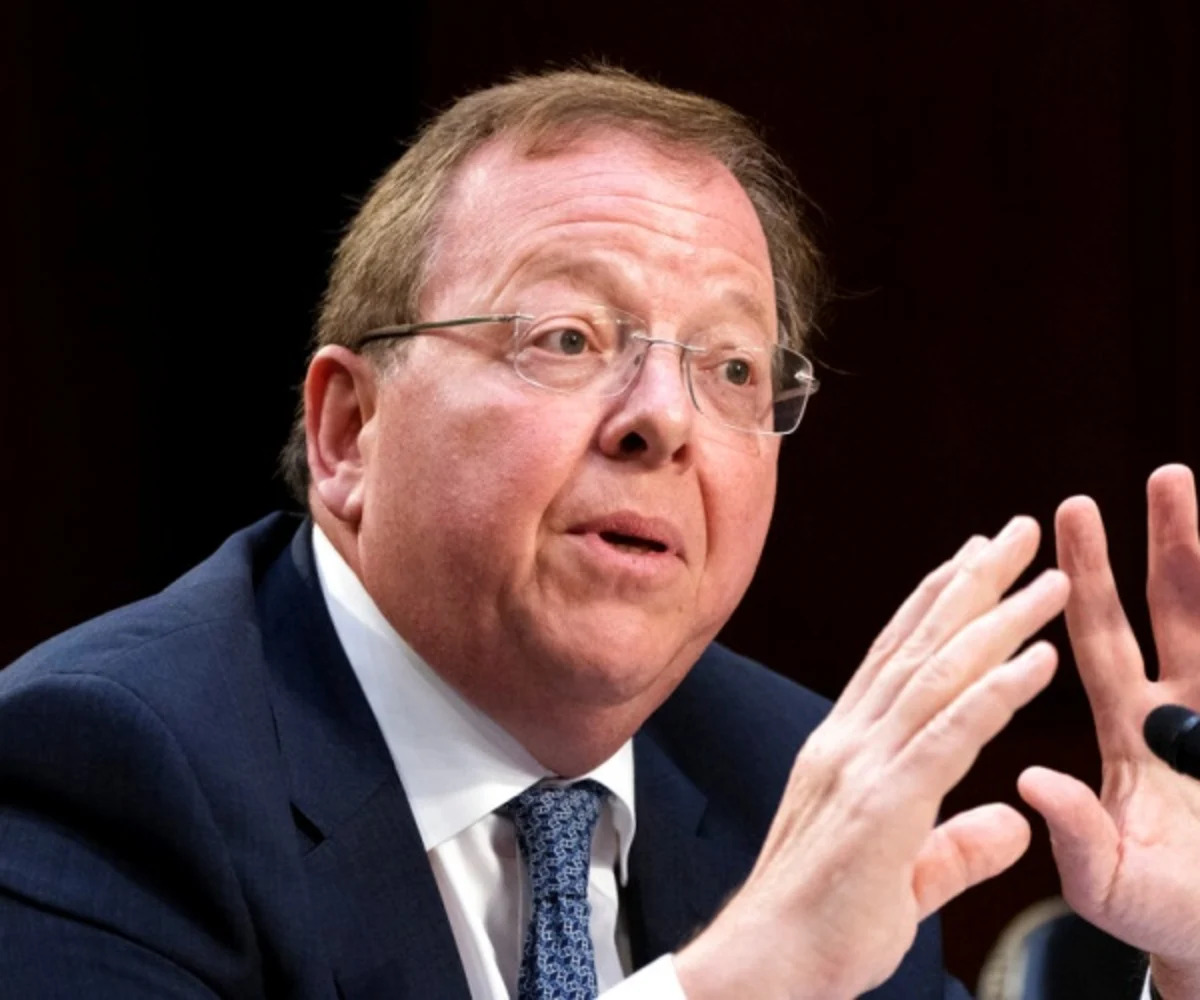

Robert Pape (Jacquelyn Martin/AP)
A leading American military strategist is warning that President Donald Trump may be approaching a critical decision to dramatically escalate the war with Iran, potentially unleashing an economic and military crisis just weeks before the Nov. 3 midterm elections.
Robert Pape, a University of Chicago political science professor and longtime expert on military strategy, told the YouTube program “Breaking Points” on Oct. 9 that recent U.S. military deployments suggest preparations for a dangerous new phase of the conflict.
“We are in the most dangerous part of the escalation trap,” Pape warned.
Pape, who has studied air power, economic sanctions, and military coercion for decades, said Trump faces mounting political pressure as the elections approach.
Pape believes Trump could order new strikes immediately before the midterms or during the vote-counting period, hoping to reverse perceptions that the war is damaging his presidency.
Pape cited the deployment of the aircraft carrier USS Theodore Roosevelt and about 2,000 Marines toward the region, along with what he described as Pentagon preparations for additional military operations.
“What you are seeing is quite serious preparations for major escalation,” he said.
Pape emphasized that the developments do not mean Trump has made a final decision.
One of Pape’s gravest concerns involves Saudi Arabia’s massive Abqaiq oil-processing complex, which he said handles about 7 million barrels of oil a day.
He warned that U.S. attacks on Iranian refineries could provoke retaliatory strikes against Saudi energy infrastructure, potentially disrupting global supplies and sending gasoline prices and U.S. borrowing costs sharply higher.
Pape argued that Iran has an advantage in its ability to inflict economic damage through retaliation, even if the United States maintains overwhelming conventional military superiority.
“We have options to escalate, but we have no options to escalate advantageously,” he said.
The professor also warned against deeper U.S. involvement in Yemen amid escalating hostilities involving the Iranian-aligned Houthis and Saudi Arabia.
He argued that additional U.S. airstrikes or troop deployments could give Iran greater incentive to launch preemptive attacks.
Pape was particularly critical of Saudi Crown Prince Mohammed bin Salman, suggesting the kingdom risks falling into an escalation trap similar to those facing Trump and Russian President Vladimir Putin.
Pape, who directs the University of Chicago’s Chicago Project on Security and Threats, previously taught air power strategy for the U.S. Air Force. His books include “Bombing to Win” and “Dying to Win.” He has also researched terrorism and political violence in the United States.
Pape believes Iran may intensify economic pressure on the United States through November and into January, when the newly elected Congress takes office.
He suggested Iran would need concrete evidence that the United States intends to change course before trusting any agreement.
One possibility, he said, would be Democrats winning both chambers of Congress and securing veto-proof legislation cutting off war funding.
But Pape expressed skepticism that a quick diplomatic agreement could resolve the conflict, arguing that neither government has accepted a new balance of power in the Strait of Hormuz.
His immediate recommendation is to reverse the American military buildup.
“The real policy here should be Roosevelt go home,” Pape said.
He also urged policymakers to recognize the consequences of escalation before ordering additional strikes.
Pape’s central warning is that further military action could strengthen Iran’s position rather than weaken it, leaving Washington trapped in an increasingly costly conflict with no clear path to victory.
© 2026 Newsmax. All rights reserved.