
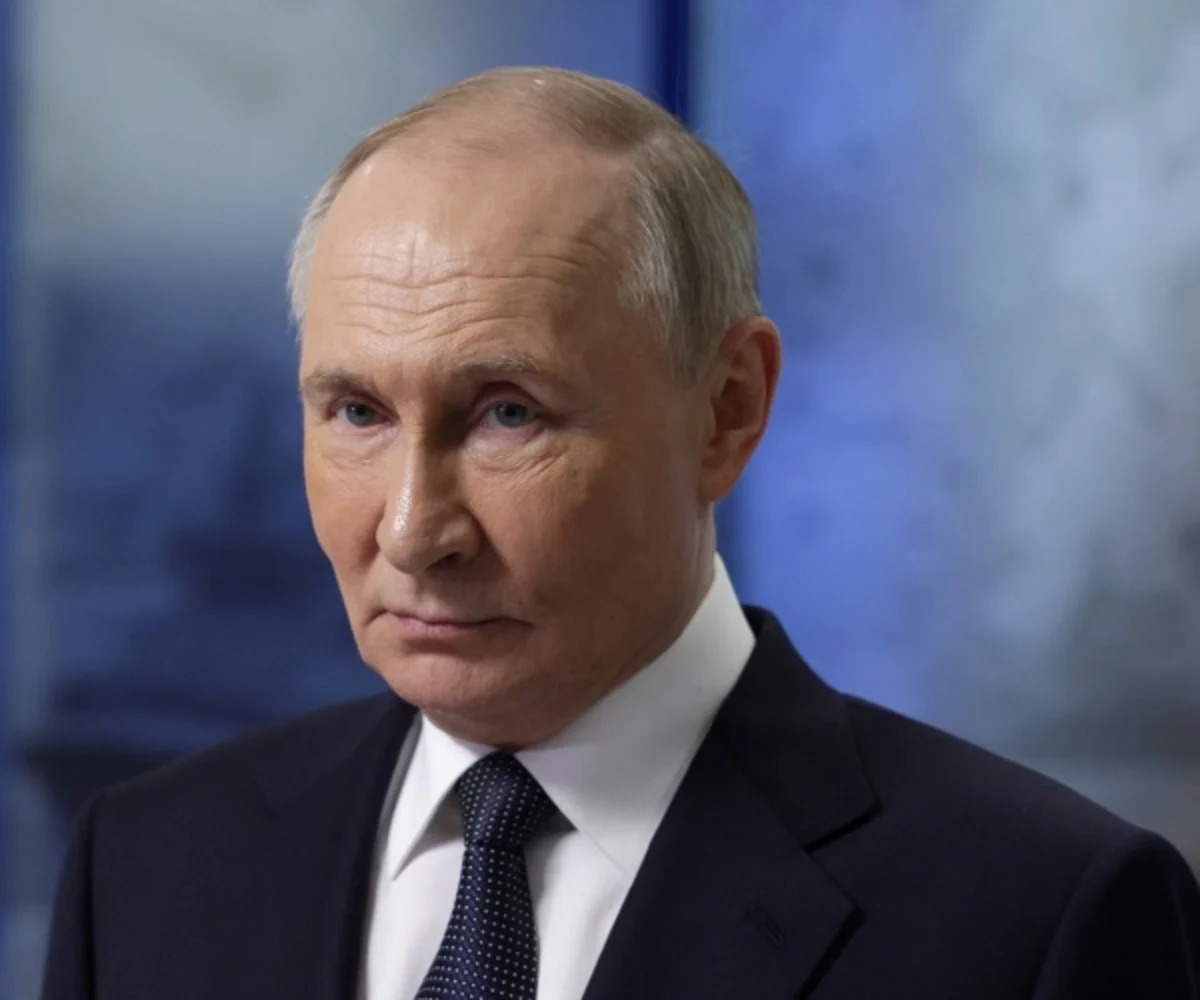

Russia’s President Vladimir Putin on March 27, 2025. (Photo by Gavriil Grigorov / POOL / AFP via Getty Images)
Western intelligence agencies have warned European defense executives that Russia is intensifying efforts to assassinate them, prompting companies to increase security for senior leaders, the Financial Times reported.
With the war in Ukraine deadlocked on the battlefield and Russia’s economy struggling, the Kremlin has ordered an expansion of sabotage and so-called hybrid operations in Europe to weaken support for Kyiv in the coming months, according to the report.
European intelligence officials told the newspaper that assassinations targeting European civilians, once considered taboo even within Russian intelligence agencies, have become a more prominent part of the campaign.
Officials from five European intelligence agencies said Russian operatives were targeting chief executives and other senior employees at defense companies, particularly smaller firms that manufacture drones or their components.
“The threat level has risen in Europe. To property but also to people,” one senior European intelligence official told the Financial Times.
Germany’s domestic intelligence agency has stepped up outreach to employees and executives at defense companies, including recommending privately contracted close-protection teams, an agency official said.
Sinan Selen, head of Germany’s Federal Office for the Protection of the Constitution, warned lawmakers Monday that Russia was planning acts of violence against individuals through state or state-controlled actors.
“We are observing a further development of these actions in terms of the targets, the methods and the actors involved, including the use of organised crime structures,” Selen said.
Several defense executives told the newspaper, speaking on condition of anonymity, that they had increased personal security measures over the past six months on the advice of government security agencies. Others said they used such protections only when traveling abroad.
Responsibility for the plots, known in Russian intelligence jargon as “wet work,” largely falls to the GRU, Russia’s military intelligence agency, according to intelligence sources.
The agency has adapted its methods by working more closely with organized crime groups, using cross-border networks and dividing surveillance, logistics, planning and execution among multiple operatives rather than relying on individual recruits hired online.
Authorities have uncovered and thwarted some plots, while other cases have involved suspicious surveillance of targets at home and work, the sources said.
Intelligence officials said the campaign’s primary objective may be psychological, even when assassination attempts are not carried out.
“The main goal from the Russian perspective is still psychological,” one official told the newspaper. “Just by making people feel they might be a target, they are having their effect. They want individuals to think twice before doing business with Ukraine.”
Some Russian agents’ efforts remain amateurish and relatively easy to counter, one official said. However, the uncertainty forces security agencies to treat a broad range of activity as potentially threatening.
In August, two young Russian tourists were arrested in Sweden after pitching a tent near the property of Saab CEO Micael Johansson. They were released shortly afterward.
Security consultants said they were receiving more inquiries from defense companies and businesses in critical infrastructure and energy about protecting employees in Europe.
Claudine Fry, a London-based partner at global risk consultancy Control Risks, said the risk of assassinations was receiving greater attention.
“We are seeing increased interest in trying to understand how seriously to take the threat to executives and [how to take] active steps towards managing that threat,” she told the Financial Times.
Defense industry executives warned that the cost of protecting employees and facilities could strain companies, particularly startups. One executive said the company had recently relocated a production site in Western Europe because of Russian threats.
Executives at Europe’s largest arms manufacturers have been on heightened alert since early 2024, when U.S. and German intelligence agencies uncovered a Russian plot targeting Armin Papperger, CEO of German defense contractor Rheinmetall.
Intelligence sources believed Russian agents had been planning a high-profile assassination, with Papperger a target because of his outspoken support for supplying weapons to Ukraine. Papperger has said he now receives round-the-clock protection from private security guards and police.
© 2026 Newsmax. All rights reserved.