

The Pentagon has updated protocols it uses to track dead or injured service members in the ongoing war with Iran.
The Pentagon’s mechanism to track fallen soldiers has received scrutiny over transparency since the war began on Feb. 28. The Washington Post, citing anonymous sources, reported Sept. 18 that more American service members died than the Pentagon had publicly disclosed—at least 22 military fatalities at a time the Pentagon said there had been 19.
Defense Secretary Pete Hegseth at the time called the publication’s reporting “a complete lie.”
But on Saturday, the Pentagon raised the official death toll to 21, acknowledging the two non-combat deaths of Maj. Sorffly Davius, 46, an Army National Guard member who died in Kuwait on March 6, and an unidentified Navy suicide that, according to the Post, occurred in September.
‘Two Key Enhancements’
In a statement provided to Military.com on Monday, the Pentagon said it was “implementing two key enhancements” to the Defense Casualty Analysis System (DCAS) to make the “data more easily understood.”
The two changes the Pentagon said it was implementing were “standardizing hostile and non-hostile casualty subcategories across DCAS” to ensure consistency, in addition to “introducing a ‘pending adjudication’ category to track casualties that the department has not yet categorized.”
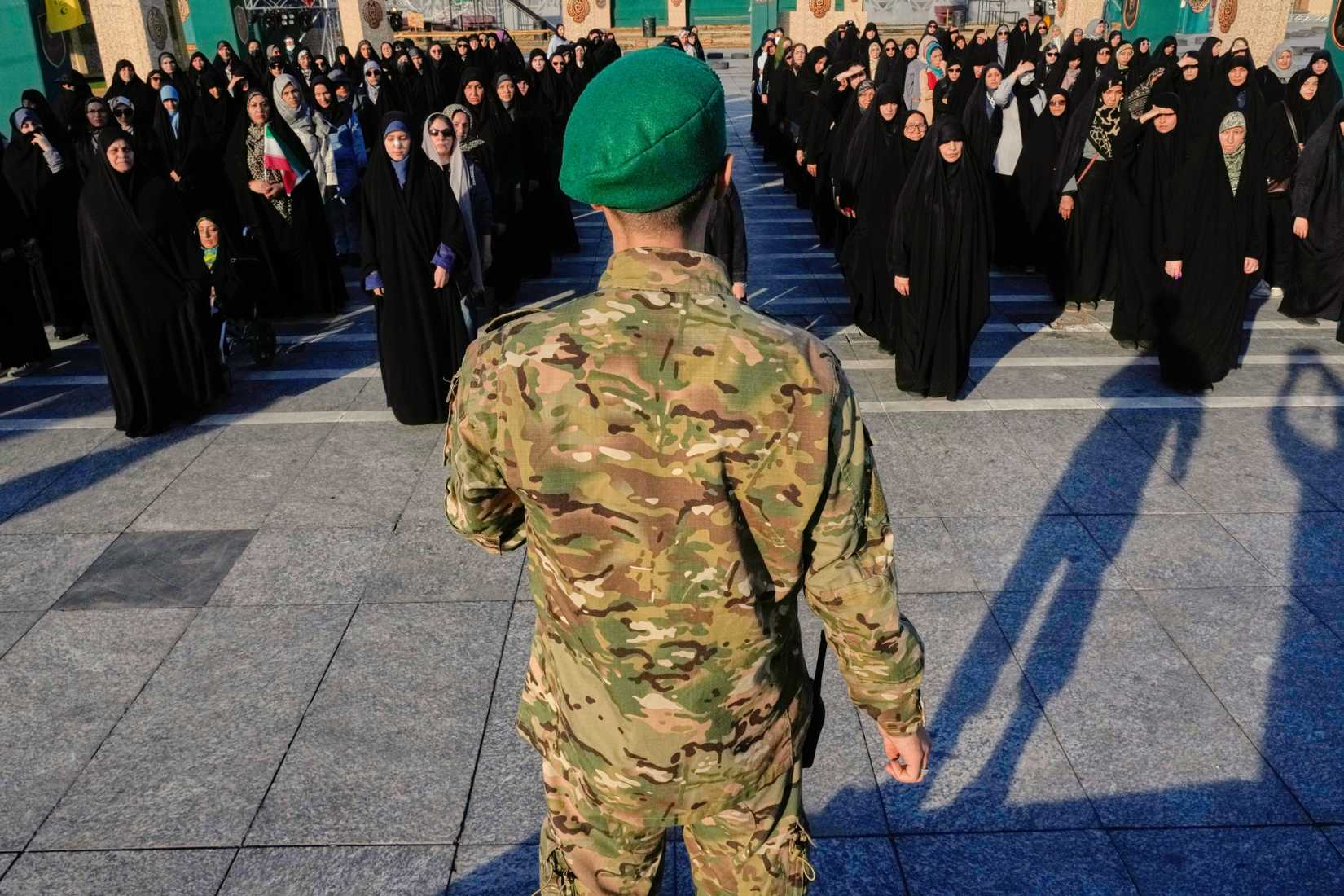
A member of the military affiliated with Iran’s Revolutionary Guard, talks to volunteers as they attend a military training course at a camp set up in Imam Hussein Square in Tehran, Iran, Sunday, Oct. 4, 2026. (AP Photo/Vahid Salemi)
“This new category will allow the department to minimize reporting delays while ensuring data consistency,” a Pentagon official said regarding the second change, noting that it has to analyze and assess several factors including deployment status and the location of incidents when making its reports.
“All changes to data in DCAS are strictly administrative, and survivor benefits, entitlements, and family support remain completely unaffected,” they added.
Pentagon’s Death and Injury Tracker Sees Issues
The administrative updates come amid widespread confusion and criticism of the Pentagon’s previous approach.
In July, news reports admonished the department for not including four soldiers who died in the conflict in DCAS.
The soldiers killed in Jordan were identified by the Defense Department as Tyler James Feehan, 25, of Ewa Beach, Hawaii, and Isabella Gonzales, 19, of Carrollton, Texas. The soldier who disappeared after the Jordan attacks is Angel S. Rampersad, 28, of Ozone Park, N.Y., per DOD.

The Pentagon’s F-35 Joint Program Office confirms fighter jet parts were somehow diverted to Hong Kong, raising national security concerns. (DoD photo by Master Sgt. Ken Hammond, U.S. Air Force, Wikimedia Commons).
The soldier killed in Iraq was identified as Michael Emmanuel Swinton, 30, who lived in Spring Lake, N.C.
At the time, acting press secretary for the Pentagon, Joel Valdez, told the New York Times that there had been “temporary data disruptions” on the department’s casualty website.
Iran War Continues
Marine and aviation combat has intensified as the U.S. enforces a strict southern naval blockade in the Middle East.
On Oct.10, an unnamed supertanker struck a naval mine in the Strait of Hormuz, and Iran-backed Houthi forces launched a missile strike on Riyadh’s King Khalid International Airport, killing 13 people.
President Donald Trump confirmed Washington is considering offensive strikes in response. A second Houthi strike hit the airport on Oct. 11, forcing a total airspace shutdown as a third tanker hit a mine.
Overall, 21 service members have now died while 865 Americans have been wounded, according to the Pentagon’s own data.
A full list of the confirmed deaths of U.S. military service members killed in the Iran war can be found here.