
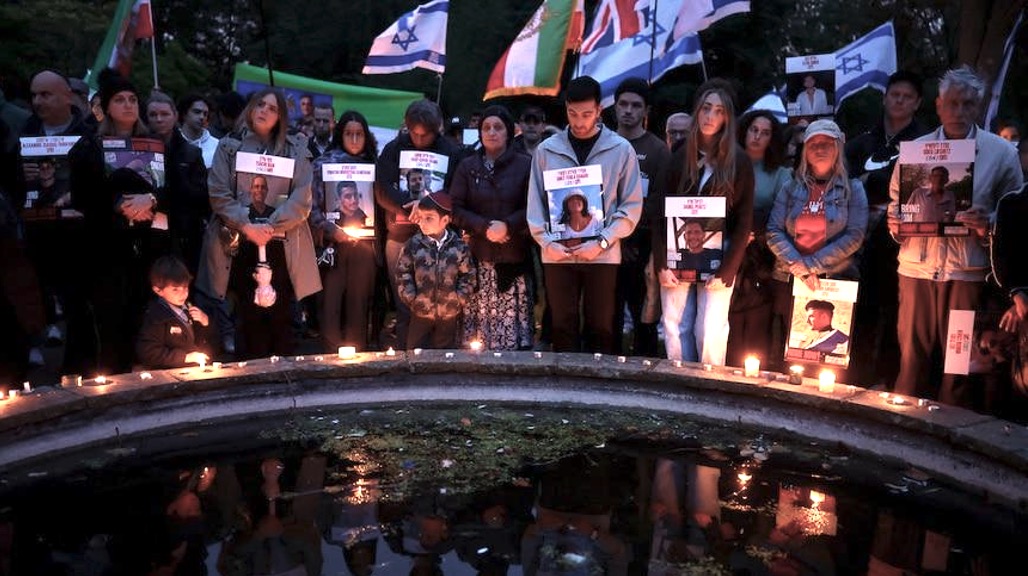
A STUDENT’S VIEW – As a Jewish student, I did not expect New York Mayor Zohran Mamdani to suddenly embrace Israel on October 7. I did not expect him to abandon his criticism of the Israeli government. I did not expect him to change his politics, his ideology, or his views about Gaza.
I expected something much simpler: I expected him to let Jews mourn. For one day.
October 7 is not an abstraction to Jewish students. It is not another date on the political calendar. It is the anniversary of the morning when Hamas led terrorists stormed into Israeli communities, murdered civilians, attacked a music festival and dragged people into Gaza as hostages.
Approximately 1,200 people were killed and 251 were taken hostage. Families were shattered. Communities were traumatized. And for Jews around the world, something changed that morning that has never completely changed back.
Mayor Mamdani began his October 7 statement appropriately.
This day is profoundly painful for so many New Yorkers, he said, before acknowledging Hamas’ “horrific war crimes,” the Israelis who were killed and the 251 people abducted.
He could have stopped there. He should have stopped there.
Instead, almost immediately, Jewish mourning became a platform for another political indictment of Israel.
Mamdani accused the Israeli government of an “ongoing genocide in Gaza.” He invoked “occupation and apartheid.” He accused the United States of complicity in Israeli war crimes.
Whatever one thinks about Israel’s conduct in Gaza and Americans have every right to debate it passionately why did those accusations need to dominate a statement commemorating October 7?
Why could October 7 not simply be October 7?
That is the question many Jewish students are left asking.
There are 364 other days of the year to criticize Israel. There are countless opportunities to debate Benjamin Netanyahu, Gaza, settlements, American military assistance, Palestinian statehood, and the future of the Middle East.
But October 7 is the anniversary of a massacre. Jewish people should not have to earn the right to mourn its victims by first accepting an indictment of Israel.
Grief Should Not Require a Political Disclaimer
Imagine what Mamdani’s statement could have said:
Today we remember those murdered on October 7.
We remember the young people who went to dance at a music festival and never came home.
We remember families attacked in their homes.
We remember those taken hostage and the families who spent months and years waiting for answers.
We stand with Jewish New Yorkers carrying that grief.
May the memories of the victims be a blessing.
That would not have required Mamdani to become a Zionist. It would not have prevented him from expressing concern for Palestinian civilians the following morning. It would have required only empathy without an asterisk.
Instead, Jewish New Yorkers received a message that effectively said: Yes, your people suffered, but before you finish mourning them, let me tell you what Israel has done.
That is precisely what made his statement so painful.
The problem is not acknowledging Palestinian suffering. Palestinian civilians have suffered terribly, and their lives and dignity matter. The problem is the inability to acknowledge Jewish suffering without immediately qualifying it.
There is something deeply troubling about a political culture in which nearly every expression of Jewish grief must be followed by a geopolitical disclaimer. We would recognize the insensitivity immediately in almost any other context.
A memorial is not a debate stage. A funeral is not a foreign-policy seminar. And an anniversary commemorating a massacre should not become an opportunity to lecture the people still mourning the murdered.
Jewish Students Notice
For Jewish students, these distinctions matter.
We have spent three years watching October 7 argued over, contextualized, rationalized and sometimes grotesquely celebrated. We have watched conversations about murdered Israelis transform almost instantaneously into arguments about whether Israel deserved sympathy.
We have learned that even saying we are grieving can invite an interrogation about Zionism.
And now the mayor of the city with the largest Jewish population outside Israel could not devote one statement to the victims of October 7 without pivoting to accusations of genocide, apartheid, and American complicity.
That sends a message: even on the anniversary of their trauma, Jewish New Yorkers’ grief must share the stage with someone else’s political case against Israel.
That is not solidarity. That is conditional empathy.
Mamdani concluded his statement by saying that honoring the dead requires fighting for a world in which everyone can live with “freedom, safety, and dignity.”
On that point, I agree.
Palestinians deserve freedom, safety, and dignity. Israelis deserve freedom, safety, and dignity. Muslims deserve to live without hatred. And Jews deserve the dignity of mourning their dead without having their grief immediately turned into an indictment of the Jewish state.
October 7 did not require Mayor Mamdani to surrender his beliefs. It required restraint. It required humanity. It required recognizing that sometimes leadership means knowing when not to make your political argument.
On October 7, Jewish New Yorkers did not need a lecture about Israel. We needed their mayor to look at the victims, look at their families, and simply say:
We remember. We mourn with you. May their memories be for a blessing.
For one day, that should have been enough.
(Shoshannah Kalaydjian is a young Jewish student who writes about education, identity, and the challenges facing the next generation. Growing up in today’s climate, she has witnessed firsthand how rising antisemitism affects young people in classrooms and on college campuses. She is committed to sharing the perspectives of Jewish youth, amplifying student voices, and encouraging leaders to create safer, more inclusive environments for all students.)