
(Oct. 13, 2026 / JNS)
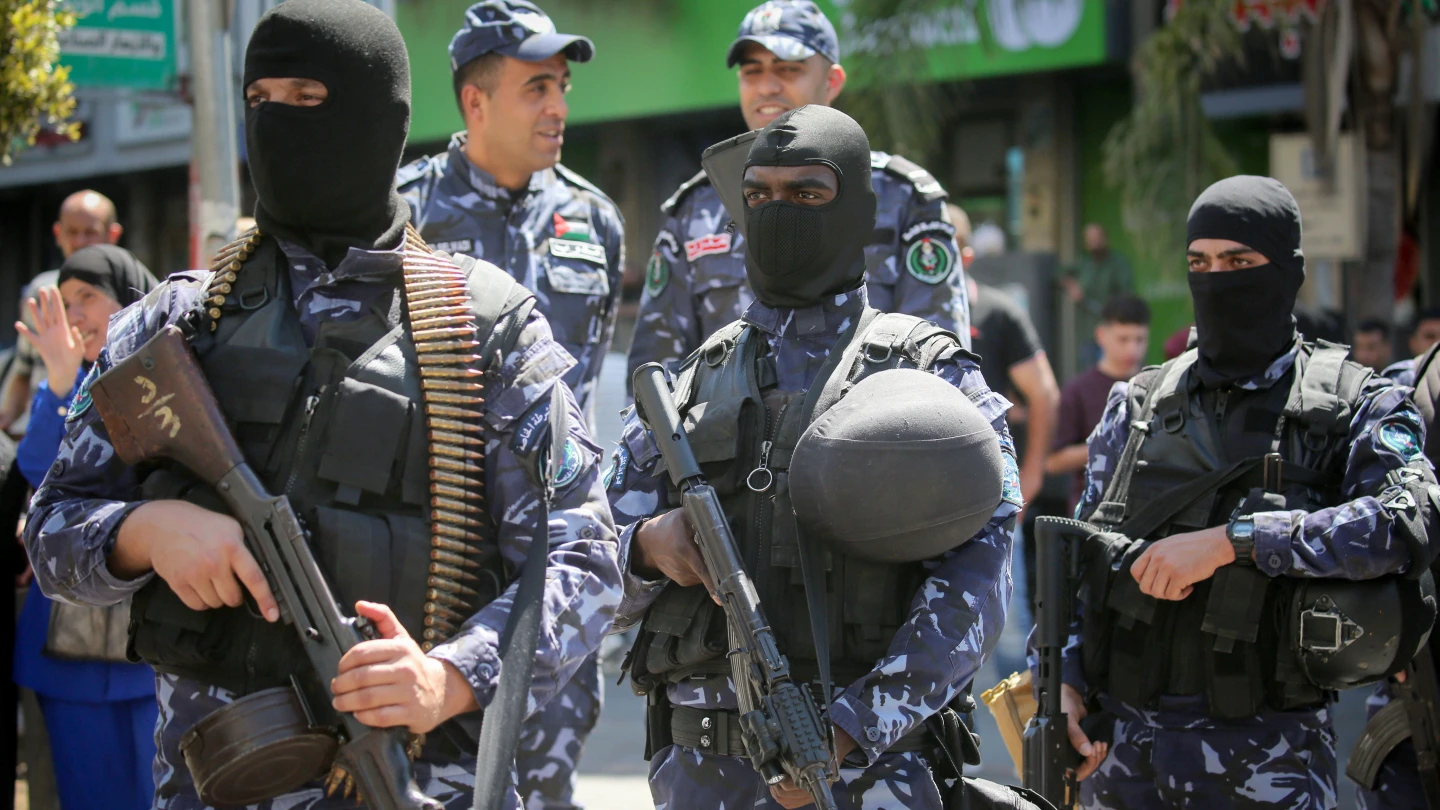
The Israel Defense Forces have been ordered to prepare for a scenario in which Palestinian Authority security forces and the Fatah-affiliated Tanzim organization “turn their guns” against Israeli civilians and IDF troops in Judea and Samaria, a move that would trigger a full-scale Israeli offensive, Defense Minister Israel Katz told ministers at the weekly Cabinet meeting last week.
“In such a case, war would be declared against the Palestinian Authority, and the IDF would launch a comprehensive offensive in accordance with a detailed plan formulated and approved by Prime Minister [Benjamin] Netanyahu and by me,” Katz said, adding that the campaign “would be short and forceful” and modeled on the Gaza and Lebanon campaigns.
Shalom Arbel, a former senior member of the Israeli Security Agency (Shin Bet) who served from 1988 to 2013 in roles involving human intelligence recruitment and operations, and before that as a major in the IDF reserves in Lebanon, Gaza and Judea and Samaria, told JNS that Katz’s directive “should have come a long time ago” and that the threat has been building for “a year, two years, three years at least.”
Arbel pointed to the scale of the Palestinian security forces’ buildup.
“This is the growth, recruitment, a very significant additional buildup of Palestinian soldiers, policemen in the West Bank, to the point where, as I understand it, the numbers reach 60,000 to 70,000 people,” he said. He described that figure as a direct violation of the Oslo Accords.
“In my assessment, the limitation there was in the direction of 20,000 policemen with very specific weapons, and those are roughly the numbers, and I think Israel is in a very big problem here,” Arbel said.
The former Shin Bet officer said he does not believe the P.A. is planning an imminent attack but suspects covert contingency planning at the leadership level for a major triggering event.
“I personally don’t think the Palestinian Authority is preparing in the short term some force order to fight Israel immediately,” Arbel said. “I think there is a thought that isn’t open, it’s covert, very secret, let’s call it that, only at the leadership level, to prepare forces of this magnitude in case of a major event,” he added, citing scenarios such as Operation Guardian of the Walls in 2021 or a second Al-Aqsa Intifada triggered by “some intensive conduct by Israel, some operational accident that causes the killing of Palestinians.”
“The lesson from Oct. 7 is that you don’t need intelligence about everything,” Arbel said, drawing an analogy to Hamas training videos.
“There was Hamas training on the other side, speaking about killing Jews, training in shooting at mock structures with Israeli flags and dolls of Jews, so we did not need a warning that Hamas will one day attack us,” he said. “Likewise, I don’t need a warning that the 60,000 to 70,000 armed policemen, one day maybe given an event, will attack us back. This requires treatment today.”
He called for an ultimatum demanding that the P.A. disarm down to Oslo-mandated levels, “including under threat,” with legal and operational sanctions against anyone holding unauthorized weapons.
On security coordination with the P.A., Arbel was categorical in his opposition.
“They’re all terror organizations, Fatah is no better than Hamas,” he said, recalling how Yasser Arafat used to detain Hamas operatives briefly under what he called “protective custody” before releasing them.
“No security coordination with an enemy. I don’t see it. It’s as logical as security coordination with Iran,” Arbel said.
Lt. Col. (res.) Amit Yagur, former deputy head of the Palestinian arena at the IDF Planning Branch and a former naval intelligence officer, pointed to P.A. President Mahmoud Abbas’s repeated postponement of elections and the P.A.’s collapsing public image as key underlying factors.
“Hamas is strong and getting stronger, and according to every public opinion poll conducted both during the war and now, including Palestinian polls, Hamas takes first place quite easily,” Yagur said, describing the P.A.’s reputation among its own people as one of “very deep corruption” and stagnation.
Yagur said the Palestinian population no longer accepts the P.A.’s narrative despite the extensive foreign funding it has received.
“The Palestinians are one of the groups that received quite a lot of money over the years, from Arab states, from European states, and tax money from Israel. They only received money, they don’t see that money translated on the ground. The people, after all these years, have taken notice,” Yagur said.
Yagur said he does not foresee an organized mass popular uprising, citing fears among Palestinian residents in Judea and Samaria of paying the price that Gaza has paid.
“I don’t see a popular intifada erupting in the style of 1987 or the 2000s. They’re afraid of the costs, and the war hasn’t ended yet. It’s better for them than a situation like Gaza, and they see that,” Yagur said.
He said a more plausible risk is that individual P.A. security personnel could turn to terrorism if their salaries stop.
“It can very much be that they’ll think, what do we do? One option is to resign, a second is to wait, a third is to say, fine, I’m turning my weapon, I’m going to carry out an attack, because I’ve lost hope anyway,” Yagur said.
A coordinated mass defection of P.A. security forces, Yagur argued, would amount to institutional suicide.
“This would be an event that requires direction from above, and it’s what’s called the official declaration of the death of the Oslo process,” Yagur said. “The Palestinian Authority understands that the moment it does such a thing, there’s nothing left to fight for control over, because Israel will simply take everything in such a case.”
He noted that the P.A., unlike Hezbollah, was not founded on ideological opposition to Israel and depends heavily on international funding to survive.
Yagur proposed an alternative long-term framework modeled on localized Gulf-style governance rather than a two-state solution.
“I think Sykes-Picot is the number one cause of failure that produced a long line of failed states, and it needs to be replaced with the Abraham Accords, with something else entirely,” Yagur said.