
There are two ways to bring light into a dark room. One is to stand in the darkness, point to the light switch and tell someone to turn it on. The other way is to strike your own match. That distinction may capture something profound about Israeli democracy and about the Hebrew language.
The Hebrew word for citizen is אזרח – ezrach. It is closely associated in Hebrew with the language of זריחה – zerichah, sunrise or shining forth.
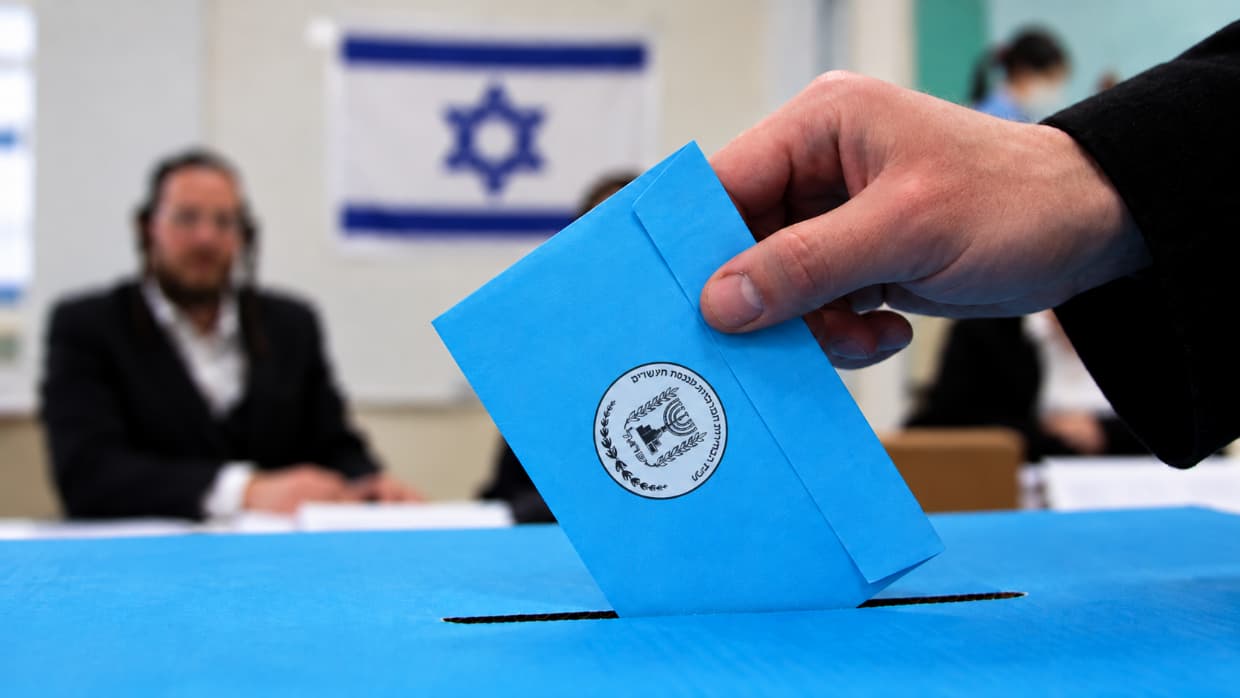
The word מצביע — matzbi’a, voter, by contrast, comes from the root צ-ב-ע, and in modern Hebrew le-hatzbia means both to vote and to point.
An ezrach (citizen) shines. A matzbi’a (voter) points.
These words represent two very different ways of thinking about our relationship with the State of Israel.
The first says: What light can I bring to my country? What can I contribute to my community? Where can I volunteer, give, build, teach, serve or help?
The second says: I will point to the people I have elected and expect them to fix things for me.
Democracy, of course, needs voters. Elections matter enormously. We need competent politicians, responsible government and functioning state institutions.
One of the great dangers of democracy is that we believe that our democratic responsibility ends when we place a piece of paper in the ballot box.
But one of the great dangers of democracy is that we believe that our democratic responsibility ends when we place a piece of paper in the ballot box. We vote, and then we wait.
October 7 taught us, in the most painful way imaginable, what can happen when the institutions we depend on fail us.
But October 8 also taught us something else. Israelis did not wait. Reservists rushed to their units before they were called. Ordinary citizens drove south to rescue strangers. Restaurants turned themselves into field kitchens. Hotels became homes for evacuees. Volunteers transported equipment, housed families, harvested crops and supported soldiers. Israelis abroad booked flights home. Jews around the world raised money, packed supplies, and asked a simple question: What can I do?
October 7 exposed the danger of relying entirely on the people we point to. October 8 revealed the extraordinary power of the people who shine.
In fact, many of Israel’s greatest achievements were built this way. The State itself was not created by people sitting around waiting for somebody else to solve the Jewish problem. It was built by people who established farms, towns, schools, hospitals, charities and businesses. They created institutions before there was a state capable of creating them.
That spirit remains one of Israel’s greatest natural resources, as demonstrated by the Israeli heroes who saved 174 people on board the hijacked FlyDubai flight. Yet election campaigns can tempt us into precisely the opposite mentality. Politicians promise us what they will do. We argue about which party will solve our problems. We point fingers at the Right, the Left, the government, the opposition, the courts, the army, the police, and the bureaucracy.
Pointing is easy. Shining is harder. Shining means asking not only “Who am I voting for?” but “What am I doing?”
Pointing is easy. Shining is harder.
Shining means asking not only “Who am I voting for?” but “What am I doing?”
Imagine if every Israeli chose one problem that bothered them and devoted a few hours each month to improving it. Education, poverty, lone soldiers, the elderly, road safety, Jewish unity, new immigrants, bereaved families, the environment, their local synagogue, school or neighborhood.
We would still disagree politically. We would still vote differently. But, instead of competing over who can point most convincingly at Israel’s problems, millions of us would be contributing a little light toward solving them.
Israel does not just need better politicians. It needs more active citizens. So, on election day, by all means be a matzbi’a – vote. Point to the people you believe should lead us. But remember that you are also something much more important. You are an ezrach, a citizen who can be a shining light. The election is not the end of the democratic process. It is the beginning.
Let us be ezrachim, not merely matzbi’im. Let’s spend less time pointing at others to change our country, and more time shining our own light and brightening the world.