
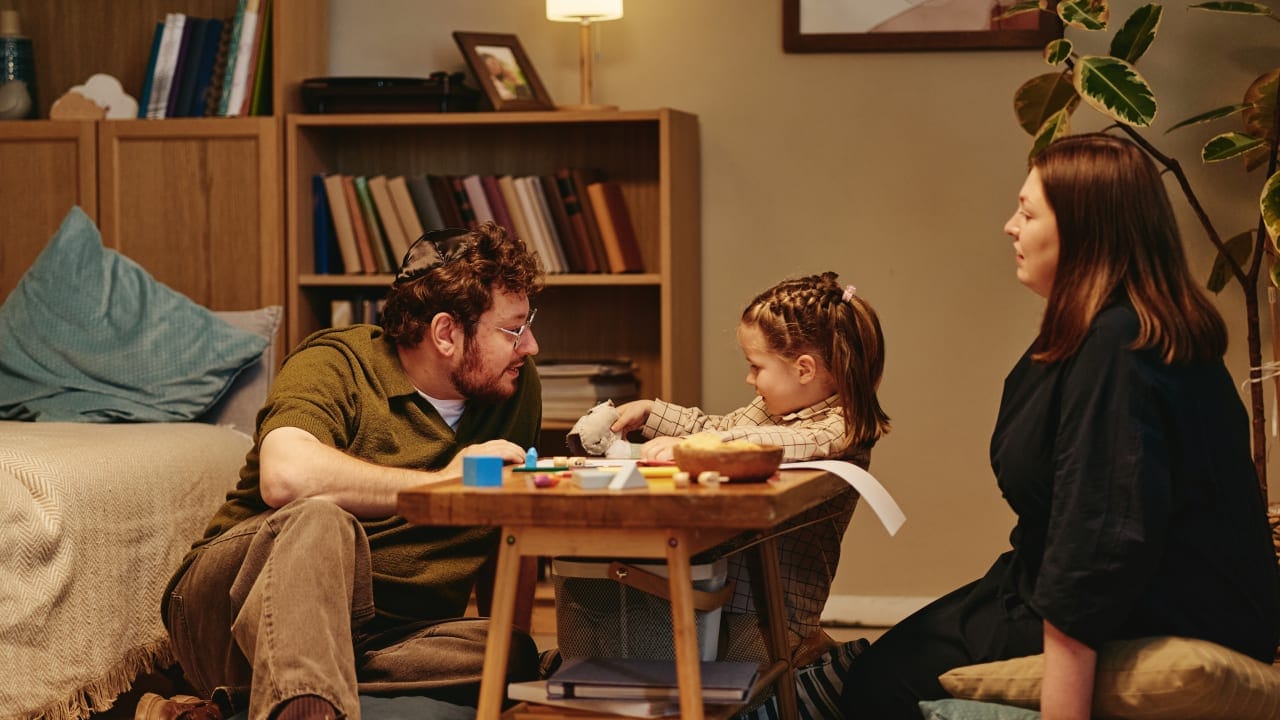
There is a distinct moment that occurs every year when the Jewish holidays come to an end.
For many, the post-holiday period is a time to catch one’s breath and reset. But for vulnerable children, intense holiday periods do not bring peace, they act as a pressure cooker. Behind closed doors, extended time at home, financial strain, and forced proximity can exacerbate hidden domestic stress, friction, and abuse.
Immediately following the holidays, the October 7th anniversary is a painful milestone that re-triggered national trauma, loss, and hyper-vigilance across the country, the emotional bandwidth of Israeli families is stretched to its absolute limit.
When resilience collapses
When parental resilience collapses under the weight of ongoing national tragedy, the home environment changes. Frustration boils over faster. Patience thins. And children, often the quietest observers in the room, absorb the shockwaves. They bear the brunt of secondary trauma, witnessing heightened domestic conflict or becoming targets of direct emotional, physical, or psychological neglect and abuse.
Now, as the school routine struggles to fully restart and normal life attempts to resume, these invisible wounds begin to show. Teachers, counselors, and neighbors will start to notice the sudden shifts in behavior: the quiet child who withdraws further, the anxious student who acts out, or the teenager who carries an uncharacteristic weight on their shoulders.
The earthquake has settled. Now we must tend to the cracked walls
Since the outbreak of the war, Israel’s civil society and therapeutic organizations have operated in emergency mode. We rallied to respond to immediate crisis points, evacuations, and frontline trauma. But emergency intervention is only the immediate response to a seismic shock.
When an earthquake hits, the first priority is saving lives and putting out fires. But once the ground stops shaking and the dust clears, you begin to inspect the house itself. That is when you discover the hairline fractures in the load-bearing walls like cracks that were invisible during the initial chaos, but now threaten the structural integrity of the home under daily strain.
This is why community needs are not decreasing; they are expanding.
Trauma Takes Far Longer Than Three Years
We must be clear-eyed about the timeline of recovery. Healing from national catastrophe and complex domestic trauma is not a matter of months, nor is it a three-year project. When families live in survival mode for extended periods, the psychological toll compounds over years. Children who adapt silently today may only express their distress five or ten years down the line. Protecting our children requires looking beyond immediate external threats and committing to multi-year, long-term safeguards that support families long after the acute crisis phase has passed.
Our Duty in the New Year
We must empower educators, community leaders, and neighbors to recognize the subtle warning signs of domestic distress. We must ensure that mental health resources and specialized child protection services are built to sustain families for the long haul, well before a home reaches a breaking point.
Building a resilient Israel begins with safeguarding the smallest among us. The holiday tables may be cleared, but our duty to repair the cracked walls and protect our children from invisible trauma continues with a sense of urgency.
Written in collaboration with ELI – The Israel Association for Child Protection