
For decades, Iran has operated a broad and well-established global network of terrorism, intelligence, and logistics. Its familiar modus operandi of deliberately avoiding leaving fingerprints dates back to the 1990s, when Iran and Hezbollah stood behind a series of major terrorist attacks in Argentina without officially claiming responsibility.
Only years later, after prolonged investigations, was it legally established that Iran and Hezbollah were behind the attacks.
In April 2024, Argentina’s highest criminal court ruled that the 1994 bombing of the AMIA Jewish community center in Buenos Aires, which killed 85 people, was carried out by Hezbollah under the political and strategic direction of Iran.
Even in the case of 9/11, it took many years to understand that Iran, despite being Shi’ite, had assisted al-Qaeda. It was this Sunni terrorist organization that carried out the mega-terrorist attack against the United States.
The 9/11 Commission found strong evidence that Iran facilitated the transit of al-Qaeda members through its territory before the attacks.
Iranian border officials were instructed not to stamp these travelers’ passports, making it easier for them to conceal their travel through Iran. According to the commission, between eight and 10 of the 14 Saudi “muscle” operatives who later participated in the 9/11 attacks traveled into or out of Iran between October 2000 and February 2001.
Therefore, when an attempt to carry out this type of attack occurs again, this time targeting Israeli soil and against a strategic target, while the war with Iran is not yet over, this requires a thorough and rapid investigation.
Such a problem must be conducted as though the aircraft had actually crashed, rather than an assessment based only on the final outcome.
In any case, if Iran is behind the attack, it would be a sign that Iran was prepared to take the risk of being caught and, more seriously, that it is prepared to go to war in the region once again.
War by proxy
Iran’s methods of operation do not always take the form of direct, overt warfare. Iran and Hezbollah often employ “soft warfare,” which is no less important than armed warfare.
This is another front in the multi-front war that Israel must confront. Iran and its proxies operate within Shi’ite communities around the world and also penetrate other communities.
They cooperate with criminal organizations and recruit terrorists through radicalization and religious extremism, which often take place in mosques, through religious preachers and local leaders, at universities, and through community and educational activities disguised as Da’wah activities.
Another major tool is social media, through the dissemination of false and radical content and the use of cyber tools and bots to intensify hatred against Israel.
In addition, there is cooperation with radical left-wing organizations, which are often recruited without their knowledge to promote mass demonstrations in the streets, within academia and universities, and through formal and informal media outlets.
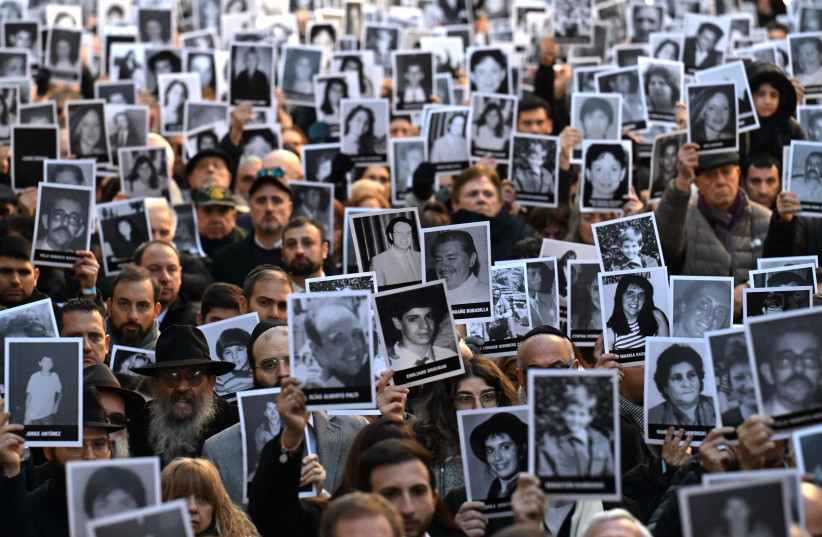 The 1994 bombing of the AMIA Jewish community center in Buenos Aires killed 85 people; Argentine investigators and courts have attributed the attack to Hezbollah acting with Iranian direction and support. (credit: Luis Robayo/AFP via Getty Images)
The objective is to recruit financial support and supporters among civilians, politicians, members of the media, and even former senior officials from security and government institutions, with the aim of damaging Israel’s standing worldwide, delegitimizing it, and constraining Israel’s response to terrorist attacks against it.
Beyond this, there is an even more serious objective: the deliberate recruitment of terrorists in the form of “lone wolves” to carry out attacks that cannot be directly linked to Iran.
However, when a terrorist undergoes religious radicalization originating from an organized terrorist actor, responsibility should be placed on that actor as though it had carried out the attack itself, rather than addressing only the end of the chain – the terrorist himself.
Following the trail
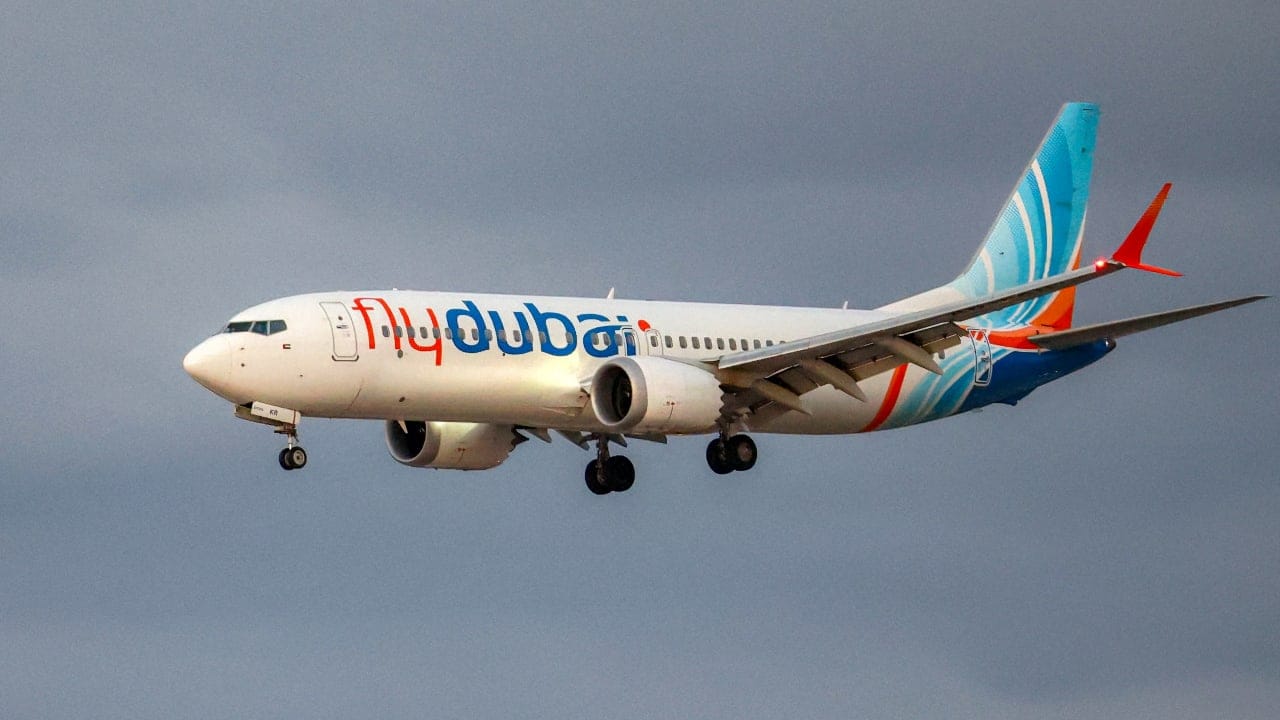
Flydubai terrorist pilot Hamam al-Hammami’s career path raises an intelligence question that deserves close examination.
He worked at Oman Air for approximately seven years and, after being removed from flying duties because of concerns over his radical views, later underwent a three-month pre-employment training process with Royal Air Maroc but was not selected for employment, before eventually joining flydubai.
According to reports, he deliberately searched for airlines operating flights to Israel. Given that Oman has no diplomatic relations with Israel, maintaining excellent relations with Iran means that Iran has a greater ability to operate inside Oman and recruit suicide terrorists. Ergo, this issue automatically comes under the spotlight – with the possible connection to Iran.
In addition, the fact that, after his radicalization in Oman, which itself requires an investigation into how he was radicalized, what methods were used on him, and who was responsible, he sought to work specifically for airlines in countries such as Morocco and Dubai.
Both joined the Abraham Accords, normalized relations with Israel, and maintain good diplomatic relations with it, which raises the suspicion that this was not coincidental.
Given that Iran has openly attempted to undermine the Abraham Accords and even to prevent Saudi Arabia from joining them through Hamas’s October 7, 2023 attack, whose Nukhba terrorists were trained in Iran and Lebanon, this too points to a possible Iranian fingerprint.
A terrorist attack on an Emirati aircraft on its way to Israel would not have harmed only Israel and the passengers; it could also have damaged Israel-UAE relations and one of the most prominent symbols of the Abraham Accords.
The strategic target
This is where the suspicion connects to Iran’s broader strategic interest: Iran opposes Israel’s integration into the Arab world and works against the expansion of the normalization process, including the rapprochement between Israel and Saudi Arabia.
The October 7 attack effectively helped halt that process. Therefore, the question that analysts and decision-makers should ask is not only: Why did al-Hammami want to attack Israel? but also: Why carry it out specifically through the airline of an Arab state that normalized its relations with Israel?
The new relationship built between Israel and the Arab world during the tenure of Prime Minister Benjamin Netanyahu is an important step toward advancing security and peace in the region.
Terrorism should be measured not only by the damage it inflicts, but by the political gains it seeks to achieve through violence.
If its objective is to undermine trust among the Abraham Accords countries and fracture the emerging regional coalition against it, then strengthening that coalition is the most effective way to deny terrorism the strategic victory it seeks.■
Danny Ayalon is a former Israeli deputy foreign minister, Knesset member, and ambassador to the US.
Moran Alaluf is an analyst on Middle East affairs and counterterrorism, and a specialist on Iran and Hezbollah.