
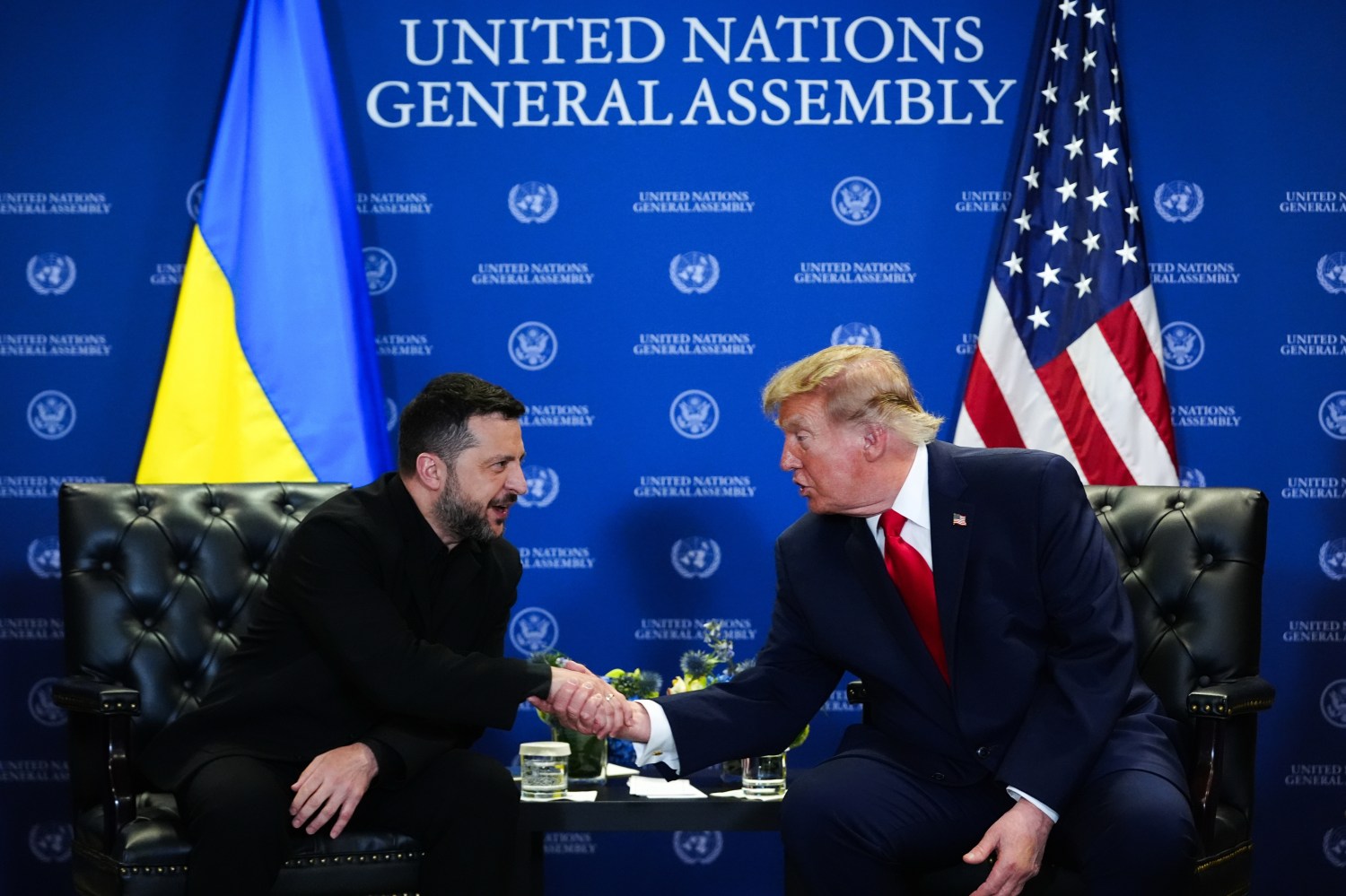
President Donald Trump is in a predicament. His party is headed toward potentially historic losses in the midterm elections, fueled largely by anger over his pro-inflation policies, including tariffs on allies, deportations of immigrant workers, and his misbegotten war against Iran.
And few things illustrate the damage better than soaring diesel prices, now averaging over $6.25 a gallon nationwide, according to AAA.
The data is clear on what’s driving those prices:
Russia struck first, destabilizing global energy markets with its misbegotten invasion of its neighbor Ukraine, and then that idiot Trump followed suit four years later with his own disastrous war against Iran.
The result has been a global energy crisis, with diesel shortages driving up the costs of everything from trucking and farming to manufacturing and food production. And voters are understandably furious.
Trump’s desperation is now clear, having finally punched through the things he truly cares about, like building arches and reflecting pools and cutting down hundreds of trees in defiance of court orders. He needs something, anything, to deflect blame for fuel prices before Election Day.
And so he concocted what he thought was a foolproof plan.
You see, he could openly shift American policy toward supporting his pal Vladimir Putin, the dictator of Russia, while pretending he was delivering lower fuel prices to American voters!
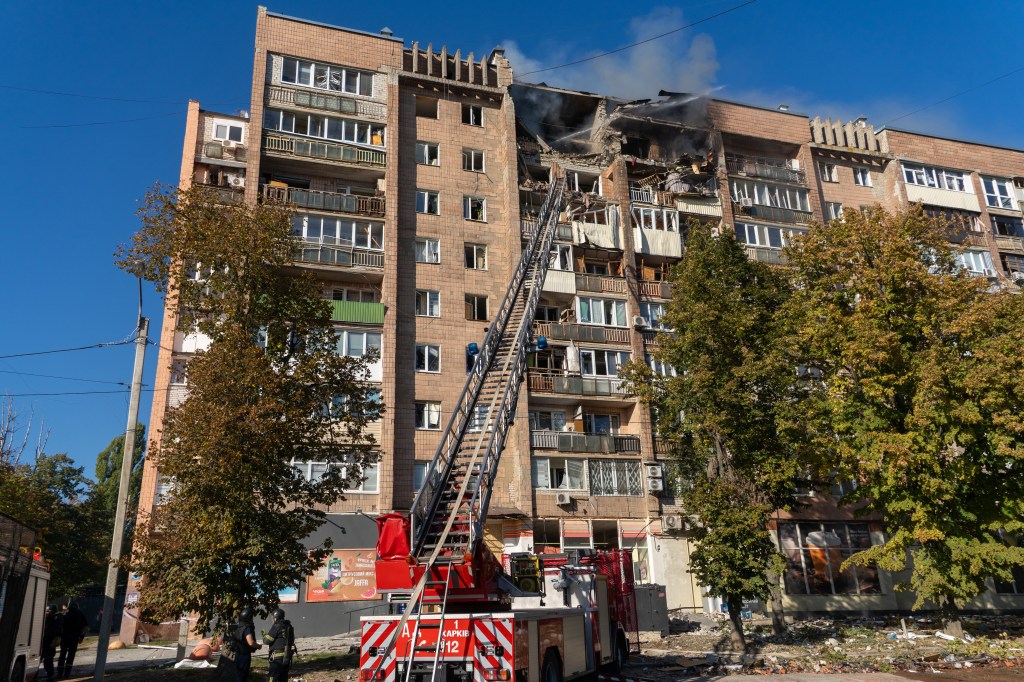 A residential building burns following a Russian air attack in Kharkiv, Ukraine, on Oct. 12.AP
And so, just weeks after signing the “Lindsey O. Graham Sanctioning Russia and Iran Act of 2026,” which the White House itself noted “authorizes and expands statutory sanctions, tariffs, and prohibitions on Russia and extends existing sanctions on Iran,” Trump went ahead and undermined the very purpose of that law.
He announced that he had negotiated a deal with Putin to supply Russian diesel to the American and global markets, with his administration temporarily lifting sanctions to make it happen.
And what a deal it was!
Russia would initially supply 300,000 metric tons of diesel, followed by another 500,000 tons in November, another million tons after that, and potentially another 3 million tons down the road.
Sounds like a lot, right?
That initial shipment amounts to roughly 14 hours of American diesel consumption. The first three shipments combined would cover about three and a half days. Even if every promised and conditional shipment materialized, the grand total would amount to less than 10 days of American consumption, not enough to affect global prices, not even at the margins.
And that’s assuming Russia had diesel to spare, which it doesn’t! In Trump’s Truth Social post announcing the agreement, he specifically notes that future Russian supply would be “based on the condition of their Diesel Refineries.” This is key because Russia’s refineries are, in large part, burning from Ukrainian long-range drone strikes, so much so that Russia previously banned diesel exports, unable to supply its own domestic supply, but it has been importing diesel from countries like Iran and South Korea.
Trump doesn’t care about any of that. What matters to him is that 1) he could finally align U.S. policy alongside fascist Russia, and—this is particularly important—2) he could now blame Ukraine for high diesel prices. And his surrogates spent the weekend doing just that.
Trump and Putin are fuming about Ukraine because their refinery strikes have emerged as one of its most effective weapons against Russia’s war machine. They damage Russia’s ability to fuel its military, disrupt its domestic economy, and deprive the Kremlin of revenue it needs to continue its invasion.
So for Trump’s diesel deal to work, he needs Ukraine to stop doing one of the things that is actually working against Russia.
And of course, Trump is siding with Russia, thinking he has a winner—able to blame Ukraine for his own failures, while shifting public sentiment against Ukraine in the process.
Not a lot of people bought it. Condemnation was fierce both internationally and from both sides of the political aisle here in the U.S. The administration was in immediate damage-control mode, whining that it was all the fault of Ukrainian President Volodymyr Zelenskyy.
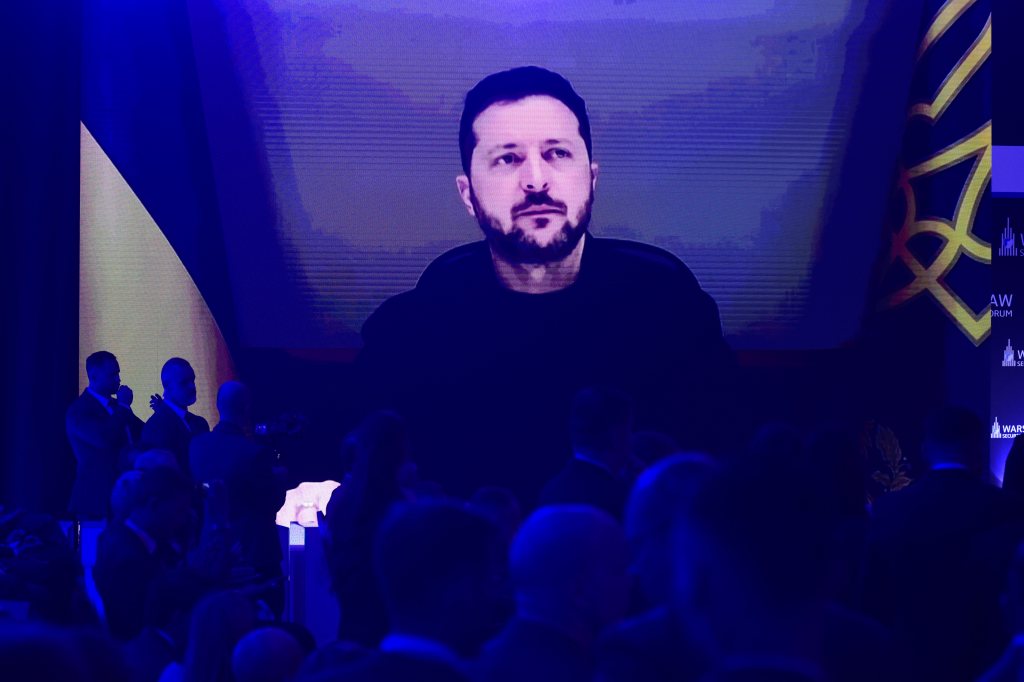 People watch Ukrainian President Volodymyr Zelenskyy on a large screen as he speaks to the Warsaw Security Forum, in Poland, on Oct. 12.AP
“President Trump decided to make a diesel fuel deal with Russia after Ukrainian President Volodymyr Zelensky ignored half a dozen U.S. requests to stop attacking Russian oil refineries, a U.S. official with direct knowledge told Axios,” the publication reported.
That official further whined, “Zelensky is misreading the room. By continuing to hit refineries, he is eroding the good will that he has built with Trump over the last six months.”
Actually, it’s Trump misreading the room. There was no “good will” with Trump. The U.S. side has spent the last year and a half stringing Ukraine along with promises to share schematics of U.S. Patriot air-defense missiles and other aid that never shows. There are still millions in Ukraine aid that Congress authorized that Trump has refused to hand over.
And with that, Trump has given up much of the leverage he had over Ukraine. This hasn’t been lost on anyone on the other side of the Atlantic, with European allies working to replace American military assistance and intelligence capabilities. France has announced that it now provides two-thirds of Ukraine’s intelligence needs. Trump has seemingly lost his last card to play. It makes it easy when the U.S. tries to pressure them directly, as they were this weekend demanding Europe stop helping Ukraine.
So Ukraine is now emboldened to chart its own course on the war.
Shortly before Trump announced his oil deal with Russia, Ukraine launched a massive strike against several Russian refineries, with Zelenskyy himself triumphantly announcing the actions. And even after Trump announced his deal with Putin, reports popped up of a new Ukrainian attack on an oil facility in Rostov-on-Don, in Russia.
Then on Sunday, Trump declared an “ENERGY CEASEFIRE” between Ukraine and Russia—only, according to Ukraine, the ceasefire was news to them. Of course, there was no energy ceasefire. It was Trump screaming into Truth Social in rage, thinking that his words can shape reality.
Zelenskyy did say he’d be happy to agree to an energy ceasefire if Russia also agreed, but then he noted that Monday morning, Russia hit energy infrastructure.
Somehow, no one is expecting Trump to scream at his buddy Putin in response.
So to recap:
Trump’s war against Iran helped create a global energy crisis that is hammering American consumers and threatening Republican electoral prospects.
Desperate to lower diesel prices, Trump turned to Putin, undermining American sanctions against Russia in exchange for relatively small and uncertain quantities of fuel.
But Russia’s ability to deliver that fuel depends on refineries that Ukraine has been systematically destroying.
So Trump announced a ceasefire on energy infrastructure that neither side had demonstrably agreed to.
This is what happens when a president believes that declaring something makes it true. Election Day can’t get here soon enough.