
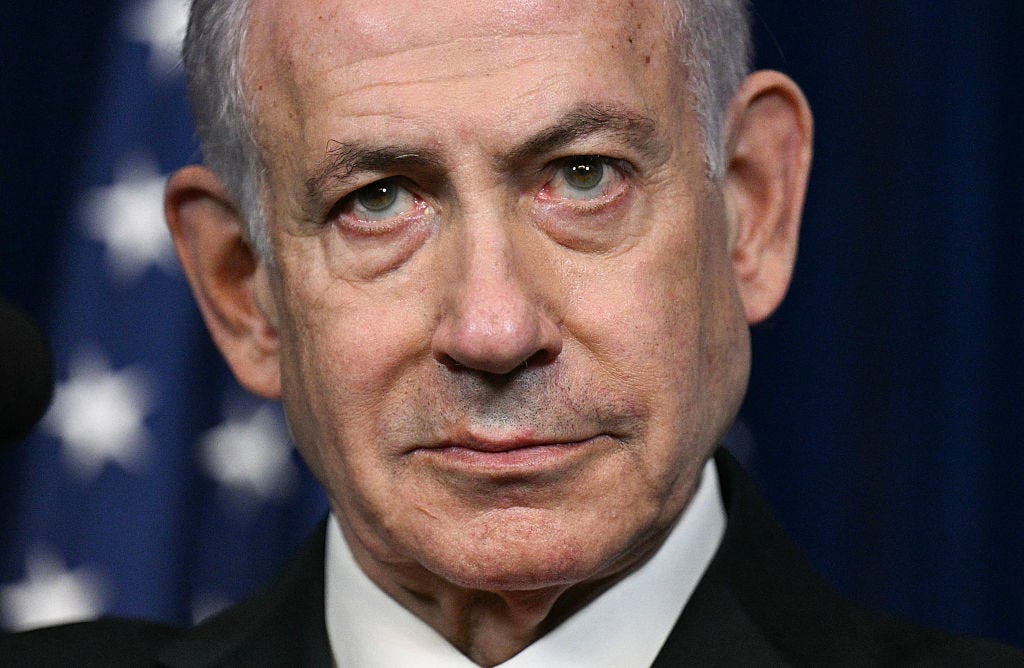
In two weeks, Israelis will vote for the first time since October 7 and the multifront war that followed. The country that goes to the polls has buried thousands since it last elected Benjamin Netanyahu. His main challenger, Gadi Eisenkot, is a former army chief of staff who served in Netanyahu’s war cabinet and lost a son in Gaza. The polls show a tight race. Whoever wins, the vote will be read as a verdict not just on Netanyahu’s current government but on the 19 years he has led Israel as its longest-serving prime minister.
On the eve of that verdict, we’ve asked a range of writers to discuss Netanyahu’s legacy. The aim of this symposium is to take his record seriously and assess it on the merits. A deafening cacophony of bad-faith arguments about the Jewish state and its head of government has made that harder than ever. The writers here have followed Netanyahu’s career closely, and they read his record in different ways. Each weighs where he succeeded, where he failed, and what is at stake when Israelis head to the polls later this month.

First, due credit: Benjamin Netanyahu is the leader who, for over two decades, led the campaign to isolate and finally militarily confront Iran. For this, he deserves the gratitude not only of Israelis but of an ungrateful West.
And he delivered the Abraham Accords, Israel’s first peace agreement that promised genuine normalization with Arab countries.
If we could only end there, he truly would be, as he imagines himself, the Israeli Churchill.
Instead, Netanyahu turned into his own antithesis. He is the leader who promised to keep us safe and brought us the greatest catastrophe in our history. The anti-terror expert who facilitated the Hamas terrorist state. The “start-up nation” economist who also immeasurably strengthened the ultra-Orthodox state-within-a-state, the greatest threat to Israel’s economic viability. The expert on the American-Israeli alliance on whose watch Israel’s most important friendship began to unravel. The “national explainer” under whom Israel’s ability to explain itself collapsed.
He is our longest-serving prime minister, yet his political legacy is scorched earth. The anti-leader who erased personal responsibility from Israeli politics, rushing to the microphones to claim credit for successes that weren’t his while blaming everyone else for his failures; the first Israeli prime minister to refuse to appoint a commission of inquiry into a disaster that happened on his watch. He was the leader we trusted to be the moderate face of the Israeli right, but who instead empowered the extremist Kahanists and, unbelievably, handed them control over the police force; who turned the Likud, a bastion of democratic values, into an ultranationalist party. The man who politicized every aspect of the Israeli ethos, even grief, visiting only families of fallen soldiers or hostages who were his supporters, denying government aid to battered border towns whose mayors opposed him.