
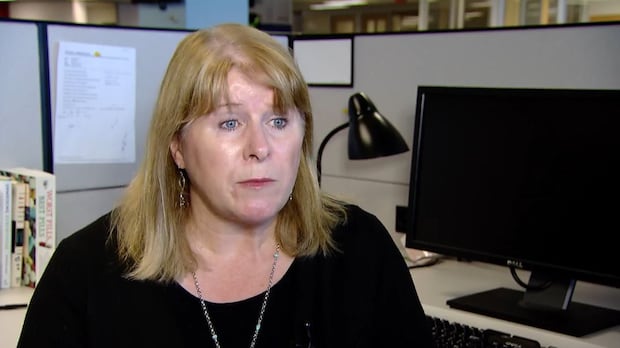
Helen Branswell, a journalist celebrated for her decades of coverage of public health and infectious diseases, has died at the age of 69.
The Sherbrooke, Que.-born reporter died Tuesday, according to an article from STAT, the Boston-based health and medicine news site she had worked for since its founding in 2015.
Her sister, Brenda Branswell, confirmed to the outlet she died of complications from cancer. She had moved back to Canada last year, after a decade in Boston, to be closer to family, STAT reported.
“She loved her work,” Brenda Branswell told STAT. “She loved science and medical writing. She thought her job was a gift. She found it so interesting.”
Branswell’s fellow journalists, members of the medical community and some of the world’s top health officials are mourning the loss of a revered reporter.
Dr. Tedros Adhanom Ghebreyesus, director-general of the World Health Organization (WHO), said he was among those “privileged to work with Helen over many years.”
“Throughout her career, Helen demonstrated an unwavering commitment to evidence, science and truth, helping the public understand some of the most complex and consequential health challenges of our time,” he wrote in a post on the social media platform X.
“At a moment when misinformation competes with facts, her reporting was a trusted source of clarity, honesty and insight,” he wrote.
Former CBC News journalist Kelly Crowe recalled how Branswell was “always conscious of her duty to inform the public without alarming them.”
An acclaimed journalist by chance
Branswell was widely recognized for her reporting at STAT and, previously, during 29 years with The Canadian Press — as a reporter in Ottawa, Calgary and Halifax, a European correspondent and, finally, medical reporter, according to her LinkedIn profile.
It was at the latter news company where “she got hooked on infectious disease reporting covering the 2003 SARS-1 outbreak in Toronto,” according to her biography on STAT’s website.
Branswell and her STAT colleagues were finalists for the 2021 Pulitzer Prize for their coverage of COVID-19. She separately won the 2020 George Polk Journalism Award for Public Service for documenting the first year of the pandemic.
She wrote 161 stories that year, beginning on Jan. 4, 2020, when she reported on a mystery pneumonia outbreak in China that could be the result of “a new virus, and perhaps even a new coronavirus.”
Her final piece, a contribution to STAT’s Morning Rounds newsletter about the growing measles outbreak in Pennsylvania, was published on Oct. 2.
As recently as Monday, Branswell was updating her colleagues in a Slack channel from her hospital bed with data about maternal RSV vaccine uptake, STAT reported.
Although colleagues are reflecting on her long and dedicated career, Branswell said it was “by complete serendipity” that she found her way into journalism.
She explained in 2022, when Carleton University awarded Branswell an honorary doctorate in recognition of her career and “stellar coverage” of the pandemic, that she didn’t really know what she wanted to do with her life after she graduated from St. Thomas University in Fredericton, N.B., with a bachelor of arts in English literature.
But she ultimately landed a reporting gig with The Daily Gleaner newspaper in Fredericton, opening the door to a career she described as “highly fulfilling and rewarding.”
WATCH | Helen Branswell accepts honurary degree from Carleton University in 2022:
Trusted journalist, wonderful person and ‘pretty kickass’
STAT described Branswell’s role as infectious diseases correspondent as “inherently unpredictable,” but one that earned her a loyal following of readers and the respect of leading health officials.
Maria Van Kerkhove, the WHO’s director of epidemic and pandemic management, thanked Branswell on social media for her “extraordinary reporting, rigor and humanity.”
Van Kerkhove told STAT she “always wanted to have a conversation with Helen,” praising her thoughtful questions on complex topics and describing her as “pretty kickass, and no nonsense.”
Branswell could be counted on for her “brilliant, ethical, evidence-based” journalism, especially during the COVID-19 pandemic, said Dr. Peter Jay Hotez, dean of the National School of Tropical Medicine at Baylor College of Medicine in Houston.
“She never fell for the ridiculous conspiracies or raised false equivalencies just to get more clicks and readers,” Hotez said on X. “Helen was very special, I will miss her.”
STAT owner and co-founder John W. Henry said Branswell was someone everyone at the outlet could lean on for any number of issues and that her death was a loss “for everyone who cares about health and medicine.”
“Beyond that she was a wonderful person,” he wrote in a note to staff, according to STAT.
Crowe applauded Branswell’s diligence and how she continued reporting on vital stories long after they faded from the headlines.
“It’s as though she never slept. She was always on top of alll of the files in her beat,” Crowe wrote in an email to CBC News. “And when a new development occurred she had it — usually first — and with precision, accuracy and context.”
CBC Radio’s Dr. Brian Goldman, host of White Coat, Black Art and The Dose, called Branswell “one of the best medical journalists of her generation.”
“Canada’s own made it big in the U.S. during COVID. May her memory be a blessing.”
LISTEN | Helen Branswell speaks with CBC’s The Current about the Ebola outbreak in DR Congo:
The Current20:04Why this Ebola is different