
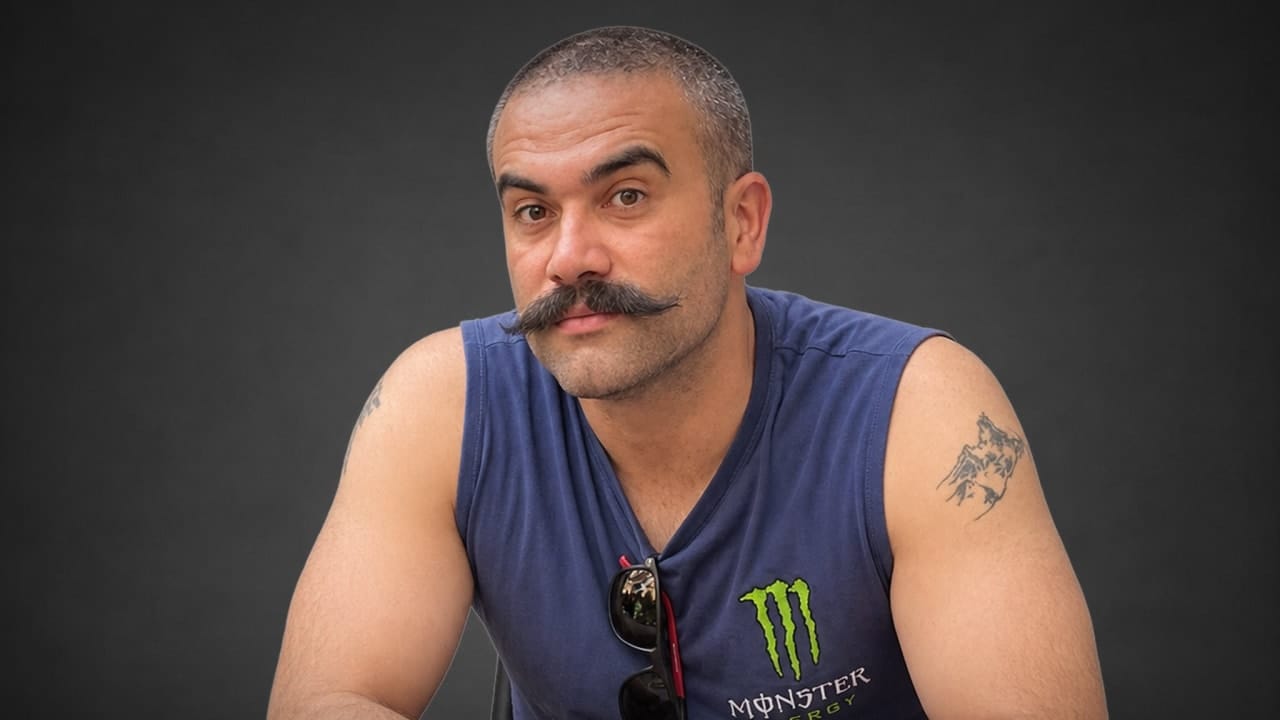
Iran executed mountaineer and musician Ali Sina Mostafavi, 38, on Wednesday, according to state sources, continuing the Islamic Republic’s use of executions as punishment against protesters. The judiciary said he carried out armed attacks during the six-week war with Israel and the United States earlier this year, supported exiled Crown Prince Reza Pahlavi, and maintained links with Israel.
Mostafavi, from Bam in Kerman province, was executed after the Supreme Court upheld a death sentence handed down by a Revolutionary Court in Kerman, the judiciary-affiliated Mizan news agency reported.
Human rights groups had warned less than 24 hours earlier that he had been moved to solitary confinement and his family summoned for a final visit. Pahlavi’s communications team then issued an urgent appeal, saying he had been tortured into confessing and convicted in a sham trial.
Mizan said Mostafavi carried out a series of shootings in Kerman during the war, which Iranian authorities call the Ramadan War. It said he opened fire in Azadi Square on March 24, wounding a civilian and a young girl. On April 21, it said, he fired at conscript soldiers and passing vehicles, injuring several people. It also accused him of two failed shooting attempts targeting police on the Kerman-Mahan road.
Authorities said a search of his hideout turned up a scoped Brno rifle, two shotguns, 246 rounds of ammunition and 30 Molotov cocktails.
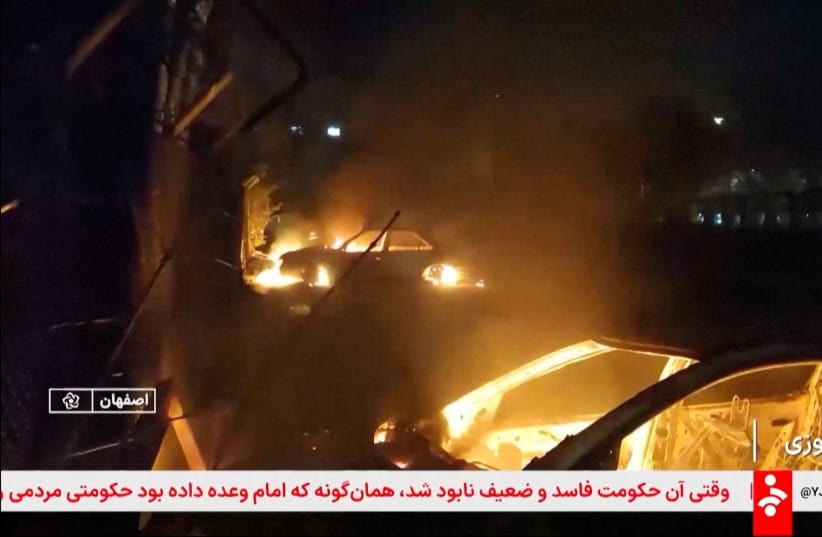 ILLUSTRATIVE: Flames engulf cars following unrest sparked by dire economic conditions, in a place given as Isfahan, Iran, January 9, 2026, in this screengrab from Iran’s state media broadcast footage. (credit: IRIB/WANA (West Asia News Agency)/Handout via REUTERS)
The judiciary also said Mostafavi sent photographs and videos of sites struck during the war to Persian-language opposition media abroad. It said he expressed willingness to carry out an operation at Kerman airport. According to the authorities, messages on his phone included exchanges with Persian-language broadcasters and messages to Israel’s official Persian-language account.
Mizan said he took part in the nationwide protests that began in December 2025 and continued into January, and sent footage of the unrest to media outside Iran.
The judiciary said the case was heard with a defense lawyer present. It said the conviction rested on investigative findings, security reports, and Mostafavi’s confessions. The public account did not include the defense’s arguments or independently verifiable evidence. Iranian authorities have not released evidence that he acted under the direction of Pahlavi or Israeli officials, while human rights groups have raised concerns about his treatment in detention and the circumstances of his conviction.
‘A political prisoner and young athlete’
Pahlavi’s team described him as “a political prisoner and young athlete” in “immediate danger of execution.” The account said in Persian that he was a patriotic mountaineer and alleged his conviction followed “forced confessions under torture” and a “show trial.”
The League for the Defense of Human Rights in Iran said armed security officers arrested Mostafavi at his home in the early hours of April 25. The group alleged he was beaten during the arrest.
Branch 1 of the Kerman Revolutionary Court, presided over by Judge Hadi Aghaei, sentenced him to death on charges including moharebeh, or waging war against God, acting against national security, and gathering and colluding. Branch 41 of the Supreme Court upheld the sentence on September 28, according to human rights reports.
On Tuesday, rights groups reported his transfer to solitary confinement at Kerman prison.
Iran sees sharp rise in the use of the death penalty
Before his arrest, Mostafavi was an experienced mountaineer. IranWire and Human Rights for Sports said he climbed Island Peak in Nepal and attempted Ama Dablam, reaching about 6,600 meters. Records in Kerman mountaineering club archives show he joined a 2016 expedition to Alam-Kuh, one of Iran’s highest mountains. Human rights reports also describe him as a musician.
The execution follows a sharp rise in the use of the death penalty against people accused of involvement in the January protests, opposition activity and war-related security offenses.
On Tuesday, Amnesty International condemned the executions of five men between September 30 and October 5 who had been convicted in connection with the January uprising. “The arbitrary executions of these five young men serves as another chilling reminder of how the Iranian authorities weaponize the death penalty to render the cost of dissent so high that it terrorizes the population into silence,” said Diana Eltahawy, the group’s deputy regional director for the Middle East and North Africa.