
As Israel marks three years since the multi-front war launched by Hamas and other Palestinian terror groups on October 7, the various fronts remain open: the IDF continues to conduct near-daily strikes in Lebanon and in the Gaza Strip, where Hamas is still in power; Israeli forces are still deployed in Syria; and the Iranian and Houthi fronts are on pause, but far from resolved.
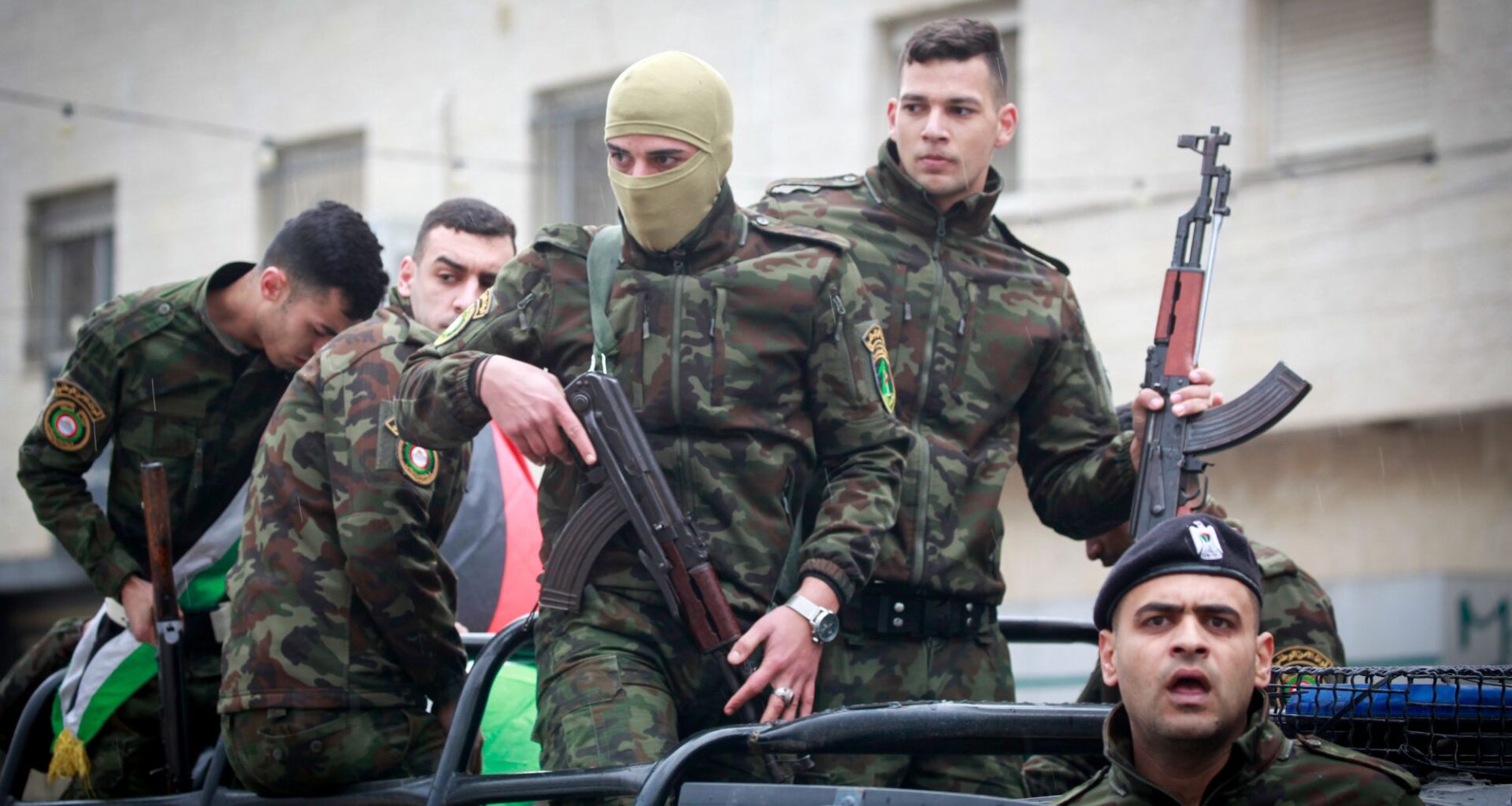
Last week, the Israeli public was suddenly presented with a new threat. “The IDF is preparing for a scenario in which the Palestinian Authority’s security apparatus turns its weapons against Israeli settlers and IDF forces in Judea and Samaria and in communities along the Seam Zone,” Defense Minister Israel Katz declared at the weekly cabinet meeting.
“In such an event, we will declare war against the Palestinian Authority, and the IDF will launch a full-scale offensive in accordance with a structured plan formulated and approved by Prime Minister Netanyahu and myself—based on the principles outlined for the IDF.”
That’s quite a bombshell. Just think about it: tens of thousands of armed Palestinian Authority security personnel deployed throughout the West Bank decide one day to launch an October 7-style attack on dozens of Israeli communities and military bases in Judea and Samaria. The results would be disastrous.
Yesterday, Netanyahu added his own warning. “Our enemies are considering testing us during this period leading up to the elections; we are prepared for any scenario, including a sudden turning of the guns. The IDF has presented a robust plan to me and the Ministry of Defense for such an eventuality; I would advise our enemies not to put us to the test,” he said, speaking from the West Bank.
Israel warns Iran & Hezbollah: Defense minister warns Hezbollah against joining any attack
In a post-October 7 reality, Israel’s security bodies must be prepared for any scenario, and it’s good to know that the country’s top leaders are aware of the threat. There is only one problem: there is no indication that such a threat exists. Security sources I’ve spoken with say the IDF has no intelligence pointing to such an attack, and Shin Bet sources told Israeli media they know of no concrete threat from the PA.
So why the sudden scare, when there is no apparent threat and Israelis have nothing in their power to do about it? There are other possible explanations, from instability within the PA to plain deterrence signaling. But none of them explain the timing. The public first heard of this new threat on October 6, the day before the anniversary of the worst security failure in Israel’s history.
Talking about how Hamas is still in power three years after it massacred some 1,200 people and kidnapped 251 more, on their watch, is inconvenient, to say the least, for leaders seeking reelection. So why not shift the conversation to other armed Palestinians, who, apart from a few rogue security personnel, pose no actual threat to Israelis?
Beyond the political cynicism, presenting the PA security forces as an emerging threat is divorced from reality. As you read these words, PA security forces are helping protect Israeli communities in Judea and Samaria. Their contribution to combating Palestinian terror in the West Bank is minimal at best, but their presence and ongoing coordination with the IDF are a net gain for Israel’s security.
Could they one day turn on Israel and endanger it? Potentially, yes, and Israel must be prepared for that, especially after October 7. But nothing points to it. The threat posed by Hamas, which is still in power and refuses to disarm, is very real. Talking about that two weeks before the first elections since October 7, however, is politically dangerous. It’s far easier to inflate a new threat and divert attention from the failure in Gaza.