
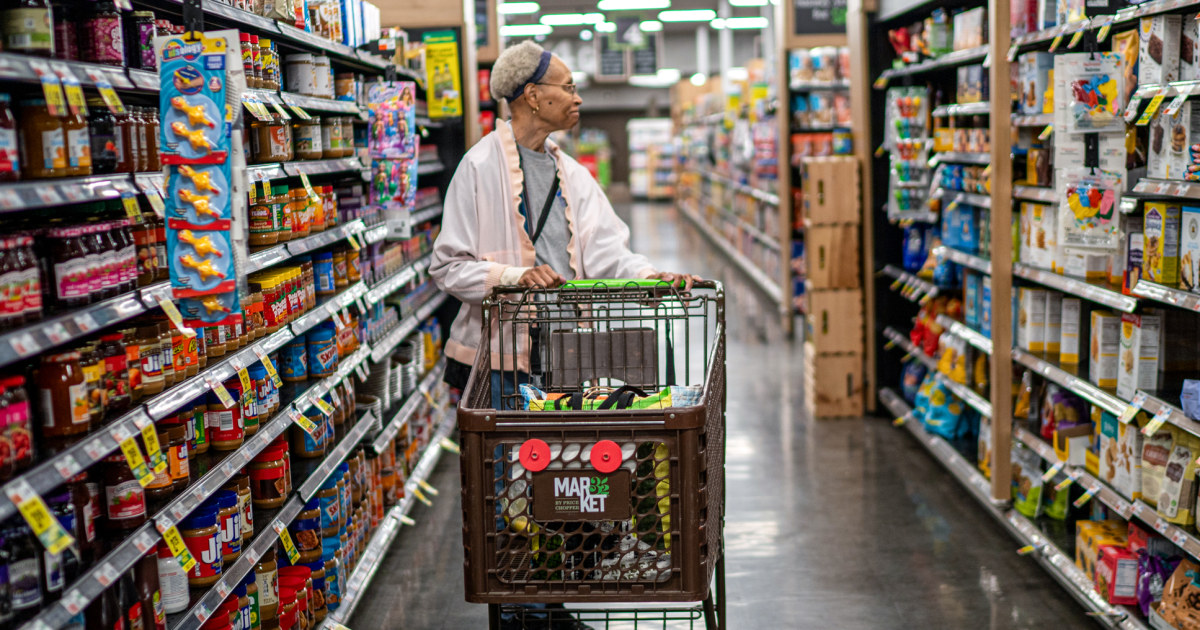
As early voting kicks off this week, the data also comes at a precarious moment for Republicans defending majorities in the House and the Senate. Polls consistently find that inflation and the high cost of living are top issues this year for voters in both parties.
Stocks fell sharply Wednesday. Before the data, market odds showed that traders had expected the Federal Reserve to wait until December to raise rates. After the data, odds rose above 55% for an October hike.
As of midday Wednesday, the Nasdaq Composite fell 1.2% and the S&P 500 tumbled 0.8%. The Russell 2000 index, which tracks small and medium sized companies, slid 1.5%. The stocks that sold off the most were interest-rate sensitive, such as those in the technology and industrial sectors, which are involved in the ever-expanding AI data center buildout.
The prospect of a rate hike also helped send bond yields higher, which will in turn raise consumer borrowing costs, especially for mortgages. The 10-year yield, which has more influence over consumer rates than other bonds, rose to its highest level since last week.
A Fed rate hike could add even more pressure to consumers, raising the cost of other forms of credit such as credit cards, personal loans and vehicle loans.
The artificial intelligence boom also reared its head last month, as categories that track the price of computers, software and accessories posted record year-over-year price increases.
Ahead of Wednesday’s report, economists had been watching recent price hikes on Apple products and whether they have an impact on the overall inflation figure. The smartphone category rose 0.4% month over month.
Airline fares were also being closely watched, given soaring jet fuel costs. Prices in that category rose 0.2% from August, posting their smallest increase since June.
Despite elevated prices and consumers who say they are being stretched to the limit, data shows that spending has remained strong.
On Wednesday, Bank of America CEO Brian Moynihan said that customers continued to spend at a pace 5% higher than last year.
“While much has been made of the AI boom, the consumer is still driving much” of the economy’s momentum, Citigroup CEO Jane Fraser said Tuesday.