
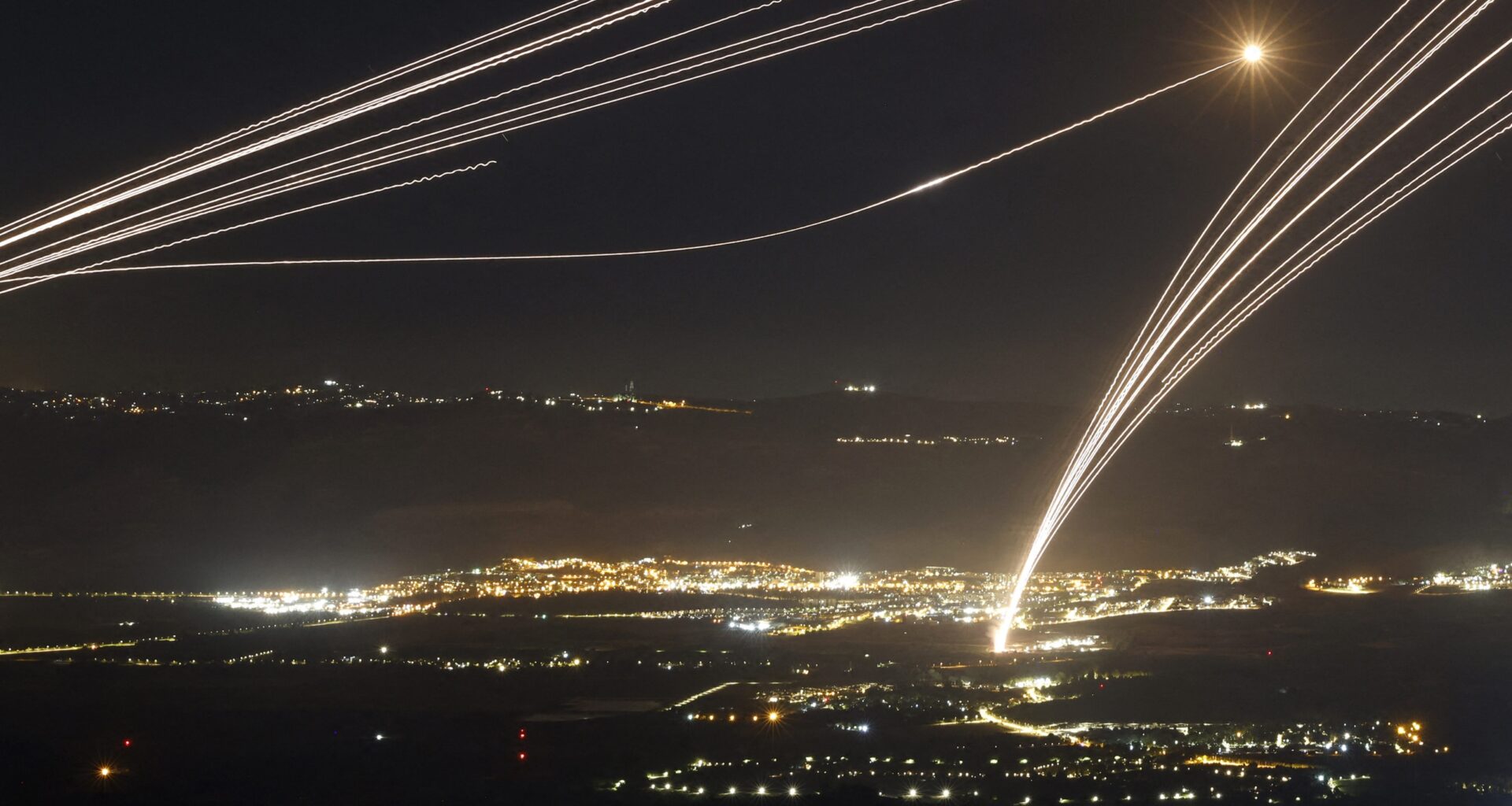
After deadly strikes on Riyadh’s airport and an attack on Saudi Aramco, Israeli air defense technology offers potential answers. But the weapons, geography, and politics make cooperation far from straightforward.
Houthi missiles have penetrated Saudi Arabia’s defenses, killing more than a dozen people and injuring hundreds at Riyadh’s King Khalid International Airport. Another attack Tuesday damaged executive offices at Saudi Aramco’s headquarters in Dhahran. Saudi air defenses have intercepted numerous incoming weapons, but some have reached their targets despite the kingdom’s enormous military spending.
The attacks have prompted renewed scrutiny of Saudi Arabia’s defensive capabilities and raised the possibility of assistance from an unlikely source: Israel.
Israel has developed some of the world’s most advanced missile defense technology, much of it tested in combat against Iranian and Houthi weapons. It has already supplied air defense systems to the United Arab Emirates, and recent reports indicate that Israeli equipment and military personnel have helped protect the UAE against Iranian attacks.
Could similar cooperation help Saudi Arabia? The technology exists, but getting it into Saudi hands would present considerable military, diplomatic, and political challenges.
Why Are Saudi Defenses Struggling?
Saudi Arabia has invested heavily in American-made missile defense systems, including Patriot batteries, which can intercept aircraft and certain missiles, and Terminal High Altitude Area Defense (THAAD), designed to destroy ballistic missiles at high altitude. The kingdom declared its first THAAD battery operational in July 2025.
Yet the Houthis have demonstrated an ability to penetrate Saudi defenses using different weapons, sometimes launched together.
Ballistic missiles climb high into the atmosphere before descending toward their targets at tremendous speed. Cruise missiles operate more like pilotless aircraft, often flying low enough to make radar detection difficult. Drones can be smaller, slower, and considerably cheaper than the missiles intended to destroy them.
Saudi Arabia must contend with all three.
Regional officials told the Associated Press that investigators believe Houthi drones were launched ahead of cruise and ballistic missiles during the deadly Riyadh airport attack. If confirmed, that sequence would suggest an effort to complicate Saudi defensive operations by presenting multiple threats in quick succession.
Radar coverage presents another difficulty. The curvature of the Earth, mountains, and other terrain can conceal low-flying weapons until they approach their targets. That leaves defenders with less time to detect, identify, and intercept them.
Saudi Arabia’s sheer size makes the job harder. The kingdom covers nearly 2.15 million square kilometers, approximately 78 times the combined land area of Israel and the West Bank. While Israel’s relatively compact geography allows some missile defense systems to protect multiple population centers and strategic installations, Saudi Arabia’s oil fields, refineries, airports, ports, military bases, and major cities are spread across vast distances.
Neither country needs to defend every square kilometer equally, but protecting Saudi Arabia’s widely dispersed infrastructure requires a far more extensive network of radars, launchers, and interceptors.
There is also a financial imbalance. A relatively inexpensive Houthi drone may force Saudi Arabia to expend a missile costing hundreds of thousands or even millions of dollars. Repeated attacks can gradually deplete defensive stockpiles.
The Financial Times reported this week that Saudi Arabia faces concerns about shortages of interceptor missiles and weaknesses in radar coverage.
Even when air defenses work, civilians can still be injured by falling debris. Saudi authorities reported four injuries in Riyadh this week after fragments from intercepted Houthi missiles struck residential neighborhoods.
The question facing Saudi defense planners is not simply how to shoot down more missiles. They must improve detection, determine which weapons pose the greatest danger, and ensure that the appropriate interceptors are available where they are needed.
Which Israeli Systems Could Help?
Iron Dome is Israel’s best-known missile defense system, but its arsenal includes several others, each developed to deal with different threats.
Iron Dome was originally designed to intercept short-range rockets. Its radar tracks incoming projectiles, calculates where they are likely to land, and prioritizes those threatening populated areas or important installations.
The system has since been upgraded to counter additional threats, including drones and cruise missiles. It could protect selected Saudi facilities, although its relatively limited coverage means it would not be suitable for defending vast areas of the kingdom.
David’s Sling, developed jointly by Israel and the United States, operates at a higher defensive layer. It is designed to intercept a range of threats, including cruise missiles, certain ballistic missiles, aircraft, and drones.
The system underwent further testing in February 2026, incorporating improvements intended to address newer aerial threats. Its versatility could make it useful against the Houthis’ varied arsenal.
Arrow 2 and Arrow 3 specialize in ballistic missile defense. Arrow 3 can intercept suitable incoming missiles outside the atmosphere, before they descend toward their targets. Israel has used the Arrow family against long-range missiles launched from Iran and Yemen.
For Saudi Arabia, Arrow could provide additional protection against high-altitude ballistic threats. It would do little, though, against a drone or cruise missile approaching an airport at low altitude.
Two less familiar Israeli systems may be especially relevant.
Rafael’s mobile SPYDER system can engage aircraft, drones, and cruise missiles, making it potentially useful for protecting oil installations, airports, and military bases.
Israel Aerospace Industries produces Barak MX, which combines different interceptors and radar capabilities to counter aircraft, drones, cruise missiles, and certain ballistic threats.
Both systems can be deployed around selected installations and integrated into broader air defense networks.
Then there is Iron Beam, Israel’s high-energy laser system.
Israel delivered its first operational Iron Beam system to its military in December 2025. Unlike conventional missile defenses, it uses a powerful laser to destroy suitable targets without consuming an interceptor missile.
That could provide a considerable economic advantage against relatively inexpensive drones.
Lasers have limitations, however. They require a clear line of sight, and their effectiveness can be reduced by dust, haze, clouds, and other atmospheric conditions. Their range and ability to engage particular targets are also more restricted than those of some conventional missile defenses.
Saudi Arabia’s desert environment would make those limitations particularly relevant.
Israel also operates C-Dome, a naval adaptation of Iron Dome, as well as specialized counter-drone systems.
For Saudi Arabia, a combination of mobile defenses, improved radar coverage, and earlier intelligence warnings could prove more useful than purchasing large numbers of any single system.
Has Israel Already Helped Defend an Arab Country?
The UAE provides a precedent for Saudi-Israeli cooperation, although the two countries’ diplomatic circumstances are different.
In September 2022, Reuters reported that Israel had approved the sale of SPYDER to the UAE, which had suffered Houthi missile and drone attacks earlier that year.
Subsequent reports, including assessments based on satellite imagery, indicated that Israeli-made Barak air defenses had been deployed near Al Dhafra Air Base outside Abu Dhabi.
These transactions followed the establishment of Israeli-Emirati diplomatic relations under the 2020 Abraham Accords.
Military cooperation reportedly expanded during the war involving Iran in 2026.
In May, the Financial Times reported that Israel had supplied the UAE with Iron Dome equipment, a version of Iron Beam, sophisticated surveillance technology, and real-time information about Iranian missile launches.
The newspaper also reported the presence of Israeli military personnel assisting Emirati defenses. The New York Times separately reported an Iron Dome deployment.
The full extent of that cooperation has not been publicly disclosed. Nor is there an independently verified record establishing how many incoming weapons each Israeli system intercepted.
Still, the reports indicate that Israeli assistance to the UAE has extended beyond equipment sales to include intelligence sharing and operational support.
That experience could provide a model for Saudi Arabia, although the absence of formal diplomatic relations between Riyadh and Jerusalem creates obstacles that the UAE does not face.
Could Saudi Arabia Obtain Israeli Assistance Without Normalizing Relations?
Possibly. Much would depend on the type of assistance involved.
Sharing intelligence about incoming missiles would be considerably easier than installing Israeli launchers on Saudi territory.
Israel possesses sophisticated radar and intelligence capabilities that can detect or track certain missile launches across the region. Some of that information could potentially reach Saudi Arabia through American military channels.
Even a relatively small improvement in warning time can be valuable. If Saudi crews know that a missile has been launched before their own radar detects it, they may have more time to activate defenses and prepare for interception.
The United States has already taken steps toward building a regional air defense network.
In January 2026, US Central Command announced the establishment of a multinational air and missile defense coordination cell at Al Udeid Air Base in Qatar. Its purpose is to improve the sharing of warnings and coordination among regional military partners.
An arrangement of that kind could allow Saudi Arabia to benefit from Israeli-origin intelligence without establishing direct diplomatic relations or openly acknowledging bilateral military cooperation.
The specific information exchanged through existing regional systems is not publicly known.
Purchasing Israeli equipment would be more complicated.
Israel would have to authorize the sale, while Saudi Arabia would need to accept the practical requirements of operating Israeli-made weapons, including training, maintenance, spare parts, software updates, and technical assistance.
Some systems would also require American approval.
Arrow and David’s Sling were developed with substantial US involvement, and American technology and financing have played an important role in Iron Dome’s development.
Germany’s purchase of Arrow 3 required Washington’s consent. Similar approval requirements could apply to prospective Saudi purchases, depending on the system and its components.
The greatest obstacle, however, may be political.
Saudi Arabia has repeatedly linked normalization with Israel to the establishment of a Palestinian state. Its Foreign Ministry reiterated that position in 2025.
The Gaza war and broader regional tensions have made the issue particularly sensitive. Openly purchasing Israeli weapons could provoke domestic and regional criticism, even if Saudi officials concluded that the systems offered substantial security benefits.
There is a difference, though, between quietly receiving missile-launch information through the United States and hosting Israeli military personnel or purchasing Israeli launchers.
The former could be accomplished through existing security relationships. The latter would require a much greater political commitment.
There is currently no publicly verified agreement for Saudi Arabia to acquire Israeli missile defense systems, and no confirmation that Riyadh has requested any of the specific weapons discussed here.
Asked Wednesday about Israeli assistance to Saudi Arabia, Prime Minister Benjamin Netanyahu did not confirm any such cooperation.
Would Israeli Technology Solve Saudi Arabia’s Defense Problems?
It could improve protection, but the practical requirements should not be underestimated.
Iron Dome batteries stationed in Israel cannot simply shoot down missiles approaching Riyadh. The distances are too great for that kind of protection.
Saudi Arabia would need its own appropriately positioned launchers, radars, communications equipment, trained personnel, and supplies of interceptors.
Integrating those systems with existing Patriot and THAAD batteries would also take time.
Israel faces another constraint: Its own air defenses have been heavily used during the fighting with Iran and the Houthis. Replenishing interceptor stocks is an important Israeli military requirement, which could affect the availability of equipment for export.
Saudi Arabia is also seeking additional defensive assistance from more established partners, including the United States, Britain, France, Turkey, and Pakistan. Those relationships offer alternatives without the diplomatic complications of acquiring Israeli weapons.
Missile defense alone cannot eliminate the danger. Better civilian warning systems, shelters, emergency procedures, and protection for essential infrastructure could also reduce casualties and damage.
Reuters reported that Saudi public missile alerts had fallen silent before recent attacks on Riyadh’s airport, raising questions about measures intended to protect civilians when defenses fail.
For Saudi Arabia, the most readily available Israeli contribution may not be Iron Dome, Arrow, or Iron Beam. It could be the intelligence needed to detect an approaching attack sooner and give existing Saudi defenses a better chance of stopping it.
That kind of cooperation would be less visible than Israeli launchers deployed near Riyadh or Dhahran. It could also be easier to arrange politically.
Whether Saudi Arabia is prepared to pursue even limited cooperation with Israel remains an open question. For now, Riyadh is trying to strengthen its defenses while the Houthis continue demonstrating that even a heavily armed country cannot count on intercepting every incoming weapon.