
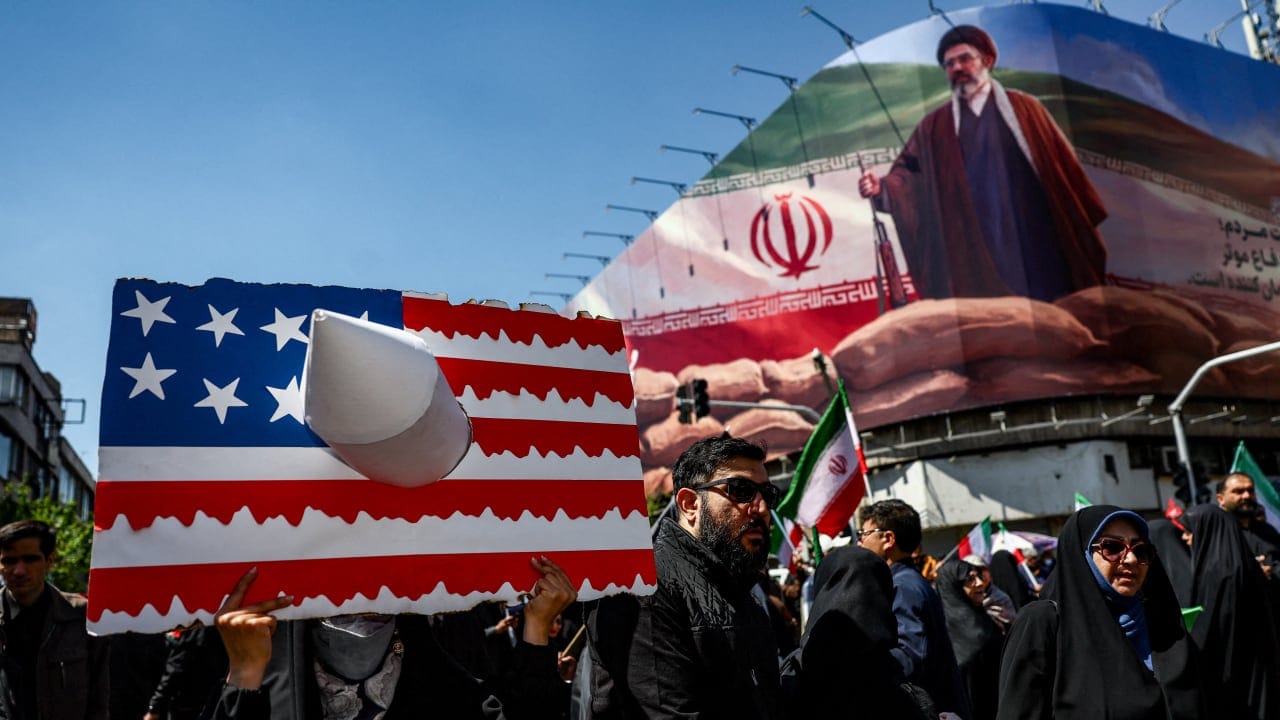
Iranian leaders believe that a US strike against the country is inevitable, viewing the question not as “if” Washington will launch another attack, but “when” it will happen.
According to several regional diplomats who spoke to The Jerusalem Post on Wednesday following conversations with senior Iranian officials, concerns are growing within Iran’s leadership that the current period of relative calm could be short-lived and that hostilities may resume in the near future.
One diplomatic source described the mood in Tehran, saying that the atmosphere in the Iranian capital reflects a widespread expectation that further US strikes are imminent. “The atmosphere in Tehran is such that people feel the bombings are going to resume in the short term.”
The growing sense of uncertainty has been accompanied by forceful rhetoric from Iranian officials, who have warned Washington against launching another offensive. On Wednesday, Iranian Army spokesman Mohammad Akrami-Nia accused the United States of seeking to destroy Iran’s Islamic civilization through what he described as an illegal war.
“America’s objective in waging an illegal war is to destroy Iranian Islamic civilization,” Akrami-Nia said.
A spokesman for Iran’s Islamic Revolutionary Guard Corps (IRGC) similarly warned that, although initiating another war against Iran would be strategically irrational for Washington, the possibility of renewed hostilities cannot be ruled out.
According to the spokesman, the Trump administration may be seeking a significant political or military achievement ahead of the US midterm elections, potentially increasing the risk of further escalation.
The IRGC spokesman stressed that Iran would respond forcefully to any additional military action. “Iran is prepared to respond to any further aggression with greater force than in the past, and the consequences for the United States will be far more painful,” he warned.
Tensions intensified further on Wednesday as Iran increased its attacks on vessels and oil tankers operating in the Strait of Hormuz. Two tankers belonging to the United Arab Emirates were sunk after being hit by Iran.
Since the beginning of the month, Iran has attacked approximately 30 vessels transiting the strait. These attacks are described as part of an Iranian effort to disrupt an operation conducted by US Central Command (CENTCOM) involving the transportation of oil barrels, which has recently been able to transfer 20-22 million barrels per day out of the Straits, reaching the numbers that were there before the war.
Earlier this week, Iranian forces conducted a military exercise during which approximately 30 ballistic missiles were launched.