
A total of 197 countries are expected to participate in the global climate summit in Turkey next month. Unfortunately, Israel will likely not be among them, due to a combination of security concerns and diplomatic isolation.
The Ministry of Environmental Protection said it had submitted a request to security officials on behalf of both the ministry and the Foreign Ministry, but noted: “At this stage, approval for the joint delegation’s departure has not yet been granted. However, the matter is currently being reconsidered, and no final decision has been made.”
(Photo: Goksel YAPAR / AFP)
The summit is an annual gathering of countries that are parties to the United Nations Framework Convention on Climate Change. This year’s agenda will include a review of national emissions reduction targets and mark a decade since the Paris Agreement, aimed at limiting global warming, entered into force.
Asked how important Israeli participation is, Prof. Colin Price, head of Tel Aviv University’s Climate Initiative, said: “It’s more of a political conference, which is why it’s important for us to be there, just as we participate in the United Nations even though we don’t have much influence. But being there matters. This year, the situation is apparently different. The fact that the conference is being held in Turkey is preventing many people from attending.
The Ministry of Environmental Protection barely functions these days, so there’s less interest. It’s a combination of security concerns and a lack of interest on the government’s part. So we won’t be there, although there may be private-sector representatives.
“Scientists working and conducting research in the climate field don’t feel that there’s any boycott or that the current situation is affecting international cooperation, including conferences,” he added. “I think there’s much less politics at the scientific level. I served as a reviewer for one of the chapters of an Intergovernmental Panel on Climate Change (IPCC) report.”
At the same time, Price warned that the private sector could suffer from Israel’s absence.
“There’s no exposure, no networking and no investment. Four years ago, there were far more foreign investors in companies. I’m involved in a startup, and over the past year or two, investors have stopped responding. They simply don’t answer our emails. There’s much less foreign investment in climate tech [innovative technologies designed to address climate change]. If we don’t attend the summit, we miss out on those connections and meetings.”
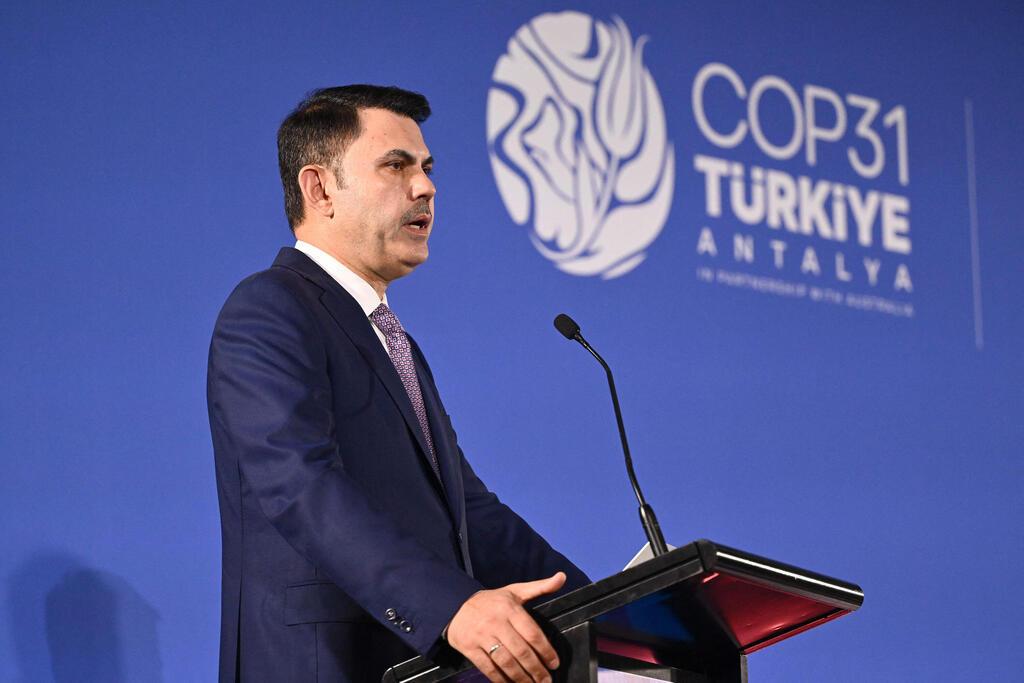
Turkey’s Minister of Environment, Urbanization and Climate Change Murat Kurum
(Photo: Saeed Khan/AFP)
Udi Avni, co-country director of Greenpeace Israel, also expressed concern over Israel’s likely absence from the event.
“Against the backdrop of extreme climate events around the world, Israel’s participation in the summit is essential,” he said. “The absence of official representation harms the national interest and the Israeli public. If this were Eurovision, things would look and sound very different. The government should be doing everything in its power to demand that the host country guarantee the Israeli delegation’s safety or ask the United Nations to relocate the summit. Turkey was chosen as the host nearly a year ago.
“Unlike Eurovision, the climate summit produces technical but important decisions on issues such as renewable energy transition targets, environmental regulations and funding for green technologies. These decisions directly affect the quality of life of all Israelis, the cost of living and the economy, national security and our ability to cope with the consequences of the climate crisis, including wildfires and drought.”

A small Israeli delegation attended last year’s summit in Belém, Brazil
(Photo: Thomas MORFIN / AFP)
Avni added that “the summit is also an opportunity to promote Israeli technologies and international cooperation that could help improve Israel’s diplomatic standing by supporting key demands on the agenda, including a rapid, just and adequately funded transition away from fossil fuels, the development of an ambitious national roadmap for phasing out fossil fuels and support for the ‘polluter pays’ principle by taxing the windfall profits of energy corporations to finance climate compensation funds.”
Dr. Avner Gross, Head of the Climate Change Research Laboratory at Ben-Gurion University of the Negev, said: “The climate crisis is one of the greatest challenges facing humanity, and it will be with us from now on. To address it, we need the entire global community, including Israel. One way to have an impact and be part of the effort is to participate in the international climate summit, which nearly every country in the world attends. Israel’s absence would signal a further withdrawal from the global dialogue, potentially harming the country academically and economically.”
Mor Gilboa, CEO of Zalul, an Israeli environmental organization focused on protecting marine and freshwater ecosystems, said Israel’s failure to attend the summit would be another blow to environmental and climate efforts in a region that urgently needs cooperation to better protect and manage the resources shared by Mediterranean countries.
“It is deeply regrettable that political tensions and security threats will likely prevent Israel from participating in the summit,” Gilboa said. “The climate crisis will not wait for political circumstances to change. In reality, it continues to worsen and even adds further tensions to an already strained political situation.”