
(Oct. 15, 2026 / JNS)
After Oct. 7, Israelis came to understand that those they hoped would be partners for peace never saw them that way. Despite outreach efforts to Gazans over shared dinners and trips to doctors, many of those living near the Gaza border—those most affected by the raw bestiality of the Hamas-led attacks—realized that they allowed themselves to be misled.
Over the course of the intervening years, many have turned inward, seeing themselves as not just Israelis but also Jews in a Jewish country. Eerily enough, the massacre happened on a Jewish holiday (Simchat Torah, the culmination of Sukkot), and this past Sukkot, a miracle in the sky took place. The lives of 174 people were spared because of Jewish heroes who acted together to stop the flydubai hijacking and planned terror attack.
The Torah portion that is read on Simchat Torah includes the final blessings given by Moses to the Tribes of Israel, known as V’Zot HaBracha, in which he says: “God rides the heavens to save you, to help you, and God shows his majesty, his splendor in the skies!”
For many, despite their secular lifestyles, they knew that in addition to the in-flight heroes, there was another “hand” that intervened.
From Simchat Torah 2023 to Simchat Torah 2026, the Jewish people’s unity has strengthened. In between those two milestones came missiles from Iran, including a barrage of 300 in one night, and retaliation in partnership with the United States.
With eyes opened, many have come to understand the seriousness of the threats Israel faces and the need for increased security, both strategic and spiritual. Many have chosen to include Jewish rituals in their lives more regularly. Many have also come to understand the necessity of protecting the Land of Israel, including Judea and Samaria, where much of the history of the Jewish people unfolded.
A few months ago, Highway 60, the road that runs near biblical sites related to Jewish history and modern Zionism, was designated as Derech HaTanach (the “Biblical Highway”). Israeli Prime Minister Benjamin Netanyahu remarked: “It is a testament to us being an ancient people, reconstituting our national life in our historic homeland.”
The importance of history cannot be overstated; however, the use of words tied to history plays a significant role in how history is interpreted.
The agenda-ridden term “West Bank” used for Judea and Samaria is meant to obscure and deny the ancient presence and indigeneity of the Jewish people in the Land. This wasn’t always the case. Before 1948, the area was consistently referred to as Judea and Samaria. But after Israel’s victory in wars waged against it, including in 1948, 1967 and 1973, there was a change in tactics from warfare to lawfare.
Likewise, following Israel’s independence, we read of the Arab-Israeli conflict. Such terminology engendered sympathy for Israel as David against Goliath. Cleverly, Arab propaganda changed course in the mid-1960s, rebranding the war as the “Israeli-Palestinian conflict.” Israelis, with the strength of their state, thus became the aggressors against the lowly “Palestinians.”
Words carefully weighed can bring clarity. As such, a delegation of U.S. legislators was recently in Israel and traveled to northern Samaria, where they were briefed on the history and the necessity of promoting legislation requiring official U.S. documents to use the term “Judea and Samaria,” rather than “West Bank.”
Delegation participant Rep. Sarah Vance (R-Alaska) said, “I intend to file the bill declaring Judea and Samaria as Israel’s sovereign biblical lands. Being here and being able to see Samaria in the context of Israel is something you cannot see on a map or read about in a book. So, thank you for allowing us to come and experience it for ourselves.”
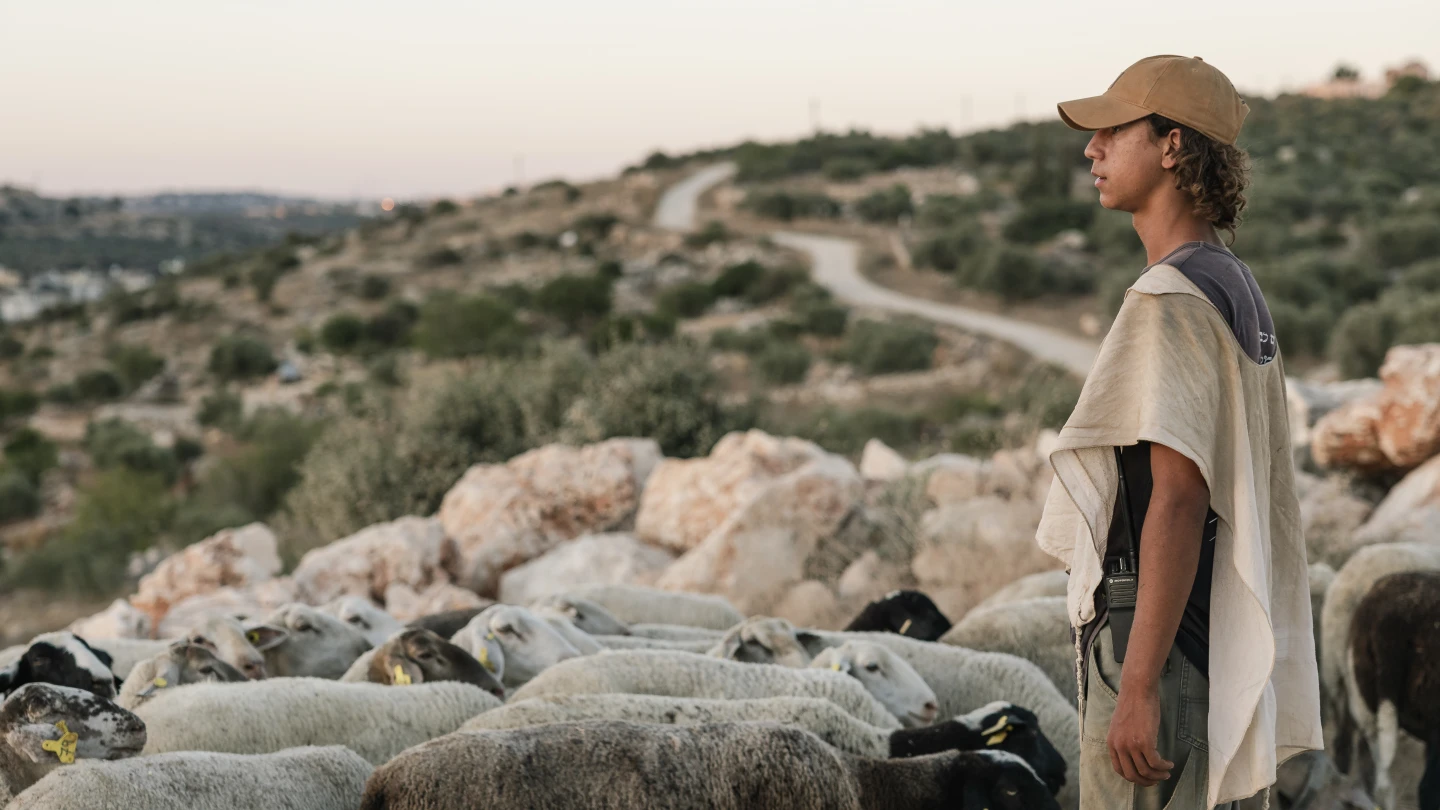
Visitors to the area are now seeing farms sprouting up in Judea and Samaria on land that was allocated to the Jews under the Oslo Accords, otherwise known as Area C. For many years, this was not the case. Now, hundreds of young Jews are building farms, becoming shepherds and settling the land.
The Arabs, according to a detailed report by the organization Regavim, have built more than 5,000 illegal structures in Area C. The intention of this encroachment was to create “facts on the ground” that would eventually lead to enough land for a state and prevent Israel from declaring sovereignty. The government finally intervened and is in the process of destroying some of the illegal buildings.
This includes accusations of famine—disputed by none other than the United Nations—and charges of genocide. The latter claim overlooks the fact that Israel could have carpet-bombed Gaza but instead distributed leaflets and made calls to protect innocent civilians. Then there is the issue of “settler violence,” of which isolated incidents of Jewish violence are widely reported, while Arabs putting poison in dates and pitas to feed to sheep and thousands of attacks with rocks, missiles, drones, shootings, vehicle-rammings and so on are ignored.
Increased Jewish settlement of the land is thwarting Arab attempts to conquer it by terror. The action that needs to be taken by the Israeli government is to declare sovereignty over Judea and Samaria, and put to rest any notion of temporary status.
History cries out to be heard. This area was internationally recognized as part of the Jewish homeland by the Balfour Declaration, the League of Nations, the San Remo Resolution, and then the U.N. founding document (Article 80), all still legally binding.
As English writer and philosopher Aldous Huxley famously noted, facts do not cease to exist because they are ignored. And, as Rabbi Hillel taught: “If I am not for myself, who will be for me? … And, if not now, when?”