
Amid concerns over the development of alternative trade routes in the region, including a trade corridor being promoted by Turkey and Syria, the Israel Ports Company is stepping up pressure on the government to advance Israeli participation in the India-Middle East-Europe Economic Corridor (IMEC). In the coming weeks, the company is expected to submit a first-of-its-kind strategic plan for the establishment of inland ports in Israel for government approval, it was announced Thursday morning at the Mare Med conference in Tel Aviv.
The plan is intended to serve as the first practical step toward implementing the initiative in Israel by creating physical and logistical links between seaports, the railway network and logistics centers. The move aims to establish Israel as a major trade hub between Asia and Europe and shift the project from the planning stage to implementation.
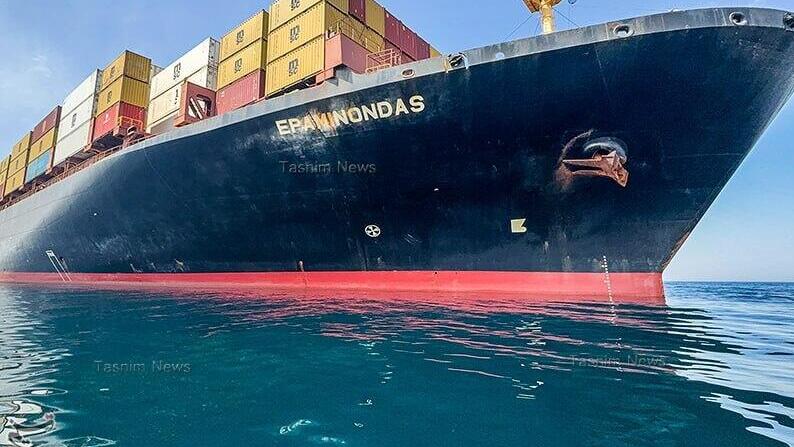
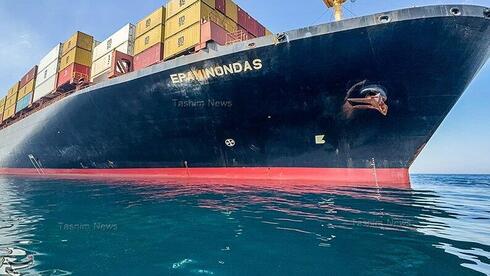
Commercial vessels; searching for alternative routes to bypass blocked shipping lanes
The announcement came during a special international forum convened by the Israel Ports Company, attended by senior officials and professionals from Israel, the United States, Greece, the European Union and Jordan, alongside representatives of shipping companies, the operator of Haifa Port, Ashdod Port and Israel Shipyards.
Participants agreed to establish a permanent international professional forum and working groups to ensure ongoing coordination. The groups will meet every two months to address regulatory and operational obstacles.
The growing urgency surrounding the corridor stems from continued turmoil in global shipping and maritime trade. Attacks by Yemen’s Houthi rebels in the Bab el-Mandeb Strait and the Red Sea have severely disrupted commercial shipping toward the Suez Canal, forcing many shipping companies to reroute container vessels around Africa.
At the same time, regional tensions with Iran and persistent concerns over threats to freedom of navigation in the Strait of Hormuz have driven up maritime insurance costs and intensified the search for alternative routes.
As global supply chains face frequent disruptions, IMEC is increasingly viewed as a strategic asset. The proposed corridor would combine a maritime route from India to the Persian Gulf with a rail and logistics network running through Saudi Arabia and Jordan to Israel’s seaports, which would serve as gateways to ports in Greece and the rest of Europe.
For both the Israeli and global economies, the project promises to reduce costly shipping times and establish a stable trade artery that does not depend on vulnerable maritime chokepoints.
“IMEC is a historic opportunity to turn Israel into a major trade hub, and the question is not whether the project will be implemented, but when,” Israel Ports Company CEO Pinchas Tsruya said Thursday morning.
“The vision is clear and the need is critical, but competition over global trade routes is intensifying, and the window of opportunity will not remain open forever.”
Tsruya added that “establishing the international working groups is an important practical step toward realizing the vision and securing Israel’s place in the trade routes of the future.”
Israel Ports Company Chairman Hezi Halavia said at the conference that “the IMEC corridor is not merely a logistics route, but a strategic bridge connecting the Middle East and Europe. A strong and resilient supply chain is built on docks, railways and logistical, technological and human infrastructure.”
Halavia also emphasized that “establishing Israel’s position within IMEC is not only an economic initiative, but a central component of the country’s strategic standing in the region and its national resilience for decades to come.”

Pinchas Tsruya, CEO of the Israel Ports Company; Maya Solomou, Greek ambassador to Israel; Hezi Halavia, chairman of the Israel Ports Company; Roi Kahlon, director of the Government Companies Authority
(Photo: Alon Spiegel)
Government officials say implementing the project will require faster procedures than those currently used for developing national infrastructure.
“Israel has an enormous opportunity to become a hub connecting economies, promoting growth and generating a long-term strategic advantage. Government-owned companies are responsible for a significant portion of the infrastructure that will enable the project to be implemented, and the Government Companies Authority will work to advance it,” said Roi Kahlon, director of the Government Companies Authority.
Kahlon added that “the government must create the conditions, powers and tools that will allow companies to operate quickly, flexibly and efficiently.”
A central focus of Thursday morning’s discussions was the maritime and overland connection to Greece, which is seeking to establish its ports, particularly Piraeus and Thessaloniki, as the corridor’s gateway to the European Union.
“Israel is an essential partner in the region. Its geographic location, port infrastructure and technological capabilities make an important contribution to developing reliable and modern connectivity,” said Greece’s ambassador to Israel, Maya Solomou.
“Greece is ready to cooperate with Israel and all the other partners to help realize the corridor’s full potential,” the ambassador added.