
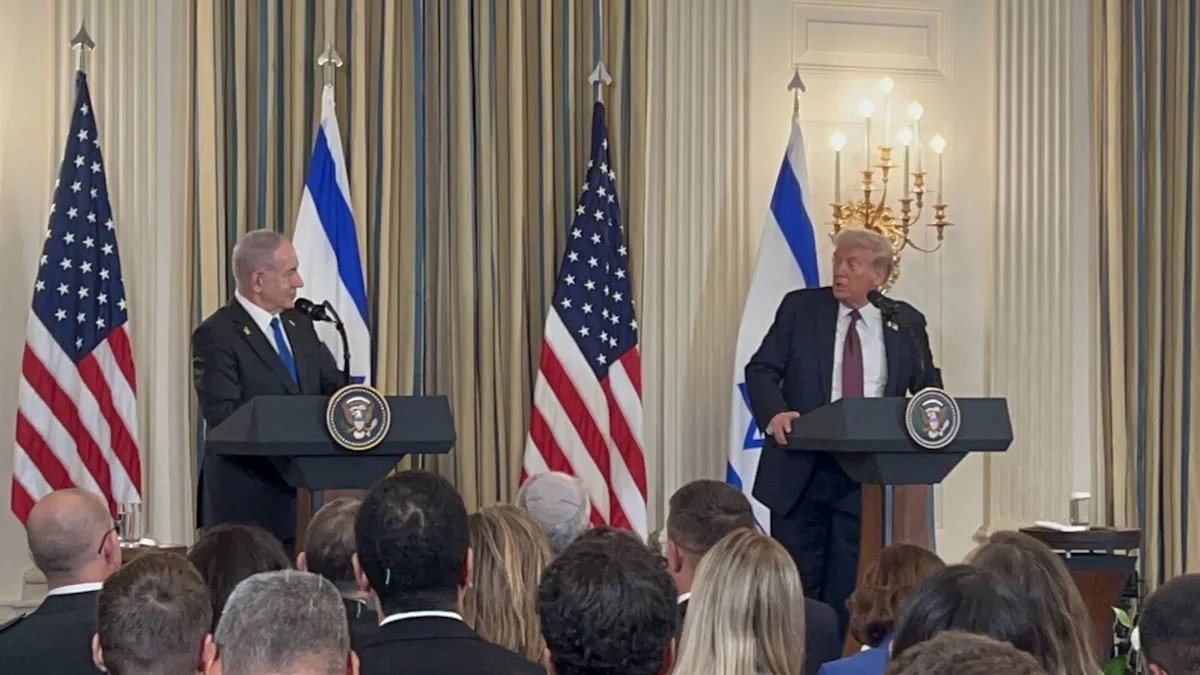
(The Center Square) — As President Donald Trump continues to weigh options regarding the next moves with Iran, elections in the U.S. and Israel loom large.
Last week, the president vowed not to strike Iran before the midterm elections set for Nov. 3.
Exactly one week before the U.S. elections, Israel will also hold an election that could determine the fate of Israeli Prime Minister Benjamin Netanyahu. The prime minister made similar comments to Trump, saying a strike before their elections would not be “convenient,” adding “it’s no good.”
As of last week, the president claimed the U.S. and the Islamic Republic were engaged in “productive discussions,” noting the country’s dire economic situation.
“Iran is in very bad condition, both economically and militarily, and while the blockade will remain in full force and effect, with oil flowing in record numbers of barrels through the Hormuz Strait,” the president wrote on Truth Social. “We will not be attacking Iran at any time prior to the midterm elections.”
The president’s comments come as the Iranian-backed Houthis in Yemen have been accused of multiple attacks against Saudi Arabia.
The Iranians have been largely quiet in recent weeks, with some in the Iranian leadership expressing a desire to end the conflict. However, there are multiple reports that Iran has returned to targeting cargo ships in the Strait of Hormuz. However, the Trump administration appears focused on the midterm elections as the president and members of his administration are engaged in a campaign blitz across the country.
Despite the hectic campaign season, Trump continues to say he is weighing options against Iran, repeating that “Iran cannot have a nuclear weapon.”
The Trump administration estimates the complete naval blockade on Iranian ports is costing the Islamic Republic’s economy between $400 million and $500 million a day in economic losses, as the country cannot export oil.
The Pentagon estimates that Operation Epic Fury, which began with joint U.S./Israeli strikes against Iran on Feb. 28 of this year, has cost at least $33.4 billion.