
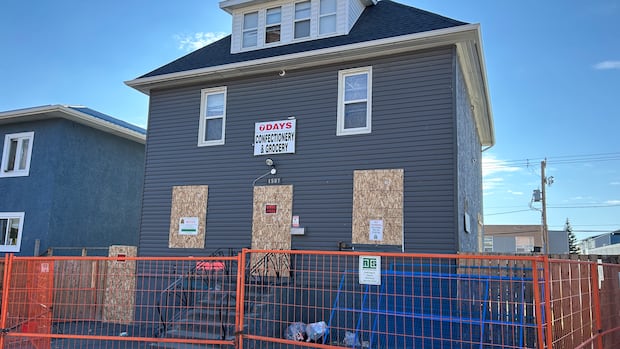
Mohammad Akhtar spends his days watching over the store he bought in the Pleasant Hill neighbourhood four years ago.
But he can no longer legally enter the property, a converted house with a confectionary/grocery store on the first floor and a space where Akhtar was living on the second floor of the structure that was originally built in 1912.
Akhtar said in an interview this week that he has been living with friends since Court of King’s Bench Justice Ron Mills granted a community safety order to close the store for 90 days under Saskatchewan’s Safer Communities and Neighbourhoods (SCAN) Act.
The order cites an “astonishing” level of activity at the property this year, including 95 police calls, 38 of which involved drug overdoses.
Akhtar admitted he has struggled to control the activity on his property, but flatly denied the suggestion in the order that he is somehow involved in the illegal drug trade.
WATCH | Judge shutters Saskatoon confectionary due to overdoses, police calls: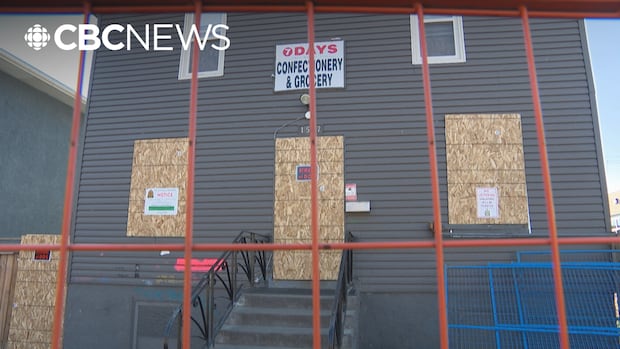
Judge shutters Saskatoon confectionary due to overdoses, police calls
A convenience store in the Pleasant Hill neighbourhood has been closed under Safer Communities and Neighbourhoods powers due to an ‘astonishing’ number of emergency calls, including 95 police calls this year, 38 of which were for drug overdoses.
“I’m seriously very upset [about] what to do, how to handle them, again, because they cannot be controlled,” Akhtar said of the people who frequent his property, 7 Days Confectionery & Grocery on the 1500 block of 20th Street West.
“Even the police cannot help me in this matter because they never give a ticket to a single person, they never kick them out. They just come here. ‘Hello, hello, hello.’ They’re gone. Police is there, [the people causing the issues] are here.”
The order took effect on Sept. 30. The door and windows of the business are boarded up and an orange wire fence surrounds it. The court order is placed on one of the windows facing 20th, warning people it is “unlawful to enter property.”
But Akhtar, who was sitting in his SUV in the parking lot behind the store to watch over it on Tuesday, said he is calling police up to 10 times a day to report people entering or trying to enter the property.
Police responded to a message Thursday, saying they were not immediately prepared to comment.
The same police force Akhtar turned to for assistance helped prompt the closure of his business.
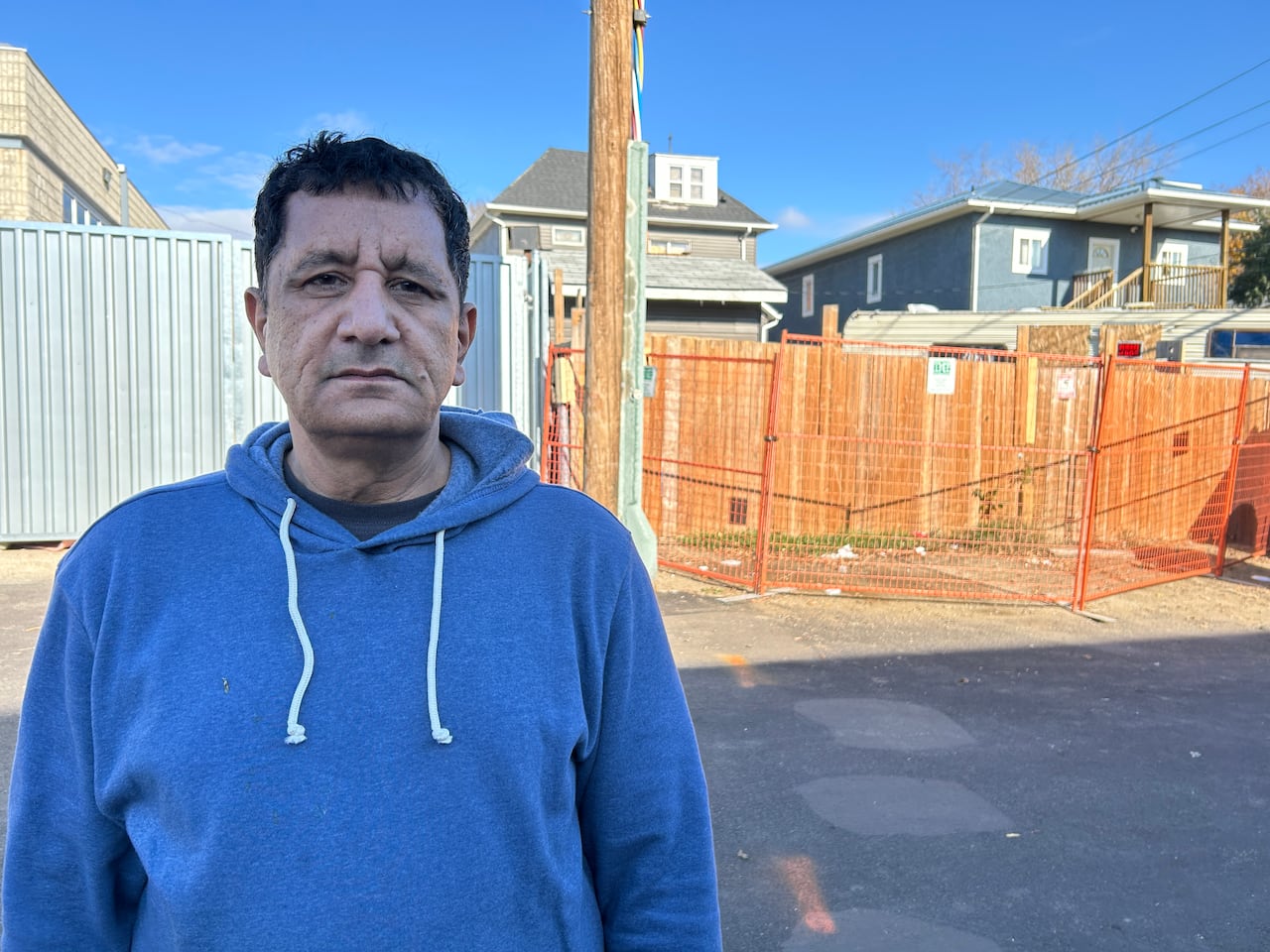
Mohammad Akhtar poses behind his shuttered confectionery/grocery store on the 1500 block of 20th Street West in Saskatoon’s Pleasant Hill neighbourhood on Tuesday, Oct. 13, 2026. (Phil Tank/CBC)
‘Suspected drug activity’
The SCAN investigation started with two individual complaints about “suspected drug activity” at the property in June and July, but the driving force behind the order came from police citing the high number of calls for emergency services at the location.
“The Saskatoon Police Service believes the confectionery is used for a source of illegal sale of drugs; however, there is no proof of that even on a balance of probabilities,” the decision by Mills says.
An emailed statement from the province’s Ministry of Community Safety said Akhtar’s store was one of two commercial properties closed this year under SCAN regulations, which marked the first time businesses have been temporarily shuttered under the act.
Last year, 10 residential properties were closed under community safety orders using SCAN regulations, while eight have been shuttered so far this year, the email says.
“The decision to pursue [community safety orders] to close commercial or residential properties associated with unlawful activity is not taken lightly,” the unsigned email says.
“They are undertaken when a community is adversely affected by unlawful activities in and around a property or when the activities [pose] a serious and immediate threat to the health, safety and security of those living in the community or neighbourhood.”
The closure decision by Mills, dated Sept. 22, cited evidence gathered by SCAN employees Logan Barker and Sydney Dicus.
Photographs of the inside of the store led to the conclusion it is “not possible for a living to be made given the size of the business operation and the nature of the goods being sold,” the decision says.
Akhtar, who immigrated from Pakistan in 2007, said he bought the store for $350,000 and sold the previous convenience store he owned on the corner of 20th and Avenue S South.
Across from former drug consumption site
7 Days is located across from the building that housed Prairie Harm Reduction’s supervised drug consumption site before it closed in the spring. The consumption site opened about a year and a half before Akhtar bought his store.
The store is located about five blocks west of the 20th Street site where a homeless encampment occupied by about 120 people was removed by the fire department last week.
Akhtar has been trying to sell the property for $500,000. City hall has assessed its value at $277,500 — an increase from $216,900 when he bought the store. Its property tax bill has more than doubled during that time, to $4,890.26 a year.
The decision to close the property says the SCAN investigation, including video surveillance over a week, observed 13 to 38 individuals gathered at the property.
The property is serving as a “hangout for people under the influence of drugs” and is requiring police resources, the decision says.
In the more than four years Akhtar has owned the property, police have been called to that location 193 times, the decision says.
It also alleges contradictions from Akhtar after he was informed about the SCAN investigation in August.
Akhtar originally denied any overdoses happened on the second floor, according to the decision, but when shown police reports about overdoses on the second floor, he said there had been someone else living there previously.
Akhtar also adamantly denied any overdoses inside the building when asked by CBC this week.
The investigation also alleged illegal cigarette sales at the store, the decision recounts, given the number of people leaving with no purchases visible. The Ministry of Finance found Akhtar has been ticketed four times for selling cigarettes illegally, the decision says.
Akhtar denied illegal cigarette sales to CBC and also denied he had been charged.
The 90-day closure is intended as a “cooling off period” so Akhtar can “rethink” how he operates his business, the decision says.
But Akhtar, who struggles with English, said he tried several measures before his business was shuttered. Some of his efforts were included in the affidavit he submitted in response to the SCAN investigation. Akhtar said a friend helped him prepare the affidavit.
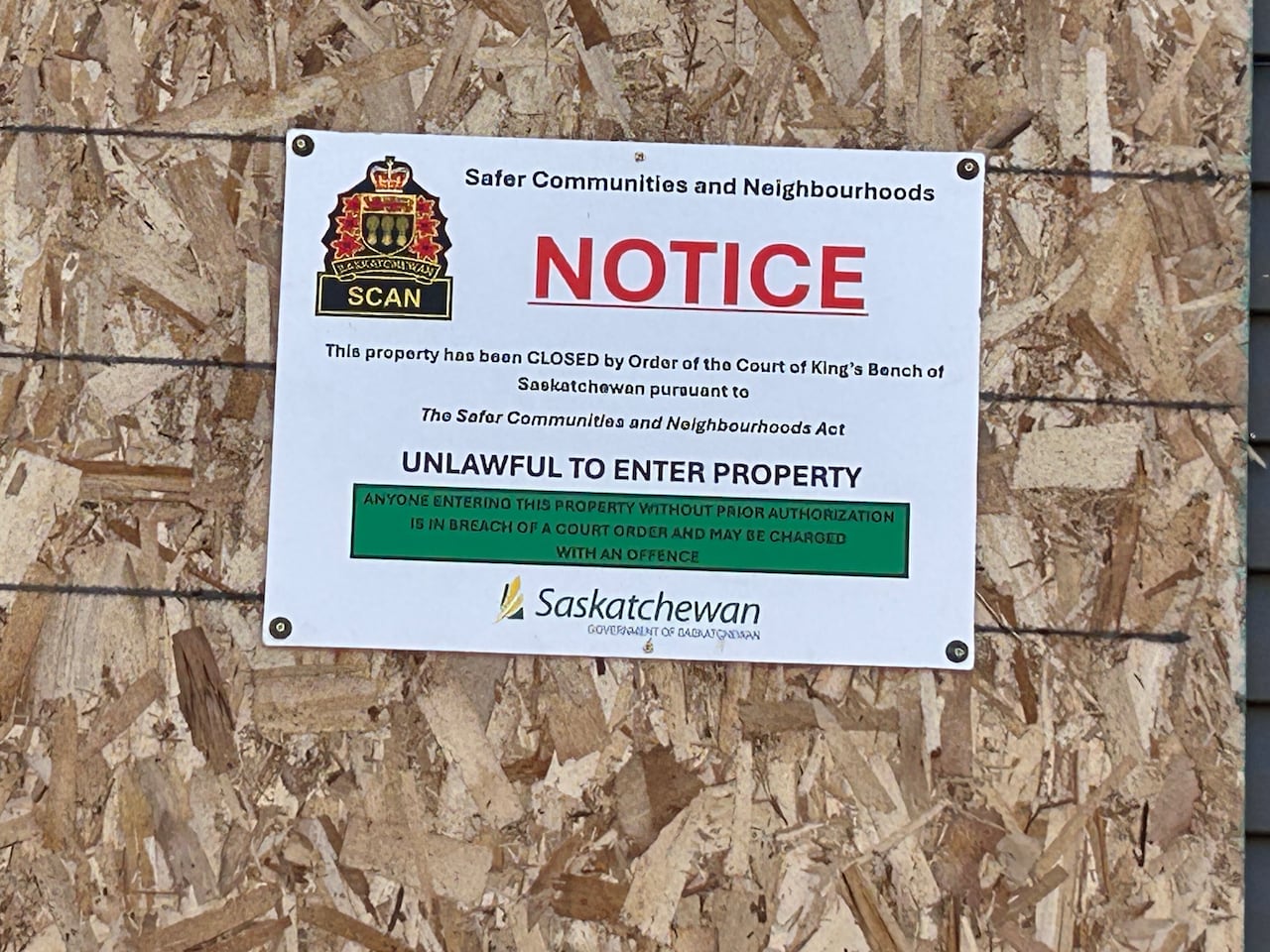
This notice noting the closure of the property is posted on a boarded-up window on 7 Days Confectionery and Grocery on 20th Street West in Saskatoon’s Pleasant Hill neighbourhood on Monday, Oct. 5, 2026. (Phil Tank/CBC)
Security guard ‘doesn’t help’
Akhtar said he hired a security guard on the advice of a friend, but that he can’t afford to pay a guard $25 an hour and, regardless, the guard failed to deter people from gathering on the property.
He also added a fence that proved ineffective. The blue metal fence is piled up behind the orange fence. He said he even bought two dogs for $500 apiece just prior to the closure order, but someone left an opening in the fence and the dogs disappeared.
“Beware of dog” signs remain on the property, including one on Akhtar’s Prowler trailer parked in the backyard.
Akhtar also said he was robbed of $25,000 worth of equipment that included security cameras and even his modem. He repeated several times in his interview that police appearances only provided fleeting relief from people gathering on his property.
“So [a] security guard doesn’t help,” Akhtar said. “Even police — I can say it — even police cannot help because … police have no rights.
“They just come, pick them out, they come back. That’s not right.”
Akhtar, who also owned a similar type of store in Pakistan, said he has tried hiring help at the store, but has struggled to find someone suitable.
He praised his customers, who he said often can’t afford to pay full price for products in a neighbourhood that has become the focus of concerns over homelessness and addiction. Yet some return and pay him more money than they owed him, he said.
In the meantime, he is trying to view the closure as a “blessing” because he needed a break after many years of working seven days a week, dating back to the 13 years he owned his previous store in Saskatoon.
“Last [17] years, I’m doing 16 hours a day from 6 [a.m.] to 11 o’clock alone,” Akhtar said.
“Can you believe me? No holidays, seven days. And with these peoples you can say 24 hours because [of] how much they give you [a] headache, how much they give you [a] hard time. Unbelievable.”