
The initiatives have won praise from conservative figures and media outlets, while raising questions about their financing, council oversight and the mayor’s priorities during wartime.
Under Zakani’s “Zero Inflation” plan, launched in late September, prices of 12 basic goods—including meat, rice, cooking oil, pulses and sugar—are to remain fixed for six months at municipal fruit and vegetable markets, Shahrvand supermarkets and the municipality’s online store, Shahrzad.
The scheme comes amid annual food inflation of nearly 130 percent.
Zakani said on television that the goods would be sold at cost, without profit, and that prices for a second six-month period would be announced after the first ended.
He portrayed the initiative as a response to what he called a US economic war against Iranians’ livelihoods. Financing would come from municipal funds, bank facilities and a Central Bank mechanism for settling foreign currency obligations, he said.
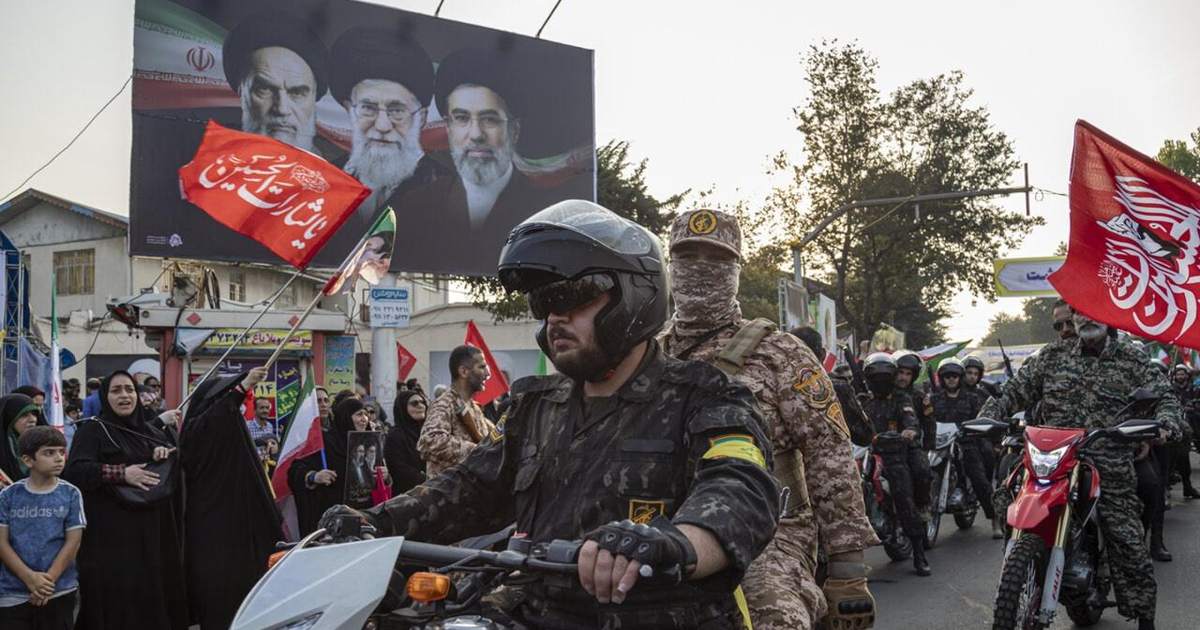
The mayor has also announced monthly municipal payments of 35 million to 40 million rials to families who have a child this year. Both initiatives have been widely advertised on billboards across Tehran.
Funding under scrutiny
Nasser Amani, a member of Tehran’s city council, said no formal bill had been submitted to the council and no specific budget approved for the price-freeze scheme.
Abdollah Ramezanzadeh, a spokesman for former reformist President Mohammad Khatami’s government, questioned where the money would come from and why the national government was not adopting the scheme if it made economic sense.
Moderate conservative commentator Mohammad Mohajeri called the plan “empty and nonsensical,” warning on X that it would lead to a “historic disaster.” He urged Tehran’s prosecutor to intervene to prevent what he predicted would become corruption.
Critics have also questioned the fairness of limiting the initiative to Tehran while residents elsewhere face rising prices.
Zakani’s supporters argue that municipal intervention could help poorer households.
Conservative politician Abdolreza Davari wrote on X that lower-income groups would be the main beneficiaries, while the losers would be the “oligarchic network dominating the basic goods market” and Zakani’s political rivals.
Hardline newspapers Kayhan and Javan, the latter affiliated with the Revolutionary Guards, have defended the initiative as an effort to improve livelihoods.
Javan accused critics of viewing every action by the mayor “through a political lens” and urged them to assess the plan’s economic and operational merits rather than speculate about future elections.
A platform for the presidency?
Zakani, a former lawmaker who has served as mayor since 2021, has sought the presidency four times since 2013. The Guardian Council barred his first two attempts. He was approved to run in 2021 and 2024 but withdrew before voting in both contests to support other conservative candidates.
Mehdi Aghrarian, another city council member, told the news website Khabar Online that he had challenged Zakani over his priorities.
“I told him that abandoning the municipality midway through your term, putting the plane on autopilot and heading off to pursue elections was not the right approach,” Aghrarian said.
He described Zakani’s activities as “performative governance” and offered this advice to the next council: “Please choose a mayor who does not want to become president.”
Khabar Online questioned whether Zakani was following the path of Mahmoud Ahmadinejad, who used the Tehran mayoralty as a springboard to the presidency. Reformist politician Ali Soufi drew the same comparison.
Zakani has faced controversy over other municipal initiatives, including the deployment of hijab enforcers and the establishment of so-called “repentance rooms” in metro stations.
After last year’s 12-day war, he made metro and bus rapid transit services free, continuing the policy despite opposition from the city council.
Praise at night-time rallies
A recently circulated video of Zakani attending a night-time pro-establishment gathering has added to speculation about his ambitions. In the footage, a young cleric urges the crowd to chant: “Zakani, hero! Thank you, thank you!”
The news website Rouydad24 questioned who was paying to promote Zakani at the rallies, which it described as increasingly factional.
Participants have chanted against figures including President Masoud Pezeshkian, parliament speaker Mohammad-Bagher Ghalibaf and Foreign Minister Abbas Araghchi, as well as former presidents and other prominent politicians, the website reported.
Zakani, by contrast, has received an unusually warm reception, it said.