

Listen to this article
Estimated 3 minutes
The audio version of this article is generated by AI-based technology. Mispronunciations can occur. We are working with our partners to continually review and improve the results.
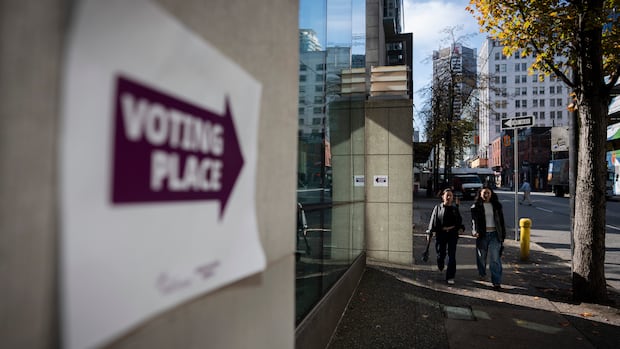
A week after several B.C. cities reported smashing advance polling records, preliminary final election results from several large municipalities confirm more people flocked to the polls Saturday than in the last municipal elections four years ago.
Experts say high voter turnout typically indicates people are dissatisfied with the status quo. Indeed, many of these races resulted in leadership change.
A turnout increase was seen in Vancouver, with 43 per cent of eligible voters hitting the polls compared to 36.3 per cent in the 2022 election. Aside from the 2014 election when voter turnout was also 43 per cent, this was the city’s largest turnout since 2002.
In Richmond, 40.6 per cent of the population voted, a big jump from 24.5 per cent in the previous election.
Delta saw a 43.2 per cent voter turnout compared to 29.9 per cent in 2022.
Burnaby broke its record for the most people to vote in the city’s history, seeing a 29.92 per cent turnout compared to 19.7 per cent in 2022.
And in Saanich, 42.7 per cent of voters showed up to the polls compared to 31.2 per cent previously.
Other large municipalities that saw increases include Surrey, Langley, Abbotsford, Coquitlam, Prince George, Kelowna, Kamloops, Victoria and Nanaimo.
Political dissatisfaction and change
University of British Columbia political scientist lecturer Stewart Prest said high voter turnout is often indicative of dissatisfaction with those in charge.
“People are more aware than they were even a couple years ago that … voting can make a difference,” said Prest.
“The sense that something has to be done differently, that those who are currently in power are not getting their job done seems to be a recurring message.”
He said high turnout rates in the municipal elections could mean the provincial election next week will also see high rates.
“Voters are paying attention and showing up,” he said.
The director of Simon Fraser University’s city program, Andy Yan, partially attributed high turnout in Vancouver to what he calls a “youth-quake.”
He said municipal elections typically have the lowest turnout rates of all levels of government, and particularly with younger voters.
But this time in Vancouver, he says the successful parties were able to reach both renters and young people.
“Young people showed up. They showed up in a way through which they haven’t necessarily shown up in others,” Yan said.
“Renters coming online and coming out to vote, I think really talks to … how ABC just couldn’t offer much for those populations.”