
Editor’s Note: This is an excerpt from WBUR’s politics newsletter, Mass. Politics. If you like what you read and want it in your inbox, sign up here.
Welcome back to Mass. Politics, where we need a nap after publishing nine ballot question explainers. In this edition: ballot questions, ballot questions and ballot questions.
How do I get my head around all nine ballot questions?
The last time Massachusetts voters had to decide on this many ballot questions, the price of gas was close to $1 a gallon, home computers were a rarity and Bill Galvin was running for just his first term as secretary of state.
So if nine ballot questions feel like a lot to manage, you’re not wrong, relatively speaking. (Just know it could have been worse. It could have been 12.)
You’re also probably not alone. Celia Canavan, the executive director of the League of Women Voters of Massachusetts, says they’ve gotten an influx of questions this year about all the ballot measures. The questions aren’t just coming from daunted voters, but from the voter education group’s own advocates and members, who sought more training and resources on the ballot questions, given their volume and individual complexities.
“Specifically, we have seen an increase in requests for presentations and explainers on the ballot questions,” Canavan said.
You want ballot question explainers? Well, we’ve got you covered.
This past week, after months of digging into everything from the nuances of Massachusetts public record rules to the state’s recent 116-page gun law, we’ve published all nine of our ballot question explainers. Click below for breakdowns of what each question would do, the arguments for and against each proposal and possible next steps should they pass:
You can also watch our video explainers on YouTube, Instagram or TikTok.
Deciding yes or no isn’t the only battle, either.
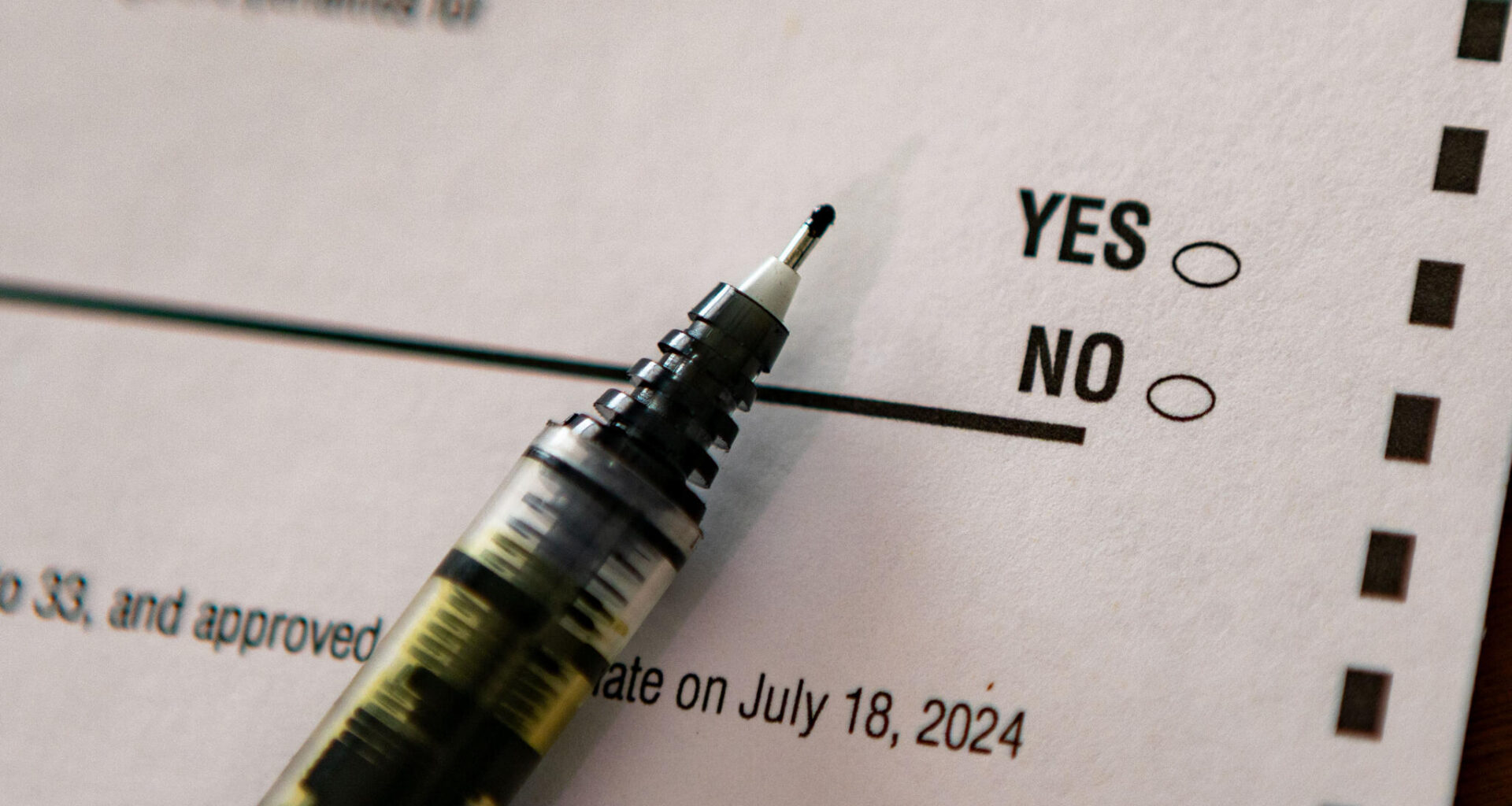
If you need help remembering all of your choices, Galvin encourages tearing out the checklist on the penultimate page of this year’s massive informational red book and bringing it with you into the voting booth. That will also help keep things moving at the polls. If the red book somehow found its way into the recycling bin, you can always bring notes on paper or your phone into the voting book, said Debra O’Malley, a spokesperson for Galvin’s office.
“With so many questions, voters may find it helpful to be able to refer to their own notes, to get through the process more quickly,” O’Malley said, noting that voting by mail is perhaps the best choice if you want to really spend some time mulling over your ballot at home and “avoid potentially longer wait times.” As of Friday, more than 1 million mail-in ballots in Massachusetts had been sent out. (Check out our 2026 voter guide for all the details and important dates for mail-in ballots and in-person early voting, which began Saturday.)
At the same time, state officials are asking residents voting in person for some patience with the multi-card ballots. O’Malley noted that putting both cards into the tabulator at once, or putting the second in too quickly after the first, could cause ballot tabulators to jam. Poll workers will be stationed by the ballot boxes to assist, she said. Galvin also predicted earlier this summer that the state “will have more issues” with ballot boxes in busier precincts filling up with all the cards.
”There are very practical logistical problems,” he told WBUR. “The fail-safe here, of course, is that the ballot cards will be retained. So if there were a close race for anything, whether it’s a candidate race or a ballot question, the cards can be physically hand-counted.”
While the number of ballot questions has some lawmakers grumbling, Galvin defended the system — which he himself is using to try to push through a law — as a “great process” and “a check on the Legislature.”
“It gives voters the opportunity to make decisions on issues as opposed to simply electing people to do it for them,” he told WBUR earlier this summer.