

Listen to this article
Estimated 3 minutes
The audio version of this article is generated by AI-based technology. Mispronunciations can occur. We are working with our partners to continually review and improve the results.
The Department of Public Works agreed to nine recommendations to improve the rehabilitation and preservation of paved roads after the province’s auditor general found it hadn’t been using an evidence-based approach for the work.
Over the past five years, the department has spent nearly $850 million repairing and preserving roads in the province.
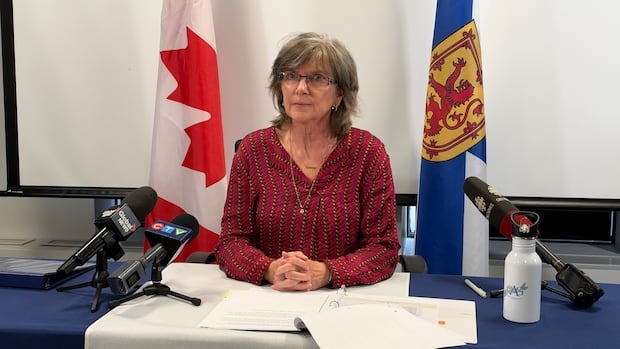
“We found projects selected each year are not backed by objective data,” Kim Adair told reporters Tuesday.
According to Adair’s 36-page report released Tuesday, Public Works doesn’t have a consistent approach for making road pavement and rehabilitation decisions, nor does it complete such work at the optimal time to maximize roads’ durability.
It also found that annual project reports lack key information.
“I was happy to see the report. In my opinion, the report is a positive report, basically saying we’re doing a good job with what we have,” said public works minister Fred Tilley Tuesday.
WATCH | AG releases report on N.S. road paving prioritization: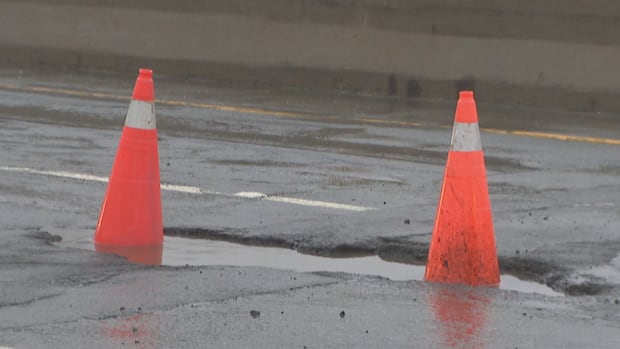
What did a new report find out about Nova Scotia road repair?
The report contains nine recommendations, all geared toward making evidence-based road investment decisions. The CBC’s Alex Guye has the story.
“And where we can make some improvements is in our administration of that work.”
The department estimated in 2019 it would need to pave and preserve around 700 kilometres a year to confront its infrastructure deficit of $4 billion. The report finds that for the past five years, it has paved an average of 391 kilometres.
Further, that deficit estimate of $4 billion, equal to around $5.94 billion today adjusting for inflation, comes from 2009 and hasn’t been updated since.
“This government is hitting record level spending on roads,” said Tilley.
“We are busy catching up. 2019 was before this government came into place.”
Among the recommendations the department agreed to is updating that estimate by fall 2027 and every five years after that.
In terms of the roadwork itself, the province could make better use of the funding it designates toward road rehab and preservation, the report found.
“We found there’s a need for the department to review that funding allocation model by incorporating appropriate factors like lane kilometres, pavement condition, traffic volumes and life cycle requirements,” said Adair.
She said under the current model, the province makes very informal and subjective decisions about roadwork.
The department is divided into four districts: eastern, western, northern and central. Each year, says Adair, district engineers put forward a list of projects. But she says they don’t provide information about the priorities or criteria they used to create it.
She says the current approach often prioritizes the worst road first rather than prioritizing roads earlier to avoid their deterioration and increasing the cost of future repairs.
Adair also said the report didn’t pinpoint political influence as a factor that impacts what roads get repaired when, but that the possibility of that is a risk without an evidence-based approach.
Included in the recommendations the department agreed to are centralizing the collection, maintenance and use of pavement condition information, establishing criteria to identify, assess and prioritize road projects and incorporate evidence-based factors into the funding model for such work.
All recommendations have a target implementation date in 2027.
MORE TOP STORIES