
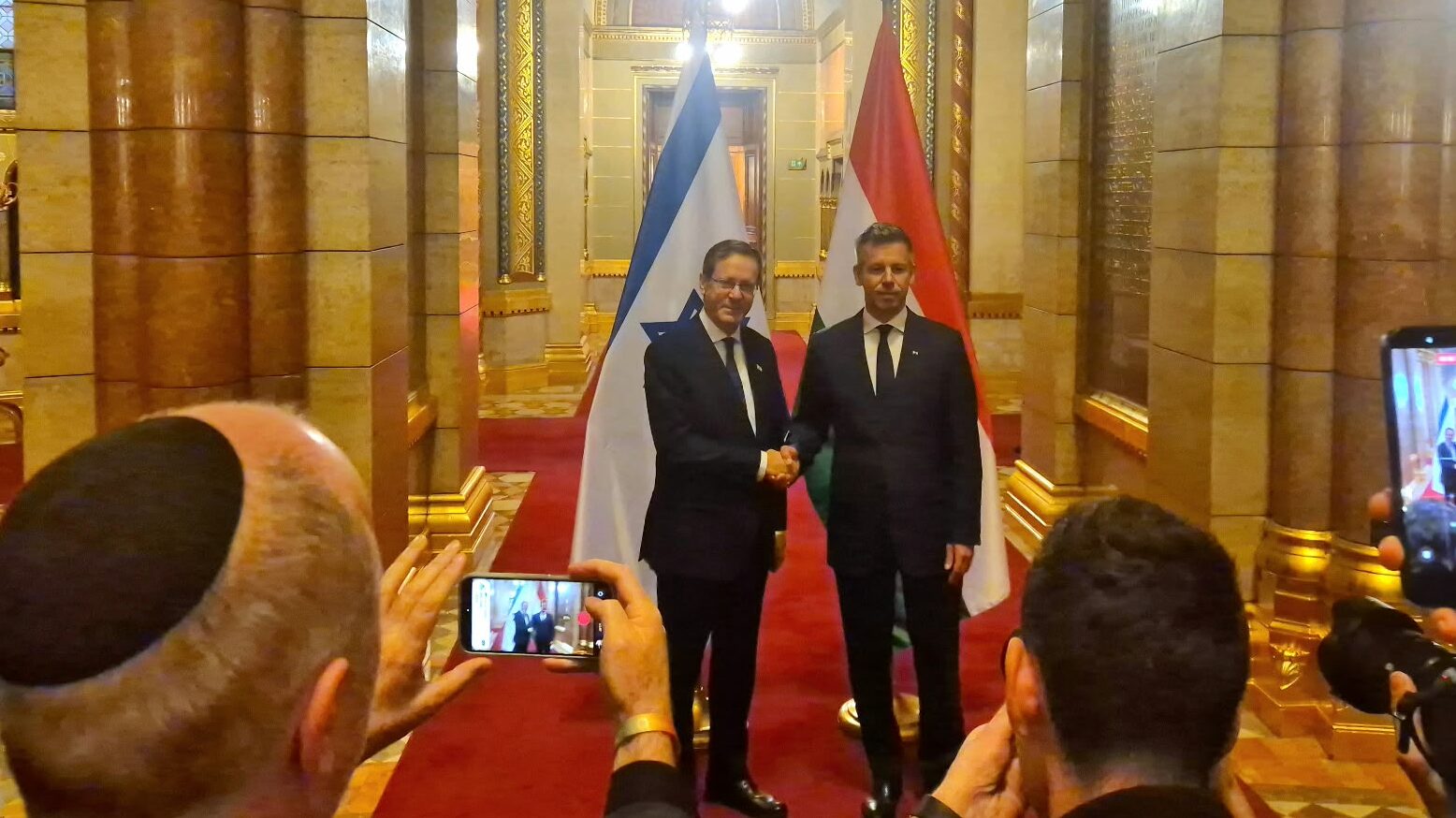
The first senior Israeli visit since Viktor Orbán’s defeat brought promises of continued cooperation, along with a Hungarian appeal for humanitarian aid and security for Israelis and Palestinians.
[BUDAPEST] The press delegation waited at Sándor Palace on Tuesday as Israeli President Isaac Herzog arrived for a ceremonial reception hosted by Hungarian President András Baka. A few hours later, reporters joined an escorted motorcade of about a dozen vehicles taking Herzog across Budapest to Parliament and his first meeting with Hungary’s recently elected prime minister.
People stood along parts of the route as the convoy passed. There were no visible protests, Palestinian flags or disturbances, despite the visit having been announced earlier by Hungarian, Israeli and international media. The quiet journey differed sharply from the scenes that have greeted Israeli officials in several other European capitals.
Tuesday’s talks were the first at this level since Prime Minister Péter Magyar brought Viktor Orbán’s 16 years in power to an end. Herzog began with Baka at the palace. He then met Magyar behind closed doors at Parliament and joined him and senior ministers for a working lunch. For Israel, the day provided a first look at how much of the relationship built under Orbán would remain in place under his successor.
At Sándor Palace, the two presidents met alone before aides joined them for a wider session. When they emerged to speak to reporters, the subjects ranged from trade and technology to Iran, antisemitism and Hungary’s role in Israel’s often difficult relationship with the European Union.
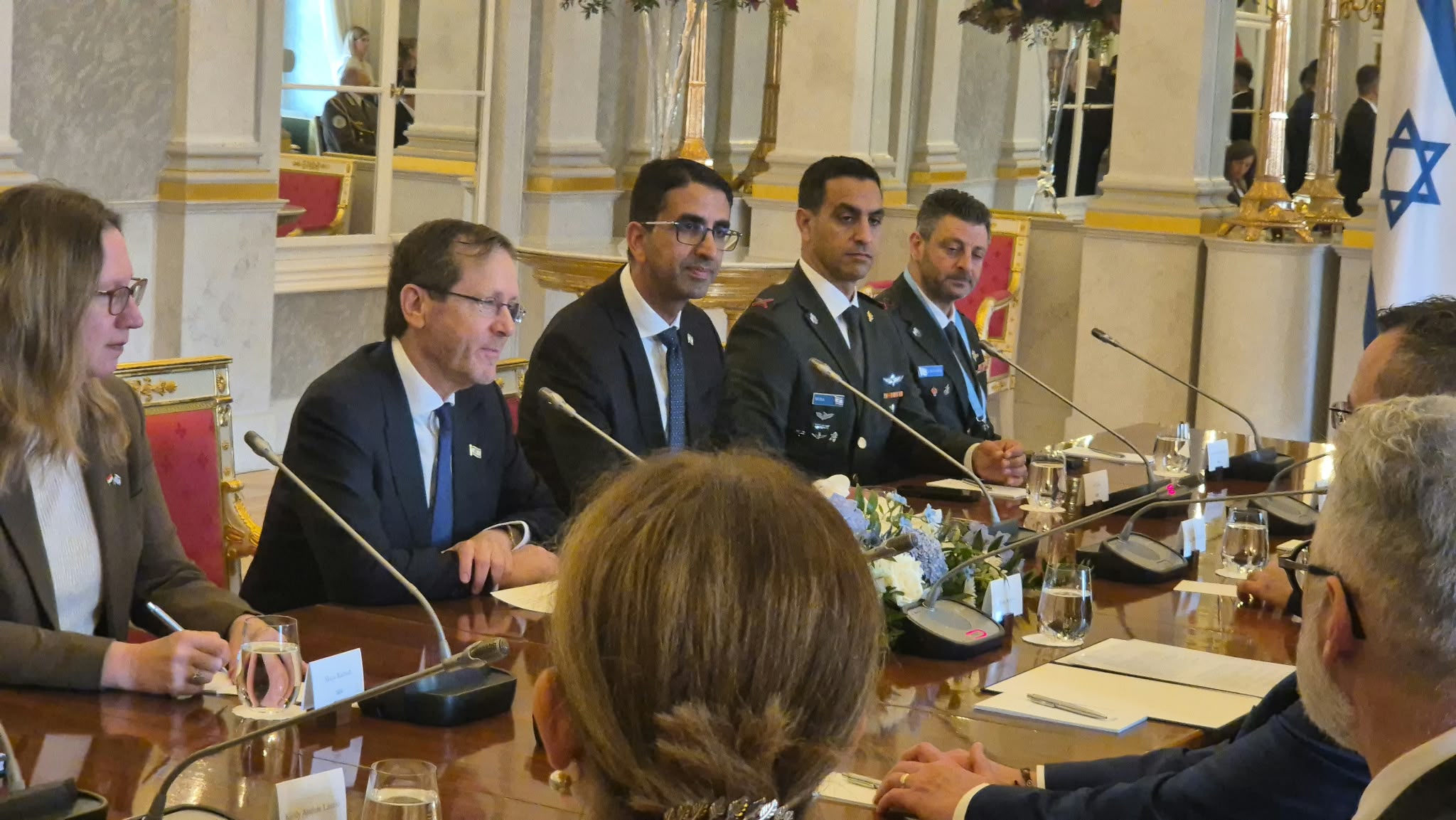
Israel’s President Isaac Herzog attends meeting at Sandor Palace, October 20, 2026. (Gabriel Colodro / The Media Line)
Herzog called Hungary “a friend and an ally on this long and difficult path.” He credited Budapest with pressing for what he called a more balanced European approach toward Israel and said bilateral ties had grown stronger over the previous year.
Iran occupied a prominent place in Herzog’s remarks. He described the country and its network of armed allies as a danger extending well beyond the Middle East. “They may sit in the Middle East, but they threaten the entire world,” Herzog said, calling cooperation among democratic countries essential to confronting terrorism.
Herzog also congratulated Baka on assuming the presidency. Before entering politics, Baka served as a judge on Hungary’s Supreme Court and the European Court of Human Rights. Herzog said that legal experience would serve both the Hungarian public and the country’s democratic institutions.
Baka, for his part, said Jews could live openly and safely in Hungary, home to one of Central Europe’s largest Jewish communities. He repeated the government’s zero-tolerance position on antisemitism and said Hungary defends that policy in international forums.
He pointed to Israel’s national soccer team playing home matches in Hungary as a practical, if modest, example of the relationship. Baka also welcomed the decision to hold Herzog’s Voice of the People conference in Budapest.
Baka did not limit his remarks to support for Israel. International humanitarian law, he said, must be observed in full, while assistance should reach those who need it “safely and without interruption.” He also said Israelis and Palestinians must be able to live with security and dignity. Families on both sides, he added, needed reason to believe their children could grow up without fear.
When he spoke about bilateral ties, Baka chose the words “cordial and stable.” He said Israel remained an important economic partner and that the two governments had no unresolved bilateral disputes. Cooperation, he said, would continue.
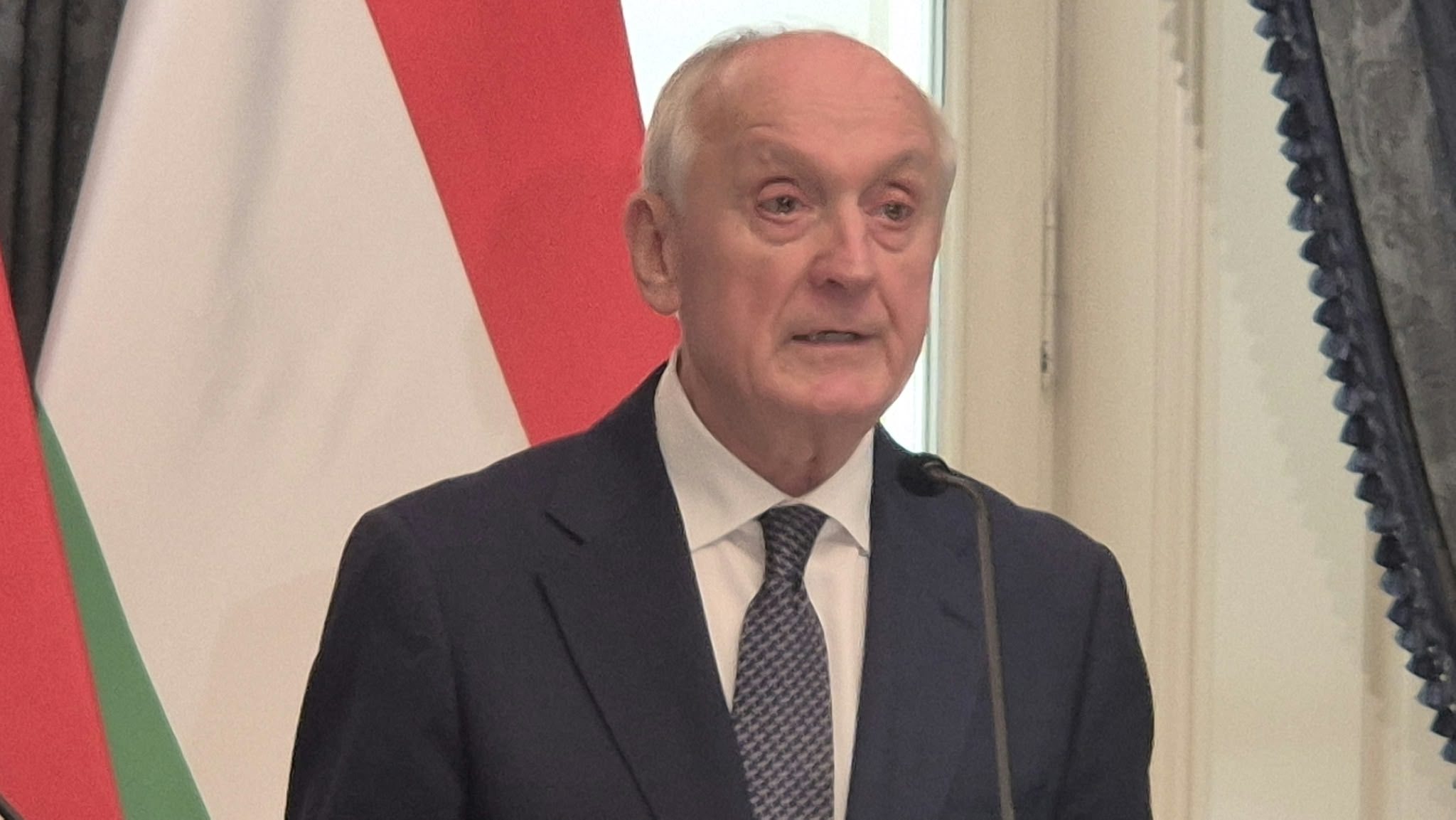
Hungarian President András Baka. (Gabriel Colodro / The Media Line)
The anniversary of the 1956 Hungarian uprising was only days away. Herzog spoke of the Hungarians who removed communist emblems from their flags before taking to the streets to demand freedom from Soviet rule. The lesson was familiar to Israelis, he said: independence had to be defended and sometimes carried a heavy price.
Baka reached back to another event from the same year, the Suez Crisis. The two upheavals took place at the same time and helped shape the world in which Hungary and Israel found themselves, he said. Seventy years later, governments still had to learn from that period rather than assume peace and security would simply endure.
Herzog also spoke about Hungarian Jewry. For centuries, he said, Jewish communities had helped shape the country’s culture, scientific life, economy and public institutions. He then turned to the Holocaust and the destruction of those communities, thanking Hungary for protecting Jewish life today. Remembering the Holocaust, he said, remained a moral obligation in the present.
The trip also retraced part of Herzog’s family history. In 1991, his father, former Israeli President Chaim Herzog, became the first sitting Israeli president to make a state visit to Hungary. The two countries had renewed diplomatic relations less than two years before. Chaim Herzog used that visit to express hope that the relationship would grow. “Today, as president of the State of Israel, and as his son, I am proud to see how that hope has become a reality,” Herzog said.
Once the palace program ended, the press corps left with the presidential convoy. From the route to Parliament, Budapest appeared undisturbed by the diplomatic traffic moving through its center. No organized opposition to Herzog’s presence was visible. Hebrew, meanwhile, was heard among tourists walking through the city. Israeli visitors appeared comfortable, and their presence in the Hungarian capital was difficult to overlook.
At Parliament, Herzog and Magyar held a private meeting before sitting down with members of the new Hungarian government. Herzog’s office said they discussed economic ties, Israel’s relationship with the European Union and problems facing Europe and the Middle East.
Magyar later wrote that the two men had agreed on the importance of strengthening historical, cultural, economic and defense cooperation. Herzog invited him to Israel, and the prime minister accepted. “Thank you for visiting us, and see you in Israel,” Magyar told him.
Some Hungarian policies have already changed since Orbán left office. Orbán had been one of Israel’s most dependable supporters inside the European Union, although his campaigns against Hungarian-American financier George Soros drew accusations of using antisemitic imagery.
Magyar has said close relations with Israel will continue, but his government reversed Orbán’s move to withdraw Hungary from the International Criminal Court. As long as the court’s warrant remains active, Prime Minister Benjamin Netanyahu could face arrest if he entered the country.
Herzog continued from Parliament to the Voice of the People conference and was also due to meet leaders of Hungary’s Jewish community. Magyar’s promised visit to Israel has no announced date. It will be his turn to define how the relationship works once it moves beyond Tuesday’s welcomes and into the decisions that divided Budapest from Jerusalem’s other European partners.