
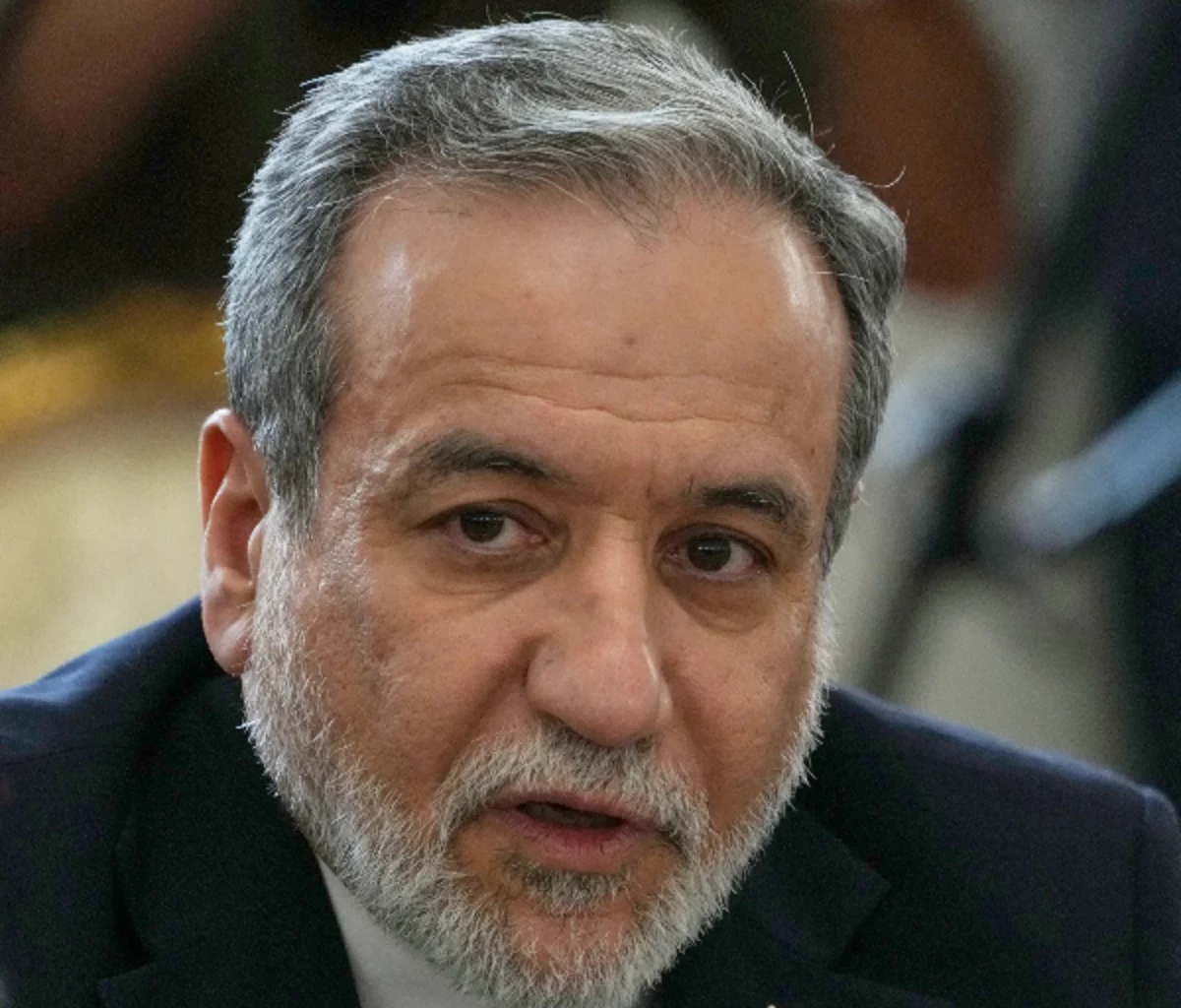

Iranian Foreign Minister Abbas Araghchi (AP)
Iranian Foreign Minister Abbas Araghchi said Wednesday that indirect talks with the United States are continuing over a seven-day ceasefire proposal to reopen the Strait of Hormuz and restart negotiations, even as Washington seeks changes to the plan and President Donald Trump weighs his next move in the war.
Araghchi said Pakistan and Qatar are helping mediate the discussions, according to CBS News, which reported that the proposal remains on the table despite Trump’s rejection of it last month.
The plan, presented in September, calls for the United States to lift its naval blockade of Iranian ports and vessels, waive sanctions on Iranian oil sales, and release frozen Iranian assets in exchange for reopening the strait and moving toward a broader agreement.
Araghchi said Washington wants to add new conditions to the proposal, but the details of the requested changes have not been made public.
The diplomatic effort comes as the war, which began Feb. 28 with U.S. and Israeli strikes on Iran, continues to disrupt shipping and put pressure on global energy markets.
Iran has sought to make the reopening of the Strait of Hormuz part of any agreement, giving the waterway a central role in negotiations over the conflict.
In a separate development Wednesday, a senior official with Iran’s Islamic Revolutionary Guard Corps threatened to target undersea internet cables in the Strait of Hormuz and other U.S. investments if Washington launches new strikes on Iranian infrastructure, CBS News reported.
The threat raises concerns about possible damage to communications links that carry large amounts of international internet traffic through the Persian Gulf region.
Trump said Tuesday that the United States was doing well in the conflict but had not decided how it would pursue victory.
“We just have to make a final decision of which way do we want to win? Do we want to win the nice way or the not nice way?” Trump told reporters, adding, “But we’re doing very well.”
The president’s remarks came as oil prices remained near five-month highs amid concerns about supply disruptions and the risk of further attacks on shipping.
Brent crude, the international oil benchmark, traded around $108 a barrel Tuesday, according to The Wall Street Journal, as markets weighed the prospects for renewed diplomacy against continuing security risks.
Oil Exports Recover Despite Hormuz Disruptions
New figures on regional oil shipments suggest Iran’s ability to use the Strait of Hormuz to pressure Washington may be weakening, although the threat of further attacks continues to pose risks to shipping and energy markets.
Newsmax reported Wednesday, citing The Wall Street Journal and ship-tracking firm Kpler, that oil shipments from the Middle East, including exports through alternative routes, averaged more than 24 million barrels per day in the week ending Oct. 18, above the prewar average of 23.3 million barrels.
Shipments through the Strait of Hormuz itself, including transfers between vessels in the Gulf of Oman, reached about 14 million barrels per day, or 82% of prewar levels, according to preliminary figures.
Saudi Arabia and the United Arab Emirates have expanded the use of pipelines and alternative export routes, helping move oil to global markets without sending every shipment through the strait.
The recovery suggests that alternative routes and a shipping system operating with U.S. protection have reduced Iran’s ability to halt regional oil exports, even though attacks and higher shipping costs continue to threaten supplies.
Iran’s own oil exports have faced a separate obstacle from the U.S. naval blockade, which restricts shipping to and from Iranian ports, further increasing pressure on Tehran as negotiations continue.
© 2026 Newsmax. All rights reserved.