
Last week, the Ministry of Finance had to impose an urgent, across-the-board budget cut at the last minute to secure funding for the procurement of 12 Apache helicopters from the United States. At the same time, the IDF is embarking on an ambitious expansion of its military capabilities in space and robotics, with plans that could require billions of shekels in additional investment.
The military’s ambitions include a dramatic expansion of Israel’s intelligence satellite fleet, potentially to several dozen satellites within a few years and eventually hundreds, alongside the accelerated development of capabilities for warfare in space. The IDF has now moved to establish dedicated Space and Robotics divisions, formalizing two areas it sees as increasingly important to future combat operations.
The scale of the planned investment in space remains classified, as do many details of the broader program. The new Space Division will operate under the IDF Planning Directorate and will delegate responsibilities across several military bodies, primarily the Air Force, the Intelligence Directorate and the C4I Directorate, which oversees communications and information systems.
1 View gallery
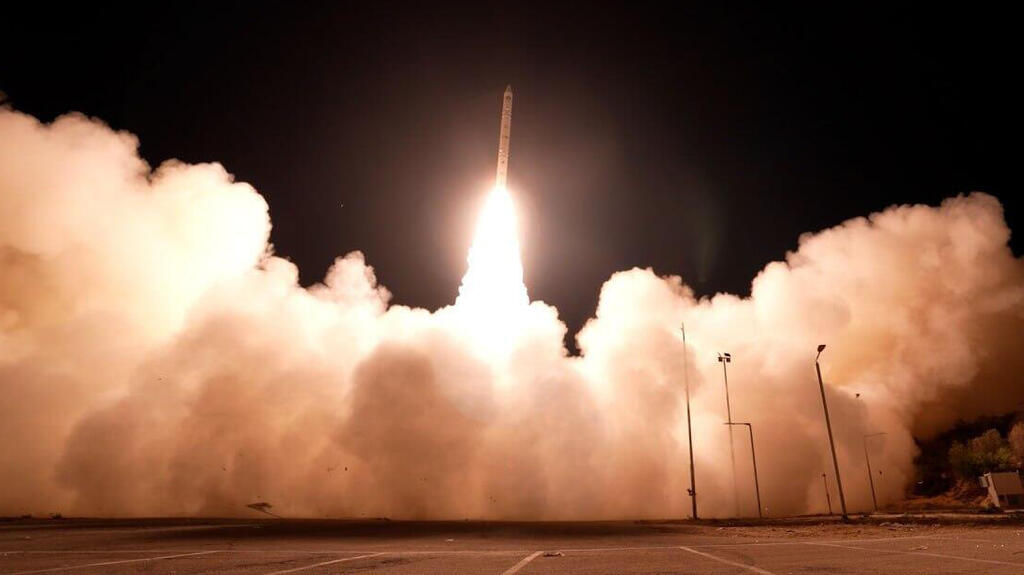
Ofek-19 launch.
(DDR&D – Ministry of Defense)
The move was reflected in a recent round of senior appointments by Chief of Staff Eyal Zamir. Brig. Gen. “S.” was selected to head the new Space Division, while two additional officers were appointed to lead departments within it and are set to be promoted to colonel. The division is part of the IDF’s multiyear Hoshen plan, which is intended to shape the military’s capabilities for the coming years. The long-term ambition is to turn space into a distinct military domain, with dedicated operational responsibilities and expertise.
At the heart of the initiative is a planned constellation of satellites designed to provide more persistent intelligence coverage of multiple regions around the world. Israel’s current reconnaissance satellites orbit at an altitude of roughly 450 kilometers, completing a full orbit approximately every 90 minutes. A satellite passing over a particular location can observe it for only a few minutes before moving out of range, leaving a gap until its next pass.
The IDF wants to narrow those gaps by deploying a much larger number of satellites, enabling more continuous surveillance of areas of operational interest. The goal is to give commanders a more up-to-date picture of developments on the ground, reducing the risk that significant movements or events go undetected between satellite passes.
The expansion into space is part of a broader technological transformation the IDF is pursuing after more than three years of war. Alongside new intelligence and operational capabilities beyond Earth’s atmosphere, the military is establishing a Robotics Division within the Depth Corps, commanded by Maj. Gen. Dan Goldfus.
The new division is intended to accelerate the development and integration of autonomous systems that can reduce the risks faced by combat personnel. Its remit includes ground-based robotic platforms operating in coordination with drones, unmanned aerial vehicles and other systems for both defensive and offensive missions. Brig. Gen. “Y.” has been selected to command the division.
The ambitions, however, face an immediate obstacle: money. While the IDF intends to finance the new capabilities through its procurement plans for the coming years, Ministry of Finance officials have questioned how the military will pay for the proposed expansion, according to conversations with Calcalist. Major funding decisions will ultimately depend on the government formed after next week’s general election, if a government is formed.
A senior Finance Ministry official highlighted the gap between the military’s ambitions and the resources available to fund them.
“Just last week, we had to implement an urgent, across-the-board budget cut to scrape together a billion shekels to cover a shortfall for the defense establishment to order 12 Apache helicopters, and even that was a struggle,” the official said. “The military is well aware of the complexities of the current budgetary situation. We expect them to tell us where the money for this is supposed to come from, because we certainly don’t know.”
The dispute comes amid a prolonged crisis of trust between the Finance and Defense ministries. Senior defense officials are looking to the next government to resolve the budget impasse and secure additional resources. The defense budget for 2026 already stands at NIS 158 billion, while the Defense Ministry and the IDF are demanding tens of billions of shekels more by the end of the year, potentially pushing the total to an unprecedented NIS 183 billion.
The planned investments could also create significant opportunities for Israel’s defense industry. Israel Aerospace Industries (IAI) is likely to be among the main beneficiaries, given its longstanding expertise in satellites, space-based sensors and unmanned systems operating on land, in the air and at sea.
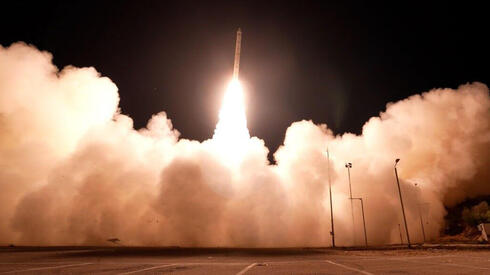
Nearly four decades after launching the first Ofek reconnaissance satellite for Israel’s defense establishment, IAI launched the Ofek 19 radar-imaging satellite from central Israel in September 2025. The satellite was carried into orbit by the Shavit launch vehicle, also developed by IAI, with its engines manufactured by Tomer.
The new satellites under consideration are expected to be smaller than the reconnaissance satellites Israel has traditionally relied on, but deployed in far greater numbers. The approach draws in part on the model popularized by Elon Musk’s SpaceX, whose Starlink constellation comprises thousands of communications satellites providing broadband internet services.
“Some of these concepts are mature, allowing us to move forward rapidly and aggressively, while others still fall into the realm of science fiction, though not for much longer. We are making great strides across several programs,” a senior defense official told Calcalist.
The expected investment is also likely to intensify competition among Israel’s major defense contractors. Rafael has expanded its work on small satellites in recent years, while Elbit Systems is developing specialized payloads carried by satellites for a range of missions.
A senior executive at a defense company expecting to compete for part of the planned spending said the value of the new systems would extend beyond the satellites themselves.
“A large constellation of satellites operating simultaneously will generate a stream of data. This data will be instantly analyzed using AI tools, providing field commanders with an up-to-the-minute situational picture and insights into events within their operational theater, in addition to further capabilities yet to come,” the executive told Calcalist.
The defense establishment has disclosed little about its plans for space warfare, leaving the precise capabilities under development largely unknown. The ambitions extend beyond using satellites to gather intelligence, but officials have offered few details about what future offensive or defensive systems might look like.
“We aren’t quite at the point where a precise laser beam fired from a satellite 500 kilometers up can destroy a ground target, but there are some very interesting things in the pipeline,” a senior defense official said.
As military reliance on space grows, so does the need to protect satellites against attacks and disruption. TSG, a subsidiary of IAI and the Formula Group, intends to offer the IDF systems designed to protect space-based assets against cyberattacks, anti-satellite weapons and even collisions with space debris.
“Damage to space-based assets could severely disrupt a nation’s functional continuity. Consequently, increasing efforts to protect these assets has become a central component of strategic planning,” Gilad Sharoni, TSG’s vice president of research and development, said on Wednesday.
The new Robotics Division is also expected to create opportunities for Israeli defense-tech companies seeking a share of the military’s procurement spending. The market has expanded as the wars in Ukraine and the Middle East have accelerated demand for drones, autonomous platforms and other unmanned systems.
The American company Ondas has acquired more than 20 companies, most of them Israeli, specializing in drones and autonomous systems. It recently secured a place in the IDF’s Digital Bat (Atalef Digitali) program for tactical attack drones, joining companies including Kela and Aitan.
Goldfus is expected to visit several defense companies working on new robotic systems in the coming weeks, including IAI-Elta’s Land Systems division. Elbit Systems is also preparing for increased demand, having established FUSE, a defense-tech arm focused on ground robotics and drones. The initiative is intended to strengthen Elbit’s position as it competes with a growing number of younger companies entering the sector.
For Israel’s defense industry, the IDF’s plans could open a new wave of procurement opportunities in space, robotics and autonomous warfare. But with the military already seeking a substantial increase in its budget and the Finance Ministry struggling to fund existing commitments, the central question is whether the government can turn these ambitions into funded programs.