


Listen to this article
Estimated 4 minutes
The audio version of this article is generated by AI-based technology. Mispronunciations can occur. We are working with our partners to continually review and improve the results.
Canada’s national mail carrier says it has begun delivering parcels on the weekend to homes in Ottawa and Montreal, with plans to expand to Toronto in late November.
The financially troubled Crown corporation will also start weekend delivery in other urban centres like Vancouver, Edmonton and Calgary next year.
It aims to offer delivery on Saturdays and Sundays to seven million households by the end of 2027.
“We will demonstrate to Canadians that our service can evolve to meet their modern needs,” Canada Post CEO Doug Ettinger said during their annual public meeting on Thursday.
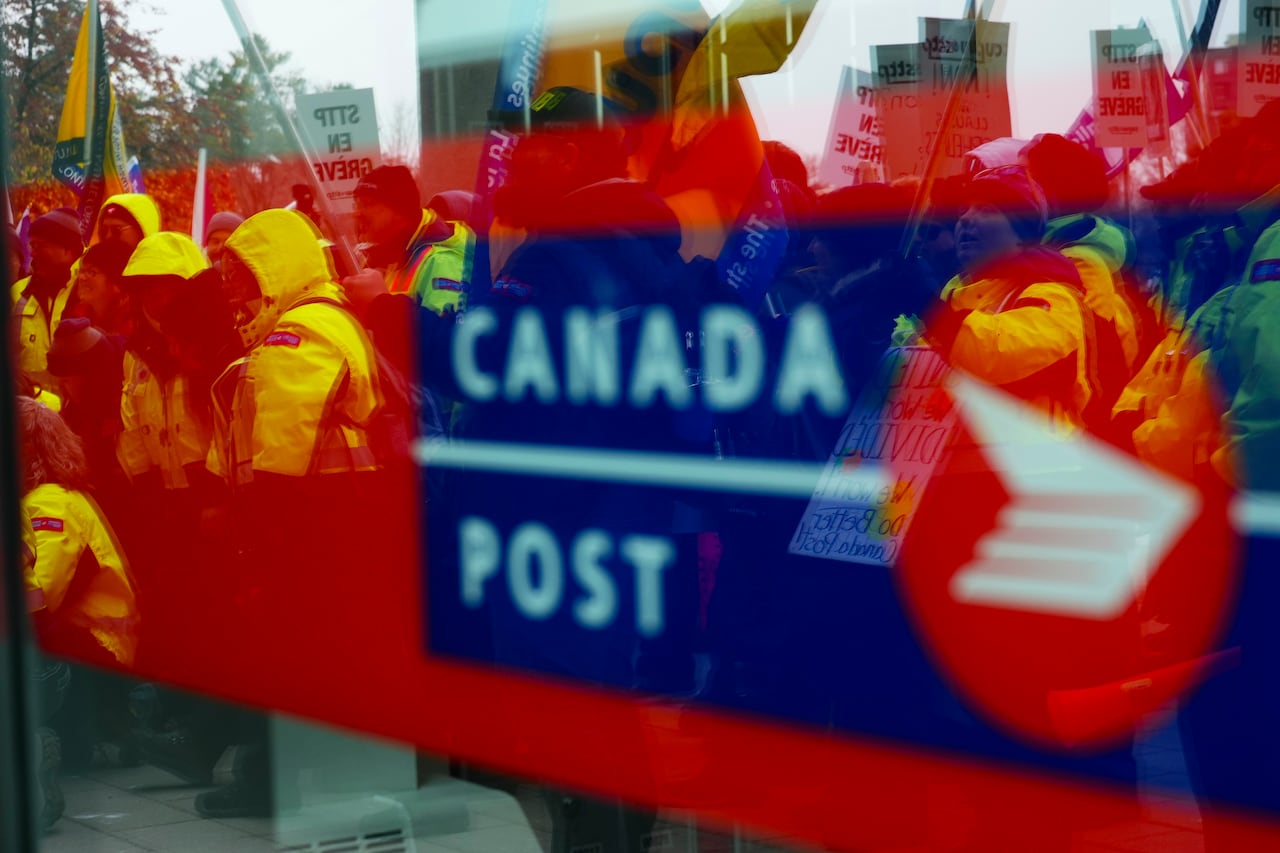
Canada Post employees and supporters rally at Canada Post headquarters in Ottawa during the November 2024 national strike that completely shut down mail service in the country. (Sean Kilpatrick/The Canadian Press)
Private carriers have successfully outpaced Canada Post by offering weekend and evening delivery for years. Until recently, the Crown corporation said it was unable to do the same because of the old contract it had with its mail carriers.
“Yes, this is partly catching up to the market. But thanks to our labour agreements, it is now possible,” Ettinger said.
The corporation will gauge public response to plan future expansions in other communities, a spokesperson told CBC News.
More bailouts from Ottawa expected
Canada Post’s senior executives provided an update on restructuring efforts and the corporation’s finances during the virtual meeting.
The Crown corporation continues to lose money, including $482 million in the first half of 2026 before tax.
Leadership said they expect the company will still need to rely on federal loans to stay afloat. Ottawa has already bailed the company out with more than $2 billion.
“The continued reliance on government funding is not a long-term solution and we are committed to reduce the reliance on government support as quickly as we can,” chief financial officer Rindala El-Hage said.
Despite the continued losses, Canada Post is showing early signs of recovery, El-Hage said, as customers return after a long period of labour disruption.
Parcel revenue grew by 20.7 per cent in the second quarter of 2026 compared to the same period in 2025. Operating costs also declined by $119 million.
“We appear to be turning the corner,” Ettinger said.
“We’re certainly very focused on restoring confidence in our service, earning back customer trust and enhancing our core services.”
The Canadian Union of Postal Workers (CUPW) and the corporation signed a new collective agreement in June, which stays in effect until 2030.
The new deal put to bed two years of labour unrest, which included nationwide strikes that shut down Canada Post’s operations nationwide, including before the busy holiday season.
Community mailbox conversions
The first Canadians to lose door-to-door letter delivery in over a decade started using their new community mailboxes this week in Winnipeg and Sept-Îles, Que., Ettinger said.
By the end of next year, Canada Post will have converted 700,000 addresses. It will get rid of all remaining door-to-door letter mail by 2031.
Canadians can now search by postal code to see when their mailbox is scheduled to be changed.
An accommodation program is available for those who may have functional issues preventing them from accessing the new mailboxes, Ettinger said.
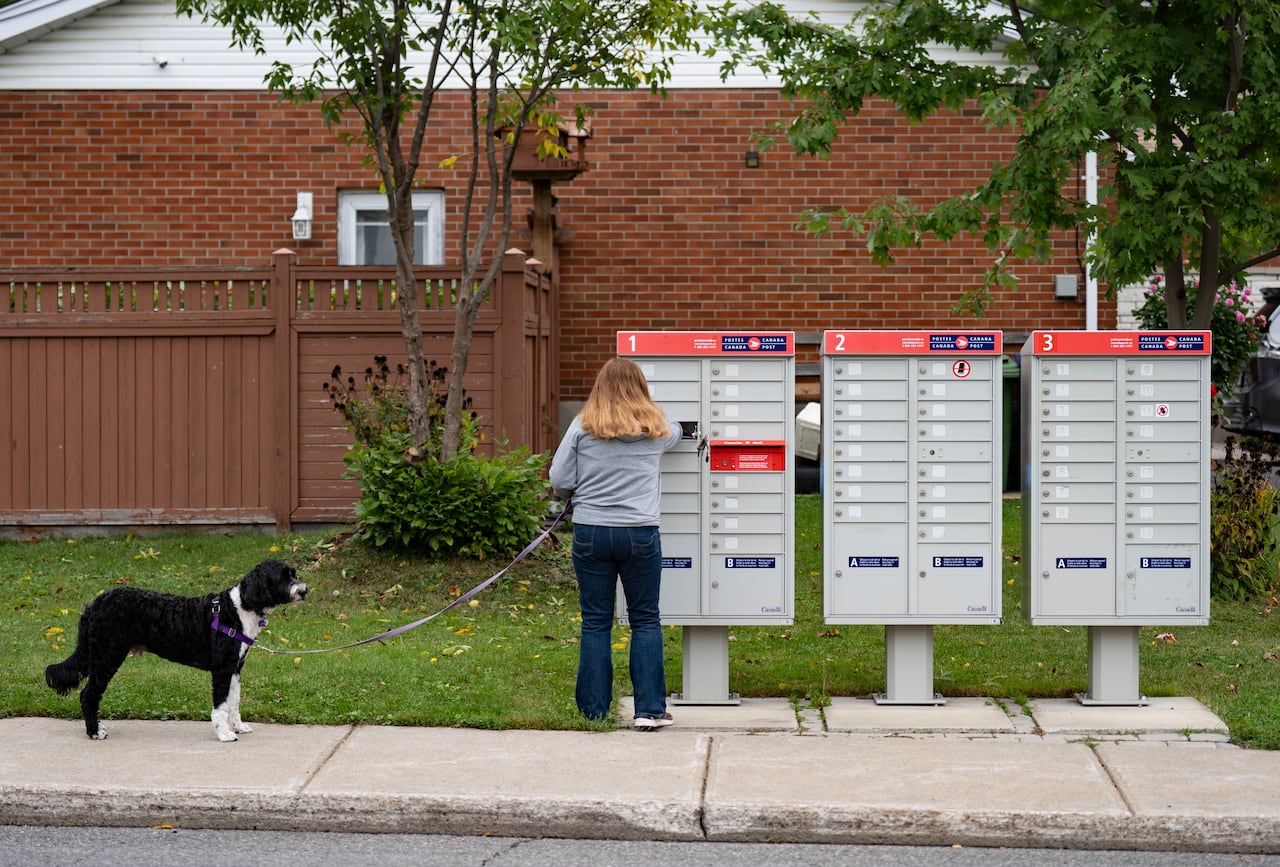
A woman checks for mail at her community mailbox in Montreal’s West Island last year. Canada Post is in the process of ending door-to-door delivery at four million addresses across the country. (Christinne Muschi/The Canadian Press)
CUPW has spoken out against the removal of door-to-door delivery, arguing it will lower service quality, unfairly impact seniors and people with disabilities and lead to job cuts.
Community mailbox conversions were halted in 2015 by the newly elected Trudeau government.
Last fall, after years of severe losses, the Carney government authorized Canada Post to undergo a slew of changes to remain financially viable — including ending door-to-door delivery and re-evaluating its post office locations.
Ottawa appears poised to keep funding the corporation for now.
In a statement, Public Services and Procurement Canada said the federal government “will continue to make necessary investments in Canada Post for it to continue to deliver services to Canadians while it modernizes.”
The corporation doesn’t usually receive tax dollars and is expected to sustain itself based on the products and services it sells. It last made a profit in 2017.