
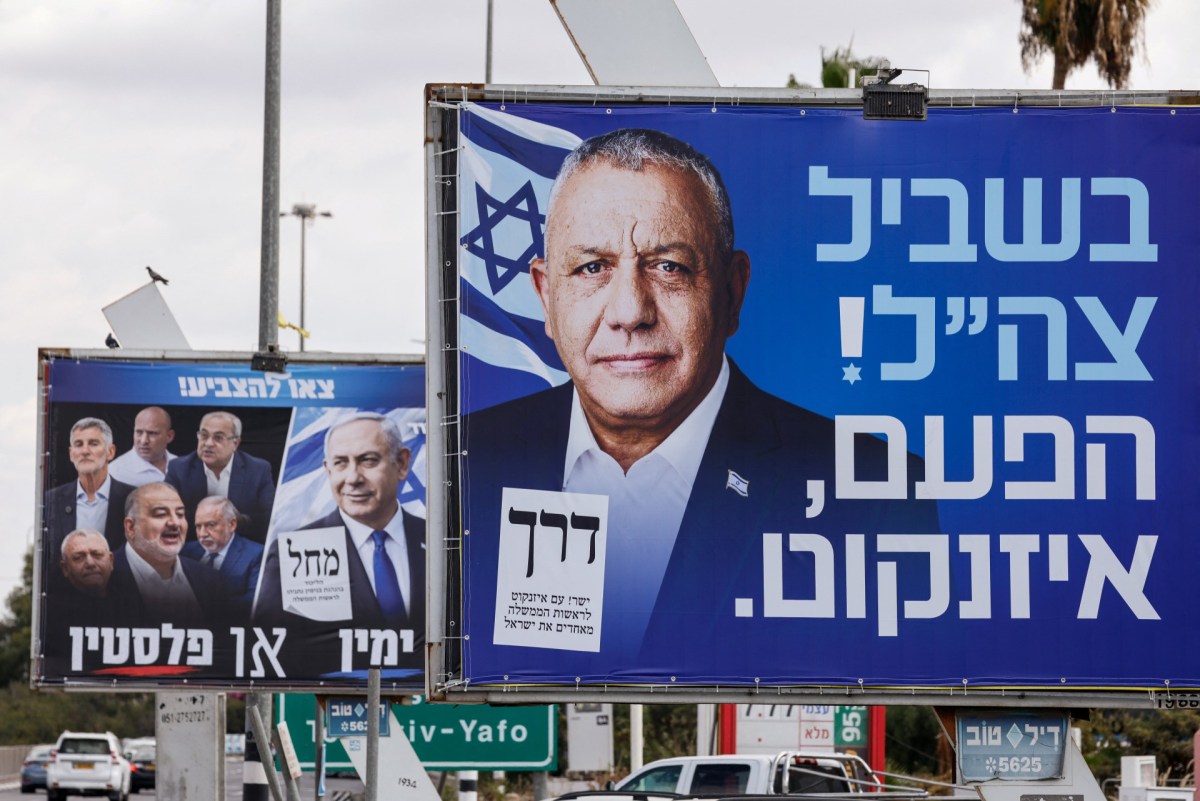
Israeli opposition parties joining forces to oust Prime Minister Benjamin Netanyahu in elections next week are united in their aim to end his hold on power. But they are at odds over the future of the Palestinians, security and the question of who among them will lead.
Five opposition party leaders agreed last month to coordinate ahead of the upcoming Oct. 27 election. The pact includes a pledge not to attack each other until after the vote, as well as an undertaking to work to form a new government of “correction and reconstruction” after it.
The vote has become a referendum on whether Netanyahu should stay in power after the security failings of the Oct. 7, 2023, Hamas attacks and persistent corruption charges that plague him. As Israel’s longest-serving prime minister, he has held office for more than 19 years and deeply divides opinion among Israelis.
Polls suggest that his religious-nationalist right-wing coalition could lose its parliamentary majority. But neither bloc is polling close to the 61 seats needed to govern, setting the scene for an intense period of horse-trading following the vote. In Israel’s fragmented political system, the leader of the largest party does not necessarily become prime minister; instead, it comes down to who can build a coalition.
The opposition parties have no unified platform for governance. The alliance brings parties from across the political spectrum: former Israeli army chief Gadi Eisenkot’s centrist Yashar party; B’Yachad, or Together, a center-to-right alliance of former prime ministers Naftali Bennett and Yair Lapid; Yair Golan’s left-wing Democrats; and Avigdor Lieberman’s secular nationalist Yisrael Beiteinu.
In addition to the disagreements on policy, Eisenkot, Bennett and Lieberman are all also competing for the premiership.
One fundamental division in the alliance is their position on Palestinian statehood. Golan stands apart from other pact members in backing a two-state solution. Eisenkot has said that anyone considering a Palestinian state after Oct. 7 is “delusional.” He has nonetheless objected to proposals for 2,167 new housing units in the West Bank, which critics say would split Palestinian territory there in two.
Ahron Bregman, a senior teaching fellow in war studies at King’s College London, said a change of government is unlikely to bring a fundamental shift in policy toward the Palestinians. Any change, he said, is more likely to be limited to efforts to curb settler violence.
Opposition leaders have sharply criticized the escalating violence against Palestinians. Eisenkot last month described the situation in the West Bank as “anarchy,” laying the blame firmly with Netanyahu.
Bennett and Lapid supported the war against Iran and military operations against Hezbollah, the Lebanese Shiite militant group the U.S. designates a terrorist organization. So, opposing Netanyahu does not necessarily imply a major shift in regional security policy.
Potential Kingmakers
With no clear path to a majority, the opposition parties are likely to have to forge alliances to get into power. All five parties back ending exemptions on drafting ultra-Orthodox Jews, or Haredim, making any coalition with their political representatives – Shas and UTJ – unlikely. Whether all Jews should be required to do military service has been a thorny issue for Netanyahu’s bloc, which includes two ultra-Orthodox parties. The issue has become increasingly contentious following Oct. 7.
That leaves few options other than turning to parties representing Arab citizens of Israel. The Arab party Ra’am and a coalition of Arab parties called the Joint List are projected to win around 13 seats.
Eisenkot, Bennett and Lieberman have all ruled out inviting them into a coalition, but an alternative could see Arab parties offering support to a minority government. Either way, Arab parties are working to boost turnout in their communities, betting that more seats will give them more say over who forms the next government.
Adapted and translated from the original Arabic.