
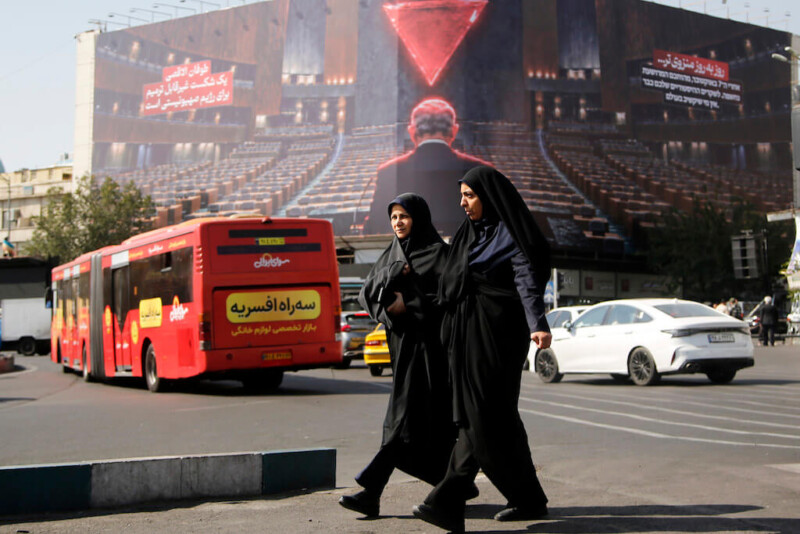
Iran retains retaliatory capabilities as US support remains uncertain
A renewed Israeli offensive would also carry substantial military and economic risks.
Sidharth Kaushal, a senior RUSI research fellow, said Iran likely retains significant missile stockpiles despite damage sustained during previous confrontations.
Its antiship missile capabilities remain particularly important, supported by domestic production and mountainous terrain that provides natural protection against aerial attacks.
Iran could also exploit the financial imbalance between inexpensive offensive drones and the considerably more expensive interceptor systems used by Israel.
Previous exchanges have already depleted portions of Israel’s interceptor inventories, potentially complicating its ability to sustain defensive operations during another prolonged confrontation.
Washington’s willingness to participate represents another major uncertainty.
According to a Financial Times report this week, an Israeli proposal for renewed strikes failed to secure Trump’s approval, although the disagreement did not necessarily rule out future American involvement.
With US midterm elections approaching, Trump faces domestic political pressure to avoid another escalation.
Without American participation, Israel would also lack access to certain specialized military capabilities, including the massive GBU-57 bunker-busting bombs deployed by US B-2 bombers against Iran’s Fordow and Natanz nuclear facilities in June 2025.
Analysts suggest Tehran could respond to an independent Israeli offensive by concentrating retaliatory strikes on Israel while avoiding American military installations and disruption to the Strait of Hormuz.
Such an approach could allow Iran to impose significant costs on Israel while reducing the likelihood of direct US intervention.
Ultimately, experts argue that Netanyahu faces a fundamental strategic obstacle: Israel may possess the military power to severely damage Iran, but destroying infrastructure and military installations does not necessarily create the conditions required to overthrow an established government.
Without a credible ground strategy, sustained international backing and a viable political alternative inside Iran, Netanyahu’s declared objective of regime change remains far more difficult to achieve than another round of devastating military strikes.
(Source: Aljazeera English)