
After nearly eight months of stalemate, the United States is finally turning the corner in its war with Iran – or at least that’s how the Trump administration is describing the state of play.
“So we’ve been in Iran, very powerful country, or they used to be,” President Donald Trump told supporters during an Oct. 12 rally in Youngstown, Ohio. “They’re not powerful anymore.”
Trump’s confidence is reinforced by several recent trends. Iran’s economy and the value of its currency are in a dismal state, the flow of crude oil from the Middle East approached prewar levels in September, and there is a growing sentiment among some foreign policy analysts that Tehran is reaching the point where peace on Washington’s terms is preferable to a longer war.
Don’t believe any of it. The Trump administration is allowing premature optimism to further cloud its judgment.

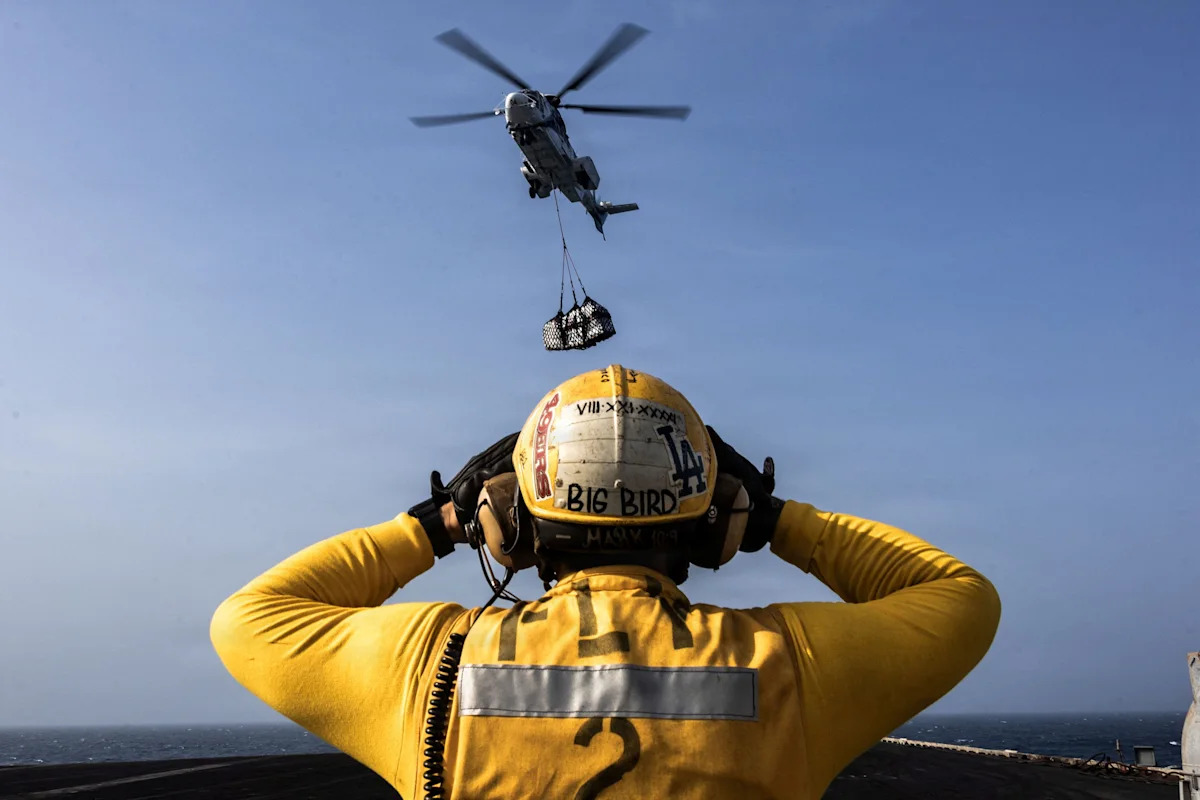
A U.S. Navy sailor directs a helicopter on the flight deck of the aircraft carrier USS Abraham Lincoln on Aug. 16, 2026. The carrier returned home to San Diego on Oct. 8, after a 321-day marathon deployment that saw its crew brave deteriorating conditions while operating in an active combat zone as part of the Iran war.
U.S. strategy remains littered with pitfalls and is highly taxing on the men and women ordered to carry it out.
In contrast to what the White House is selling, the United States is no closer to victory now than it was in the summer. Tehran still has leverage at its disposal.
Another view: Trump doesn’t have the right to send National Guard to Iran | Opinion
US ‘progress’ in Iran war is misleading
To be fair, U.S. officials aren’t wrong to state that more oil is getting out of the Persian Gulf today than earlier in the year. Major oil producers are tapping into alternative pipelines to bypass the Strait of Hormuz. Others are working with the U.S. Navy to facilitate oil transits through the strait along Oman’s coastline, neutralizing at least some of the fear shippers previously held about Iranian strikes.
Yet this is not a cost-free proposition. The United States has effectively anointed itself the defender one of the world’s most critical energy chokepoints with little to no international support and little clarity about an end date.
President Trump joins dignified transfer for soldiers lost in Iran war
1 of 10
President Donald Trump arrives at Dover Air Force Base to attend the dignified transfer of U.S. Army service members killed in Jordan and Iraq, amid the Iran war, in Dover, Del., July 22, 2026. Hours before he arrived, President Donald Trump said the U.S. would escalate retaliatory strikes against Iran.
(Evelyn Hockstein, REUTERS)
Serving as the world’s policeman in a highly contested environment like the strait is a resource-intensive mission even for the U.S. Navy – one that involves deploying significant air platforms, air defense systems and ships on a continuous basis to perform a variety of tasks, from coordinating sea lanes and protecting vessels from Iranian attacks to ensuring search-and-rescue assets are available if ships are disabled.
The U.S. military is fully capable of doing this work, but stretched out over an indefinite period of time, the mission will exacerbate the depletion of precision-guided munitions the Pentagon needs for other potential conflicts.
In fact, the war with Iran has already squeezed the U.S. military’s stockpiles and deepened the Navy’s maintenance crisis, as repairs are deferred and deployments are extended. This, in turn, has impacted the fleet’s readiness, and in some cases has caused psychological anguish among the crew.
Eventually, the bill will come due as U.S. military planners struggle to implement the Pentagon’s national defense strategy.
None of this even begins to account for the risk this operation poses to the U.S. military personnel tasked with executing it. In September, Iranian cruise missiles struck a vessel in the strait, wounding eight Marines, according to NBC News.
The danger of U.S. casualties is constant, which could prompt the Trump administration to resume large-scale bombing and render any end-of-war diplomacy more remote.
Iran is a joke to Trump. Our US casualties aren’t laughing | Opinion
Iranians resist because they have more to lose
The Trump administration bets that with more time and pressure, the regime will eventually see reason, resume serious diplomacy and sign a peace deal that includes comprehensive concessions on its nuclear program.
The alternative, Treasury Secretary Scott Bessent stated in August, is more economic strangulation and a cutoff from the global economy.
This assumption, though, is unlikely to bear fruit.
Opinion alerts: Get columns from your favorite columnists + expert analysis on top issues, delivered straight to your device through the USA TODAY app. Don’t have the app? Download it for free from your app store.
Throughout the conflict, Tehran has shown that expanding the war and putting the pressure back on Washington is its go-to move when its back is against the wall.
Iran’s hard-line leadership views this option as far superior to submitting to Trump, who not only pulled the plug on the 2015 nuclear agreement, but also has bombed Iran twice in the middle of nuclear negotiations.
And make no mistake: Iran still has the military capability to cause more pain. Iranian escalation could come in any number of ways.

The U.S. and Iran exchanged fire for the third time in a week amid a recent escalation of fighting, even as the White House has sought to downplay the severity of the war with Iran.
An increase in drone and cruise missile attacks against vessels transiting the strait is already occurring. The Islamic Revolutionary Guard Corps has recently launched about 30 attacks on ships in the region’s waters, the highest rate since the war began in February.
Those attacks are meant to accomplish two goals: retaliate to a U.S. blockade that’s impacting Tehran’s bottom line and reset the table in case end-of-war negotiations resume after the U.S. midterm elections.
As a consequence, shipping companies are once again reassessing their risk tolerance. Crude oil prices are still about 50% higher than they were before the war.
If the Iranians become desperate, they may even embrace more aggressive tactics and revert to the high-intensity attacks they conducted during the early weeks the war. Iranian drone and missile strikes on civilian targets, ports and energy-processing facilities in the Persian Gulf states should not be ruled out, particularly if Tehran’s oil revenues begin to run dry.
As Iranian parliamentary speaker Mohammad Bagher Ghalibaf said recently: “In a region where we cannot sell oil, no one else will sell oil, either.”
Another view: Iran was a regional threat. War with the US changed that | Opinion
Iran is OK with playing the long game
The Strait of Hormuz near Bandar Abbas, Iran, on Aug. 25, 2026.
Additional attacks against U.S. and Gulf interests by Iran’s proxies are also a possibility, one that provides Tehran with at least some plausible deniability. The region is fully aware of the damage those proxies can inflict.
Iranian-supported militias in Iraq shut down Saudi Arabia’s East-West oil pipeline for a few days in a relatively unsophisticated strike that caused a jump in global oil prices. Yemen’s Houthis, another militia supported by Iran, is increasingly launching missiles at Saudi Arabia’s busiest airports, killing civilians and shutting down air traffic.
With the Iranian economy falling apart and Tehran’s oil industry at a near standstill, Trump is understandably encouraged. That encouragement is misplaced.
Thousands of U.S. air strikes, the ongoing U.S. blockade and Trump’s constant threats about ending Iran’s civilization have failed to move Tehran’s negotiating position, which continues to prioritize Washington loosening oil sanctions, terminating the blockade and ending the war before any Iranian concessions are granted.
This shouldn’t be a surprise. Although the United States holds the edge in military firepower, the stakes are simply much higher for Iran.
The Iranians perceive the war as an existential struggle and thus have a higher pain threshold. As long as this is the case – and there’s no reason to believe it will change – optimistic prognostications about an imminent U.S. victory are nothing more than a redux of George W. Bush’s infamous “Mission Accomplished” banner more than two decades earlier.
Daniel R. DePetris is a fellow at Defense Priorities, a foreign policy think tank, and a syndicated foreign affairs columnist.
You can read diverse opinions from our USA TODAY columnists and other writers on the Opinion front page, on X, formerly Twitter, @usatodayopinion and in our Opinion newsletter.
This article originally appeared on USA TODAY: Trump claims we’ve beaten Iran. But US isn’t close to victory | Opinion